Two thousand votes.
In a country of more than three hundred and thirty million breathing, worrying, tax-paying souls, the trajectory of the United States government often comes down to fewer people than fit inside a mid-sized high school gymnasium.
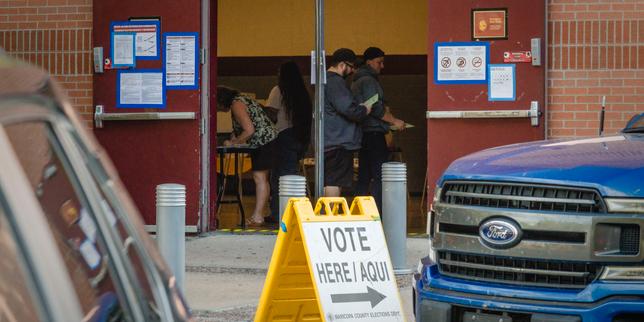
Consider a hypothetical kitchen table in the Hudson Valley of New York, or perhaps a cramped diner booth along the Rio Grande in South Texas, on a Tuesday evening in early November. Let us call the person sitting there Elena. She is forty-two, runs a small physical therapy clinic, and spends her evenings toggling between wholesale supply invoices and her daughter’s algebra homework. Elena does not watch cable news panels. She cannot name the chair of the House Ways and Means Committee. Yet, when she folds her paper ballot and slides it into the optical scanner at the local elementary school, she is quietly deciding whether the Speaker of the House will hold a gavel or pack up their office.
Political analysts love maps. They color counties in aggressive shades of crimson and cobalt, slicing the nation into clean, predictable blocks of partisan loyalty. Those maps lie by omission. They hide the truth that nearly ninety percent of the 435 seats in the U.S. House of Representatives are mathematically locked before a single campaign yard sign is hammered into the grass. Gerrymandering, geographic sorting, and deep cultural trenches have turned most congressional districts into fortified castles.
The war is not fought across the whole continent. It is fought in the mud of roughly two dozen battleground districts—the stubborn, unpredictable swing seats where the ideological tides of America collide and leave behind a fragile, shifting shoreline.
The Illusion of the National Wave
I remember standing inside a county elections warehouse in Orange County, California, three days after a midterm election several cycles ago. The fluorescent lights hummed with an exhausting, metallic buzz. Around me, exhausted poll workers in fleece vests sorted provisional ballots by hand, moving at a glacial pace while television pundits hundreds of miles away screamed about national mandates and sweeping ideological rejections.
There was no sweeping mandate in that room. There was only math, fatigue, and paper.
When you watch democracy up close, stripped of orchestral news bumpers and dramatic graphics, you realize how violently fragile legislative power actually is. In recent Congresses, the majority party has governed with margins so thin that a single bout of the flu, a delayed commercial flight out of Chicago, or one sudden retirement could stall the entire legislative machinery of the superpower. Think of the House of Representatives not as a grand philosophical parliament, but as a tightrope stretched across a canyon, where the person holding the balance pole has three fingers missing.
To understand which party controls the next Congress, you have to stop looking at Washington and start looking at the suburbs that refuse to behave.
Take the sprawling, sun-bleached stretches of California’s Central Valley and the commuter towns ringing Los Angeles. Districts like California’s 13th, 22nd, 27th, and 45th are political fault lines where agricultural anxieties, skyrocketing housing costs, and shifting demographic loyalties grind against one another. In these communities, a voter might fiercely support reproductive rights on Monday, recoil at the price of diesel fuel and groceries on Tuesday, and cast a split-ticket ballot that leaves party strategists weeping into their spreadsheets on Wednesday.
Across the continent, the exact same tension plays out in the damp autumn air of New York’s suburbs—places like New York’s 4th District on Long Island or the 17th and 19th Districts stretching north from the Hudson River. These are towns filled with commuters who ride Metro-North trains in the dark, pay some of the highest property taxes in the nation, and judge politicians less by their rhetorical fire and more by whether the local train station feels safe and the family budget survives until Friday.
How a Single District Swallows Billions
If you want to feel the true weight of these toss-up House races, follow the money until it stops making sense.
In an uncompetitive district—say, a deeply rural stretch of Alabama or a dense neighborhood in downtown Chicago—a congressional campaign costs a fraction of a corporate marketing budget. The incumbent shows up at parades, shakes hands at the pancake breakfast, and coasts to victory by thirty points.
Now step across the invisible border into a true battleground, such as Pennsylvania’s 7th District in the Lehigh Valley, or Michigan’s 7th and 8th Districts, or Nebraska’s 2nd District—the famous "blue dot" anchored by Omaha. Suddenly, the airwaves become uninhabitable. Between August and November, a voter living in one of these zip codes cannot watch a local weather forecast, stream a cooking tutorial, or check the high school football scores without being ambushed by thirty-second attack ads painted in ominous black-and-white tones.
Tens of millions of dollars pour into a single congressional race. Super PACs buy up every available second of local television inventory, driving ad rates so high that local car dealerships and furniture stores are priced off the air until the second week of November.
Why? Because control of the House is binary.
There is no prize for second place in the House of Representatives. Unlike the Senate, where individual senators hold vast procedural power to filibuster legislation and block judicial nominees regardless of party status, the House is a majoritarian machine. The party with 218 seats controls the floor. They decide which bills live and which die in committee drawers. They hold the subpoena power. They set the budget baselines, control oversight investigations into the White House, and decide whether the federal government stays open or grinds to a halt over a debt ceiling standoff.
If the minority party loses by a single seat, they get no gavels, no floor calendar control, and virtually no legislative leverage. It is an all-or-nothing cliff, and those two dozen competitive districts are the narrow ledge keeping both parties from falling off.
The Anatomy of a Toss-Up Voter
Political scientists often talk about "persuadable voters" as if they are mythical creatures, like snow leopards spotted once a decade on a grainy trail camera. In reality, they are everywhere in swing districts, and they are mostly just exhausted.
Let us return to a hypothetical scenario to see how this plays out in real time. Imagine Marcus, a thirty-eight-year-old union electrician living outside Allentown, Pennsylvania—right in the heart of one of the nation’s premier bellwether districts. Marcus voted for Barack Obama twice, backed Donald Trump in 2016 because he liked the promise of bringing manufacturing home, swung back to Joe Biden in 2020 during the chaos of the pandemic, and now stares at his ballot with a mixture of skepticism and fatigue.
Marcus does not wake up thinking about partisan realignment. He wakes up at 5:15 in the morning, checks the price of copper wire, worries about his aging father’s prescription costs, and wonders why both parties seem more interested in viral outrage clips than fixing the bridge he drives across every morning.
In districts like Marcus’s, national branding often becomes toxic weight around a candidate's neck. A Democrat running in Alaska’s at-large district, Maine’s 2nd District, or Washington’s 3rd District cannot run the same campaign as a Democrat in Manhattan. They have to talk about timber, commercial fishing, energy independence, and border security without flinching. Conversely, a Republican fighting for survival in Arizona’s 1st or 6th Districts, or Virginia’s 2nd and 7th Districts, cannot rely purely on hardline cultural grievances without alienating moderate suburban parents who care deeply about public school funding and healthcare stability.
This is the secret engine of battleground politics: candidates in swing seats spend half their time fighting their opponent, and the other half frantically distancing themselves from the loudest voices in their own party.
The Invisible Stakes Behind the Curtain
When pundits debate who will win the House, they usually frame it as a horse race. Who is ahead in the generic ballot? How are fundraising numbers looking in the third quarter? Which party has the enthusiasm advantage?
That framing misses the human wreckage and quiet victories hidden inside the legislative process.
Control of the House determines whether a small business owner in Ohio gets a tax credit to expand their machine shop or watches their compliance costs spike. It decides whether community health clinics in rural North Carolina receive federal grants to keep their maternity wards open, or whether pregnant mothers have to drive ninety minutes along unlit two-lane highways to deliver a baby. It governs how much money flows into semiconductor manufacturing, clean energy grids, border enforcement personnel, and veterans' mental health care.
Even more subtly, the margin of victory shapes how the country feels from day to day.
Think back to the chaotic speaker battles and razor-thin floor votes of recent years. When a majority party holds only a three- or four-seat cushion, the center of gravity shifts away from compromise and toward the most uncompromising factions within the ruling coalition. A handful of hardline members—whether on the far right or the far left—suddenly possess veto power over every major piece of legislation. The Speaker becomes less of a legislative architect and more of an emergency room surgeon trying to stop internal bleeding while the building shakes.
A slightly wider margin—say, fifteen or twenty seats—changes the entire psychological climate of Washington. It gives leadership breathing room to cut bipartisan deals on infrastructure, farm bills, and national defense without fearing that five angry members will trigger a mutiny before sunset.
That difference—between legislative paralysis and functional governance—hinges entirely on how a few thousand people in places like Bakersfield, Poughkeepsie, Davenport, and Laredo decide to spend ten minutes of their Tuesday in November.
The Quiet Variables Nobody Polls Properly
If you ask any veteran campaign manager what keeps them awake at 3:00 AM in October, they will rarely mention national polling averages. National polls measure the temperature of the ocean; House races are won or lost in specific tide pools.
They worry about turnout drop-off in midterm years, when millions of voters who show up for presidential drama stay home because the ballot feels less theatrical. They obsess over redistricting maps that quietly shifted three precincts across a county line, altering the partisan math of a district by 1.4 percentage points—a margin that looks trivial on paper until election night drags into Thursday morning.
They worry about third-party spoilers siphoning off three percent of disaffected voters in a race decided by half a percent. They watch early voting tallies in university towns like Madison, Wisconsin, or Chapel Hill, North Carolina, trying to guess whether eighteen-to-twenty-four-year-olds will actually walk to the polling place or leave their mail-in ballots sitting unopened beneath a stack of junk mail.
And above all, they fear the late-breaking local shock. A factory closure announced in October. A hurricane scrambling voter access along the Gulf Coast. A candidate caught on a hot mic saying something dismissive about the very town they are asking to represent.
In a race where 350,000 ballots are cast and the winner survives by 1,800 votes, there is no margin for human error. Every knocked door, every rained-out county fair, every unanswered phone call carries the weight of a potential tie-breaker.
The Illusion of Powerlessness
It is easy, living in an age of algorithmic outrage and billion-dollar political machines, to feel entirely irrelevant as an individual citizen. When you read about dark money networks and hyper-partisan cable ecosystems, your single paper ballot can feel like a teaspoon of water tossed into a forest fire.
That cynicism is understandable. It is also factually wrong.
In 2020, Mariannette Miller-Meeks won Iowa’s 2nd Congressional District by six votes. Not six thousand. Six. Out of nearly four hundred thousand ballots cast, six human beings—the equivalent of two minivans pulling up to a church basement polling station—decided who would represent three-quarters of a million Iowans in the United States Congress.
Two years later, Lauren Boebert survived her reelection bid in Colorado’s 3rd District by 546 votes, forcing an automatic state recount that held national control of the House in suspense while clerks re-fed ballots through machines one county at a time.
History does not turn on grand speeches delivered from marble podiums. It turns on quiet decisions made behind flimsy plastic privacy screens in high school gymnasiums, fire stations, and public libraries.
Somewhere tonight, in a quiet suburb outside Phoenix or a farming town in central Illinois, someone is sitting at their kitchen table with a sample ballot spread out next to a lukewarm mug of coffee, weighing broken promises against stubborn hope, entirely unaware that the fate of the next Congress rests resting quietly beneath their pen.