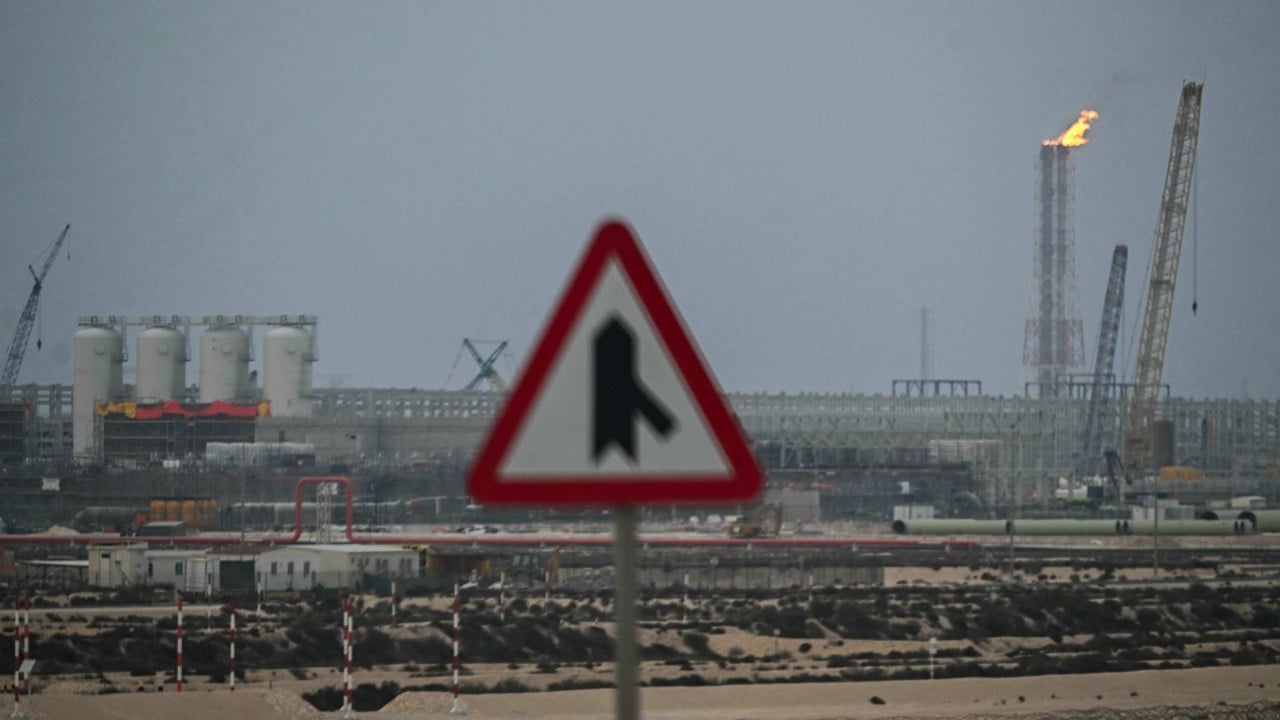
A massive fireball just ripped through the heart of the world's liquefied natural gas supply, and it's going to ripple across the globe. On Sunday night, a powerful explosion tore through the Barzan gas facility within Ras Laffan Industrial City, Qatar’s premier energy hub. The official numbers are grim. Qatar's Ministry of Interior confirmed that at least 54 people are injured and 18 workers remain missing.
The blast happened during a delicate start-up operation. Crews were attempting to spin the plant back up after it suffered severe structural damage from Iranian missile strikes earlier this year. While state officials quickly labeled the disaster a "technical malfunction" and assured the public there is no active chemical leak, the timing couldn't be worse. If you think an accident in the Persian Gulf desert won't affect you, you're underestimating how tightly wound the global energy infrastructure really is.
The Cost of Restarting a Post-War Gas Plant
Ras Laffan isn't just some local refinery. It sits about 80 kilometers north of Doha and processes roughly one-fifth of the entire planet's liquefied natural gas (LNG). The specific site of the blast, the Barzan facility, is co-owned by state-run QatarEnergy and American oil giant ExxonMobil.
Barzan is a beast of a facility. It normally pumps out 1.4 billion standard cubic feet of sales gas every single day. In the desert expanses of the Arabian Peninsula, this gas is the lifeblood for domestic power generation and the massive desalination plants that keep the country’s drinking water flowing.
The trouble started when workers tried to bring these systems back online. Qatar had previously frozen its operations after Iran squeezed the Strait of Hormuz, making it nearly impossible to ship gas to international buyers. Back in March, an Iranian missile slammed directly into Ras Laffan, leaving behind what authorities called "extensive damage." As recent diplomatic talks in Switzerland offered a glimmer of hope and Iran slightly loosened its grip on the shipping lanes, Qatar jumped at the chance to resume exports. Instead, the restart triggered a catastrophic internal explosion.
Knockout Blow to Global Energy Markets
The Qatari International Search and Rescue Group is currently working alongside civil defense teams to locate the 18 missing individuals. Emergency crews stayed on-site through the night, battling a massive blaze that sent shockwaves strong enough to produce a loud boom heard miles away in Doha.
Markets hate uncertainty. Qatar shares its massive offshore South Pars/North Dome gas field with Iran, making the entire zone a geopolitical powder keg. Even if you accept the official stance that this was purely a mechanical failure during a startup sequence, the supply chain reality is harsh.
- Europe's Missing Buffer: European countries rely heavily on Qatari shipments to offset the loss of Russian pipeline gas. A prolonged shutdown at Barzan keeps the supply cushion dangerously thin.
- Desalination Strains: Locally, if Qatar has to divert other gas streams to keep its domestic water desalination and power grids running, it means less fuel is available for the export ships.
- Insurance Spikes: Maritime insurance rates for tankers entering the Persian Gulf are bound to climb, adding a hidden tax to every gallon of fuel moved out of the region.
The immediate next steps for the energy sector involve rigorous safety audits across the remaining undamaged trains of the Ras Laffan complex. If you're managing commercial energy portfolios or just trying to budget for winter utility spikes, you need to track the operational status updates from QatarEnergy over the next 72 hours. Watch the daily LNG spot price indices in East Asia and Europe. Those numbers will tell you exactly how long the market expects the Barzan shutdown to last, and how hard it will hit your wallet.