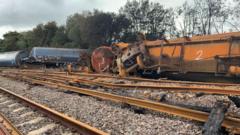
A massive wall of fire lit up the night sky near Llangennech, south Wales, back in August 2020. Ten wagons of a twenty-five-wagon freight train derailed, sending nearly 450,000 litres of fuel flooding into local wetlands. Firefighters spent two agonizing days fighting the blazing inferno. About 300 residents had to evacuate their homes immediately.
Now, the legal fallout is hitting the High Court. Network Rail is suing two major rail companies for over £5 million to cover the staggering costs of the accident. If you want to understand how freight safety accountability works in the UK, look closely at this lawsuit. It sets a massive precedent.
The Anatomy of a Freight Disaster
The train was hauling fuel from the Robeston oil refinery in Milford Haven straight to a distribution terminal in Berkshire. It chugged along at roughly 38 mph before catastrophe struck. A set of wheels on one of the wagons locked up completely.
Why did it lock? According to the Rail Accident Investigation Branch (RAIB), a severe brake defect caused the mechanical failure. Years of investigation pointed squarely at poor design and substandard maintenance of the components.
Out of the 446,000 litres of fuel that escaped the ruptured tanks, roughly 116,000 litres caught fire. The rest—about 330,000 litres—soaked directly into surrounding salt marshes and wetlands. This wasn't just any piece of land. It sits inside a site of special scientific interest and a special area of conservation.
Who Is Actually to Blame in High Court Claims
Network Rail isn't messing around. They filed high court claims against two specific entities: DB Cargo UK, the company that operated the freight service, and Touax Rail, the company that actually owned the defective wagon.
The legal arguments break down into two distinct tracks:
- Touax Rail: Facing direct claims of negligence because they allegedly failed to maintain the wagon with reasonable care.
- DB Cargo UK: Facing breach of contract claims for failing to ensure proper care was maintained over the equipment they put onto the active network.
Network Rail expects to claw back more than £5 million through these proceedings. Neither company has filed a formal defense yet, and official court hearings are still waiting on the docket.
The Heavy Price of Environmental Cleanup
Fixing a disaster like this takes a massive toll. The local rail line was completely shut down for six months. It didn't fully reopen for nearly an entire year.
Crews had to dig out roughly 30,000 tonnes of fuel-soaked soil. Insiders called it one of the largest environmental recovery operations Network Rail has ever handled. Protecting sensitive waterways from total ecological collapse required endless engineering marvels and millions of pounds in cleanup fees.
Freight operators often treat safety regulations as a box-ticking exercise. Cases like this prove that equipment neglect carries multi-million-pound liabilities. Expect railway operators to scrutinize third-party wagon leases much harder from now on.