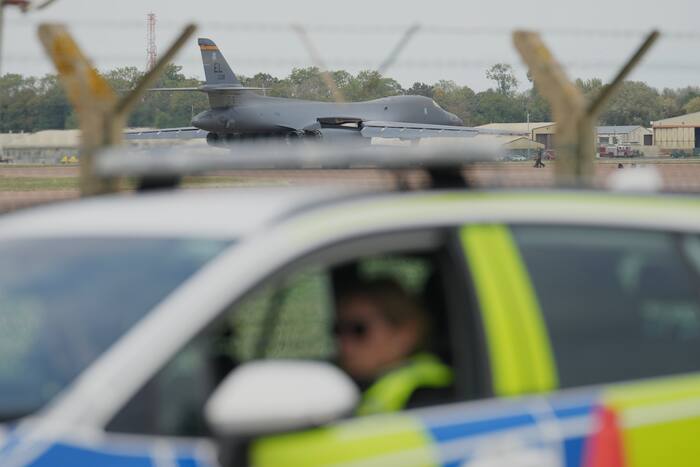
Security alerts at military installations rarely stay local for long. When British counterterrorism police arrested a 22-year-old man in London, bringing the total number of detainees to seven, it marked another escalation in a high-stakes security breach targeting RAF Fairford.
If you've been following the intersection of international conflict and domestic policing, you know this story is about more than just a few suspicious vans. It exposes how easily foreign state-backed operations can probe critical defense infrastructure right under the noses of local authorities. Recently making headlines in related news: Why China's New Footprint in Laos Changes the Game in Southeast Asia.
Inside the RAF Fairford Security Incident
The operation began unfolding when police and bomb-disposal units intercepted vehicles near the rural Gloucestershire air base, roughly 100 miles west of London. Investigators discovered drums of gasoline used as accelerants hidden inside vans outfitted with sham corporate branding. While no explosives were found initially, the intent became glaringly obvious as federal indictments later detailed a broader campaign orchestrated by networks tied to Iran.
The reaction from Washington was swift. The U.S. military pulled its long-range B-52 and B-1 bombers out of the British base, relocating them back to domestic soil. Officials didn't want to leave multi-million-dollar assets sitting as sitting ducks while threat levels spiked. More details on this are detailed by USA Today.
Why the Initial Bail Decisions Sparked Outrage
One detail that caught a lot of people off guard was the initial release of the first six suspects on bail. That move drew immediate public frustration, including sharp commentary from political leaders who argued that suspects tied to terror plots shouldn't simply walk out of custody.
However, UK policing procedures operate under strict evidentiary rules. Arresting someone on suspicion of a terror offense starts a ticking clock. If investigators haven't gathered enough concrete forensic or digital evidence to formally charge them within statutory detention limits, courts or police must bail them while the investigation continues.
Subsequent developments proved that bail doesn't mean freedom from scrutiny. Authorities rearrested at least one of those men under the stringent UK National Security Act, hitting them with charges related to assisting foreign intelligence services.
The Broader Intelligence Picture
U.S. federal prosecutors pulled back the curtain on how these local cells operate. Indictments unsealed in New York tied the UK base plot to a wider ring directed from abroad—and remarkably, even from inside a foreign jail cell via coded phone conversations.
It turns out the operatives weren't just stumbling onto base perimeters on a whim. They were paid to scout locations, film fences, and secure logistical supplies. This hybrid model—using local proxies or low-level operatives for reconnaissance while handlers direct actions remotely via encrypted apps or phone calls—is the new normal for state-sponsored sabotage.
What This Means for Future Defense Protocols
Military bases like RAF Fairford have historically prioritized defense against sophisticated aerial or missile threats. They weren't necessarily optimized to stop local couriers driving rented vans loaded with jerrycans of fuel up to the perimeter gate.
Expect to see permanent infrastructure upgrades around allied bases. Concrete roadblocks, stricter digital surveillance, and tighter vetting of local contractors working near sensitive defense zones are already becoming standard practice. When modern threats look like ordinary delivery trucks, security forces have to change how they define the perimeter.