The fluorescent lights in a county clerk’s office hum at a frequency designed to make you forget what time it is.
If you have ever stood behind the counter of a municipal building at four in the afternoon on a Tuesday, you know the smell. It is a specific, inescapable mixture of burnt coffee, damp wool coats, and the faint, metallic tang of toner dust. You know the weight of a cardboard banker’s box filled with paper, and you know the particular dread that settles into the base of your skull when a courier walks through the double doors carrying a thick manila envelope stamped with the seal of a federal court.
For most people, the news about the Trump midterm election lawsuits and the fierce state pushback coming to a head this Tuesday reads like static. It sounds like the background noise of modern American life—another round of legal filings, another set of injunctions, another cable news chyron flashing in angry red and blue. We skim the headlines, mutter something about gridlock or chaos, and go back to checking the weather or deciding what to make for dinner.
We treat election litigation like a spectator sport played by lawyers in expensive suits.
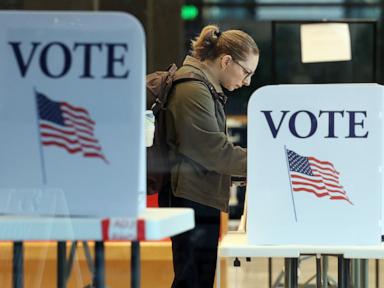
That is a mistake. Because while the arguments happen in oak-paneled courtrooms in Washington, D.C., Atlanta, Phoenix, and Harrisburg, the consequences land directly on the laminate countertops of local election offices—and, ultimately, on the kitchen table where you fill out your ballot.
The Architecture of a Tuesday Showdown
To understand why this Tuesday marks a critical flashpoint in the ongoing battle over American voting rules, you have to look past the partisan shouting and examine the machinery itself. Over the past several months, a coordinated wave of lawsuits backed by Donald Trump and aligned legal groups has targeted the foundational mechanics of how states run their midterm elections.
The targets are rarely dramatic. They are mundane, technical, and deceptively quiet.
Lawsuits across key battleground states—including Pennsylvania, Georgia, Arizona, Michigan, and Wisconsin—have challenged everything from the precise wording on mail-in ballot envelopes to the deadlines by which county boards must receive ballots postmarked on or before Election Day. Other filings demand immediate access to unredacted voter rolls, seek to restrict the use of drop boxes, or attempt to alter how election workers verify signatures and cure minor clerical errors.
On Tuesday, several of these parallel legal tracks collide. Federal and state judges in multiple jurisdictions are holding simultaneous hearings, issuing rulings on emergency motions, and setting hard deadlines for state attorneys general to respond.
And the states are fighting back. Hard.
Secretaries of state and attorneys general from both parties—including Republican election administrators who have spent years defending the integrity of their own systems—have filed blistering briefs pushing back against what they describe as last-minute judicial interference. Their argument is rooted in a long-standing legal doctrine known as the Purcell principle, which warns courts against changing election rules too close to an election because doing so confuses voters and overwhelms local officials.
Wait. Stop and think about what that actually means.
When a judge changes a rule six weeks before an election, it does not just update a line of text in a statute book. It forces thousands of underpaid, exhausted civil servants to rewrite training manuals, reprogram optical scanners, reprint millions of instructional inserts, and retrain temporary poll workers who are mostly retirees working fourteen-hour shifts for minimum wage.
Meet Evelyn and Marcus
To make this concrete, let us step into a hypothetical scenario. Consider two ordinary people whose lives are directly entangled in Tuesday’s court rulings—let us call them Evelyn and Marcus.
Evelyn is seventy-two years old. She lives in a brick ranch house outside Pittsburgh, uses a walker because of a bad hip, and has voted in every single election since 1972. Because standing in line at the local elementary school gymnasium is physically painful for her, she votes by mail. When she fills out her ballot, her hands shake slightly from a mild essential tremor. Sometimes she forgets to write the date on the outer declaration envelope, or she writes her birth year instead of the current year—a surprisingly common mistake among older voters.
In Pennsylvania, the battle over whether an undated or misdated outer envelope invalidates an otherwise valid, timely ballot has bounced back and forth between state and federal courts like a ping-pong ball. If a court rules this Tuesday that strict enforcement applies without a chance for the county to notify Evelyn and let her fix the mistake, her forty-year streak of civic participation vanishes. Not because she committed fraud. Not because she missed the deadline. Simply because her pen slipped on a line that serves no administrative purpose, since the county already timestamps every envelope the moment it arrives.
Now consider Marcus.
Marcus is a thirty-eight-year-old county elections director in a mid-sized county in Arizona. He is a lifelong conservative who took the job because he loves logistics and believes public service is a quiet duty. For the past two years, Marcus has slept an average of five hours a night. He has installed bulletproof glass in his lobby, memorized the names of the sheriff’s deputies assigned to patrol his parking lot, and spent every waking hour preparing for the midterms.
When a lawsuit demands that Marcus hand over full voter registration files—including partial Social Security numbers and driver’s license digits—to outside activists, or when a court order forces him to alter signature-verification protocols days before ballots go to the printer, Marcus is the one who has to absorb the shock.
"People think an election is a single day," a veteran county clerk in the Midwest once told me while showing me rows of locked cages holding voting machines. "It isn’t. It’s a six-month supply chain. If you yank one gear out of the conveyor belt in October, the whole factory jams."
The Invisible Stakes of Procedural Attrition
I will be honest with you: following election law right now can feel exhausting and deeply disorienting. Even for those of us who spend our lives reading court dockets and interviewing election administrators, the sheer volume of litigation is dizzying. One day a state supreme court affirms a rule; forty-eight hours later, a federal district judge issues an injunction; three days after that, an appellate panel stays the injunction pending further review.
It is entirely rational to feel confused. In fact, confusion is part of the point.
Think of the American election system not as a single fortress, but as a vast, decentralized network of more than ten thousand local jurisdictions, each operating like a delicate mechanical watch. Every gear—registration deadlines, absentee ballot requests, logic and accuracy testing of tabulators, bipartisan canvass boards—is calibrated to mesh with the others at a precise moment in time.
Historically, when political movements sought to shape election outcomes through the courts, they focused on sweeping constitutional questions: who has the right to vote, how districts are drawn, whether a specific tax or literacy test violates the Fourteenth or Fifteenth Amendment.
What we are witnessing now is fundamentally different. It is a strategy of procedural attrition.
Instead of arguing that millions of citizens lack the right to vote, the modern wave of lawsuits targets the friction points of administration. If you cannot stop someone from voting, you challenge the validity of the drop box they used. If you cannot close the drop box, you challenge the chain-of-custody log signed by the courier who emptied it. If the courier signed the log, you challenge whether the county board had the statutory authority to accept ballots after five o'clock on Friday.
Each individual lawsuit looks small, technical, and dry. Taken together, they create a fog of perpetual uncertainty.
And that fog does two things simultaneously. First, it strains the operational capacity of state and county offices to the breaking point, diverting millions of taxpayer dollars away from poll worker recruitment, cybersecurity upgrades, and voter education and pouring them into legal defense funds. Second, it plants a seed of doubt in the public mind long before a single vote is cast. If the rules themselves are constantly under litigation, then whatever outcome emerges on election night can be framed as illegitimate by whichever side loses.
Why State Pushback Has Reached a Boiling Point
This brings us back to why Tuesday is so significant, and why state officials are pushing back with unprecedented ferocity.
Under Article I, Section 4 of the United States Constitution—the Elections Clause—the primary authority to set the times, places, and manner of holding elections belongs to the states, subject to Congress. For more than two centuries, that decentralized design has been America’s greatest firewall against systemic failure. You cannot rig ten thousand separate counties running on different software, managed by local neighbors from opposing political parties, all watching one another like hawks.
Yet that very decentralization is now being tested by coordinated national litigation.
In the briefs hitting judges' desks this week, state attorneys general and secretaries of state are making a forceful, unified case: Enough.
In Georgia, state officials are defending the integrity of their voter roll maintenance procedures against demands for aggressive, automated purges that risk knocking eligible citizens off the rolls just before the deadline. In Michigan and Wisconsin, state lawyers are pushing back against challenges to absentee ballot processing rules that were enacted specifically to prevent the multi-day counting delays that fueled conspiracy theories in previous cycles.
What is striking—and often missed in cable news coverage—is that this pushback is not strictly partisan. Across the country, Republican secretaries of state, county recorders, and state supreme court justices have joined their Democratic counterparts in rejecting attempts to upend established voting procedures on the eve of an election. They recognize a simple, operational truth: chaos has no party affiliation. When a voting line stretches around the block because a court blocked early processing of mail ballots, or when thousands of military and overseas ballots are thrown into legal limbo, voters of every political stripe pay the price.
What Happens When the Gavel Falls
People often ask what happens if a state loses one of these Tuesday rulings, or if federal and state courts issue conflicting orders at the eleventh hour.
The answer is both simple and unsettling.
If a federal judge strikes down a state mail-ballot deadline or orders a change to signature-verification rules, the state has only a narrow window to file an emergency appeal to a federal circuit court—and, potentially, to the Supreme Court’s emergency docket, often referred to as the shadow docket. While those appeals play out, local clerks like our hypothetical Marcus are trapped in purgatory. Do they print the envelopes with the old instructions or the new ones? Do they set aside ballots with missing dates in a separate locked bin, awaiting a final appellate ruling weeks after Election Day?
Yes. That is exactly what happens.
In county warehouses across America, ballots are routinely segregated into color-coded trays—provisional ballots, challenged ballots, undated ballots, cured ballots—waiting for judges to decide whether the citizens who filled them out will have their voices counted.
Imagine working forty years at a factory, paying your taxes, raising your kids, sitting at your kitchen table with a cup of tea to carefully research every candidate on the ballot, sealing the envelope, walking down your driveway in the rain to put it in the mailbox—and having your vote sit in a plastic bin in a fluorescent-lit basement while lawyers argue over the placement of a comma.
Taking Back the Floor
Yet if there is a reason for grounded optimism amid all this legal turbulence, it lies in the quiet resilience of the people running the machinery—and in the power voters still hold to insulate themselves from the noise.
State pushback is working more often than the headlines suggest. Judges across the ideological spectrum have repeatedly dismissed lawsuits built on speculation rather than hard evidence, citing the lack of concrete harm and the danger of last-minute disruption. State legislatures and election boards have quietly fortified chain-of-custody protocols, expanded early in-person voting windows, and built transparent ballot-tracking portals that let citizens watch their ballot move from mailbox to tabulator like a package delivery.
You do not have to be a bystander to Tuesday’s rulings.
Every single voter has the ability to strip away the ambiguity that procedural lawsuits thrive on. You can check your registration status directly on your state’s official .gov website today—not on a third-party link sent in a text message. If you vote by mail, you can request your ballot early, read the instructions twice as if you were assembling a piece of furniture, sign and date every required line in dark ink, and return it weeks before the deadline rather than days. Better yet, you can track its acceptance online, and if a clerical error flags your envelope, you can walk into your county office and cure it on the spot.
Democracy does not collapse in a single dramatic explosion. It erodes—or endures—in the quiet, unglamorous details of how we treat one another when the rules are tested.
On Tuesday afternoon, when the courtrooms empty and the legal briefs are filed away, the fluorescent lights in those county clerk offices will still be humming. Inside, ordinary people will still be opening boxes, checking seals, and calibrating scanners, determined to make sure that when you step up to the counter or drop your envelope into the slot, your voice carries the exact weight the Constitution promised it would.