The tarmac at José Martí International Airport smells like jet fuel, damp limestone, and roasted coffee drifting from the terminal vents. When the cabin door of the commercial flight from New York swung open, the humidity of Havana didn't just greet the returning passenger; it claimed him.
Waiting at the bottom of the stairs wasn't merely a driver with a laminated sign. Top officials from the Cuban Ministry of Foreign Affairs stood in pressed guayaberas and dark suits, ready to embrace a man Washington had just branded persona non grata.
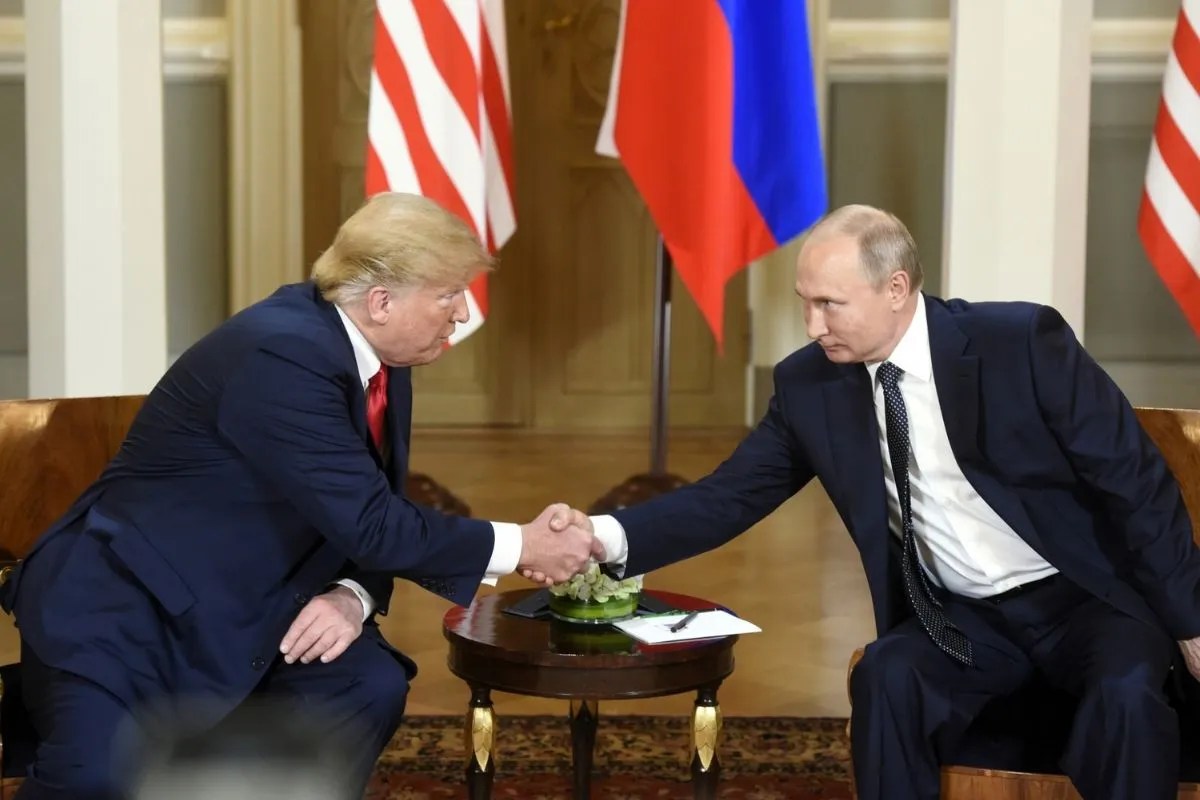
To the outside world, reading the wire reports over morning toast, the incident sounded like a bizarre footnote in diplomatic history. A Cuban diplomat stationed at the United Nations had been expelled by the United States following an unusual physical altercation inside the U.N. headquarters in Manhattan. Two sentences. A shrug. Next story.
That is how cold news treats human friction. It strips away the sweat, the sixty-year weight of an unfinished Cold War, and the suffocating claustrophobia of representing a blockaded island inside the belly of a superpower.
If you want to understand why Havana threw open its arms to an expelled envoy, you have to step out of the press briefing room and walk onto First Avenue in New York City.
The Glass Cage on the East River
Diplomacy is supposed to be the art of whispering in well-lit rooms. In practice, especially between Washington and Havana, it is closer to two boxers clinching against the ropes, each trying to bruise the other's ribs where the referee cannot see.
To grasp the reality of a Cuban diplomat working in New York, consider a hypothetical composite—let’s call him Mateo—based on the documented daily constraints placed upon members of the Permanent Mission of Cuba to the United Nations.
Mateo wakes up in a city that is technically not his host, yet controls every step he takes outside the U.N. compound. Under the 1947 United Nations Headquarters Agreement, the United States is legally obligated to allow foreign diplomats access to the U.N. district on Manhattan's East Side. What the agreement does not guarantee is freedom of movement. For decades, Washington has enforced strict travel limits on Cuban personnel, confining them to a twenty-five-mile radius around Columbus Circle.
Want to visit a cousin in New Jersey? Denied. Need to attend a weekend conference in Boston? Out of bounds. Every trip beyond that invisible perimeter requires formal permission from the U.S. State Department, filed days in advance, often met with silence or flat refusal.
Now imagine living inside that invisible fence while your country back home endures its worst economic crisis since the collapse of the Soviet Union. Every morning, Mateo checks his phone to read messages from his sister in Havana. Rolling blackouts last twelve hours. Pharmacies lack basic antibiotics. Lines for subsidized bread stretch around the block before dawn.
Then Mateo puts on a tailored suit, pins a small flag to his lapel, and walks into the gleaming halls of the United Nations, where every corridor hums with power, wealth, and ideological hostility.
That is the pressure cooker nobody mentions in a three-paragraph wire dispatch. When an altercation happens in a U.N. hallway, it is never just about the two men in the room. It is the sudden release of pressure built up over six decades of embargoes, espionage scandals, sonic-attack theories, and frozen bank accounts.
What Really Happens When Protocol Breaks
Inside the United Nations, physical space is sacred. The carpets are thick, the acoustics are engineered to swallow raised voices, and security officers in dark uniforms monitor every escalator and lounge. An altercation—whether a shove near a committee room, a heated confrontation in a restricted corridor, or a clash during a contentious General Assembly session—is the ultimate diplomatic taboo.
Think of the U.N. floor like an operating theater. Everyone wears masks, moves with rehearsed precision, and uses sanitized instruments. If two surgeons suddenly drop their scalpels and grab each other by the collar over the patient, the shock isn't about the bruises. It is about the realization that the sterile environment has failed.
When the U.S. State Department moves to expel a U.N. diplomat, it invokes a nuclear option in miniature. Under international law, host countries have limited authority to eject accredited U.N. representatives, precisely because the organization belongs to the world, not to Washington. Yet the U.S. retains the right to expel individuals for abusing their privileges of residence—a category that includes espionage, threats to national security, or serious misconduct.
I have spent years tracking how these quiet expulsions unfold behind closed doors, and the choreography never changes. There are no dramatic arrests in the lobby. No handcuffs. Instead, a terse diplomatic note arrives at the mission. A deadline—usually seventy-two hours, sometimes a week—is set. Bank accounts tied to the diplomat's local residence are flagged. School enrollments for their children are abruptly terminated. The life you built in exile is packed into cardboard boxes while intelligence agents watch from unmarked sedans across the street.
By the time the diplomat boards a plane out of JFK or Newark, the American narrative is already cemented: We removed a rule-breaker.
The Choreography of the Welcome
Now cross the Straits of Florida. Why did Havana turn an expulsion—typically a moment of quiet embarrassment in foreign service—into a public homecoming?
Because in Cuban political theater, there is no such thing as a private defeat at the hands of the United States. Every friction point is immediately translated into the language of David and Goliath.
Look closely at the mechanics of the welcome at José Martí International Airport. When Cuban officials greet an expelled diplomat on the tarmac, cameras are rolling for Noticiero Nacional de Televisión, the nightly state broadcast watched across the island. The visual message is unmistakable, even with the sound muted: He did not retreat. He stood his ground in the empire's capital, and we honor him for it.
To understand why this works domestically, you have to set aside Western assumptions about diplomatic decorum and look at how Cubans experience daily life. For an ordinary teacher in Santiago or a mechanic in Matanzas, the United States is not an abstract geopolitical rival. It is the reason remittances are difficult to send, the reason international shipping companies refuse to dock in Cuban ports, and the reason the island remains on Washington's State Sponsors of Terrorism list—a designation that freezes Cuba out of global financial networks.
When those citizens turn on their televisions and see a Cuban envoy returning from New York with his head held high, embraced by senior ministers, it provides a rare psychological counterweight. It transforms a bureaucratic expulsion into an act of personal defiance.
Is that an honest framing of a hallway scuffle? Probably not. Diplomatic rows are rarely heroic; they are usually messy, exhausting, and fueled by bruised egos on both sides. I find myself torn whenever I watch these moments play out. On one hand, international institutions collapse if envoys treat U.N. corridors like street corners. On the other, expecting representatives of a besieged nation to absorb endless hostility without ever snapping asks for a level of detachment few human beings actually possess.
A History Written in Expulsions
This incident did not happen in a vacuum. It sits atop a long, jagged fault line of tit-for-tat removals that stretches back to the earliest days of the Cuban Revolution.
Consider the rhythm of the past decade alone. In 2017, following the mysterious health incidents affecting American personnel in Havana—later dubbed "Havana Syndrome"—the Trump administration slashed its embassy staff in Cuba and expelled fifteen Cuban diplomats from Washington. Havana called the move unjustified and politically motivated, insisting it had nothing to do with the illnesses.
In 2019, Washington expelled two more members of Cuba's U.N. mission, accusing them of conducting influence operations harmful to U.S. national security. Cuba's Foreign Minister Bruno Rodríguez condemned the accusation as vulgar slander, pointing out the hypocrisy of targeting diplomats whose primary job is to lobby against the annual U.N. General Assembly resolution condemning the U.S. embargo—a resolution that routinely passes by margins of 185 to 2.
Every time Washington shrinks the diplomatic footprint, the same unintended consequence follows. Fewer diplomats mean fewer backchannels. Fewer backchannels mean minor misunderstandings escalate into formal crises. And when a crisis erupts, neither side has the quiet personal trust required to pick up a phone and defuse it before the press gets wind of it.
Diplomacy without human contact is like trying to steer a cargo ship by text message. By the time the warning arrives, you have already hit the reef.
The Invisible Stakes in the Corridor
What makes this latest altercation so revealing isn't the physical clash itself, which left no lasting injuries and altered no treaties. It is what the incident exposes about the current state of U.S.-Cuba relations in 2026: they have become entirely performative.
In Washington, toughness toward Havana remains a low-cost domestic signal, especially in a political climate where any hint of compromise with the island's leadership invites fierce pushback from key voting blocs in South Florida. Expelling a Cuban official requires zero legislative effort, costs nothing, and generates a clean headline about enforcing rules.
In Havana, welcoming that same official home as a patriot costs equally little and serves an urgent internal need. Facing historic emigration—hundreds of thousands of Cubans have left the island in recent years, draining hospitals, schools, and factories of skilled workers—the Cuban government desperately needs symbols of loyalty and solidarity. Turning an expelled diplomat into a returning hero tells the remaining population that standing firm still carries honor.
Both capitals get what they need from the script. Washington gets to play the enforcer of international norms. Havana gets to play the unbowed underdog.
And what gets lost in the middle? The actual work of solving problems that neither wall nor embargo can contain.
Migration flows across the Florida Straits do not stop because a diplomat was put on a plane. Drug trafficking routes in the Caribbean do not pause during diplomatic freezes. Environmental threats to the shared waters of the Gulf of Mexico do not respect twenty-five-mile travel restrictions. Every time a seasoned envoy is sent packing over a hallway confrontation, the institutional memory required to manage those shared crises gets thinner.
The Long Walk Through Customs
Picture the returning diplomat hours after the cameras at the Havana airport have packed up their tripods.
The official SUV drops him off at his home in Miramar or Vedado. The ceremonial handshakes are over. The adrenaline of the flight and the tarmac reception begins to fade, replaced by the familiar hum of a neighborhood generator kicking in as the evening power cut hits the block.
He unpacks his bags. Suits tailored for Manhattan autumn are hung in a closet built for tropical dampness. The badges that granted him access to the Security Council chambers sit on a dresser next to Cuban pesos worth a fraction of what they bought when he first left for New York.
Tomorrow, he will report to the Foreign Ministry to debrief his superiors on what happened in that Manhattan corridor, what was said, and who pushed whom. His career will likely survive, perhaps even advance, buffered by the political value of his expulsion.
Yet as the ceiling fan slows to a stop and the humid night settles over the city, the grand narratives of both capitals evaporate. There is no empire and no revolution in the dark. Just a man sitting on the edge of his bed in Havana, listening to the distant sound of waves breaking against the Malecón, knowing that the bridge he was sent north to guard is one plank shorter tonight.