The frost arrives early in northern Minnesota, creeping across the iron-rich soil of the Mesabi Range before the autumn leaves have even finished falling. For generations, the people who live between the pine forests of St. Louis County and the sprawling suburbs of the Twin Cities have measured their lives not by the cable news chyron, but by the price of taconite, the yield of the soybean harvest, and the quiet, stubborn dignity of a promise kept.
They are pragmatists. They do not easily fall in love with politicians, nor do they easily divorce them. Yet, in the autumn of 2026, a profound tremor is running beneath the frozen ground of American politics, and its epicenter sits right here, in a state that has long served as a reliable barometer for the national mood. Read more on a connected subject: this related article.
Listen closely at a corner diner in Duluth, or in the bleachers of a high school hockey rink in Edina, and you will hear a distinct, unmistakable shift in the air. The loud, theatrical fury that defined the last decade of American political life has curdled into something far more dangerous for those in power. Exhaustion. Disillusionment. A quiet, resolute rejection.
To understand the 2026 midterm elections, you cannot look merely at polling aggregates or partisan maps. You have to look at the kitchen tables where ordinary families are doing the math that Washington refuses to do. Further reporting by Reuters delves into related perspectives on the subject.
The Anatomy of a Broken Promise
Consider a hypothetical family—let’s call them the Lindqvists—living in a split-level home in Anoka County, a classic suburban battleground just north of Minneapolis. Mark works as a logistics supervisor; Sarah teaches middle school science. In 2024, like millions of Americans anxious about the cost of groceries, housing, and an unpredictable global economy, they listened to the grand promises of a populist revival. They were told that sweeping tariffs would bring back manufacturing overnight, that aggressive deregulation would lower their energy bills, and that a strongman’s hand at the wheel would restore order to a chaotic world.
Two years into the second Trump administration, the Lindqvists are looking at their bank statements, and the numbers simply do not add up.
"We were promised a golden age," Sarah might say, staring at a grocery receipt that has climbed steadily higher since the implementation of broad, across-the-board import tariffs. "Instead, we got a trade war that raised the price of everything from winter boots to auto parts, while the local factory down the road actually froze hiring because their supply chain costs exploded."
This is not an isolated anecdote; it is the defining economic reality of 2026. Basic economics functions much like gravity—you can argue with it, you can hold rallies against it, you can sign executive orders denouncing it, but when you drop a heavy stone, it still falls. Broad tariffs act as a direct tax on consumers, and in a trade-dependent state like Minnesota, where agriculture and medical device manufacturing form the twin pillars of the economy, the blowback has been swift and merciless.
Retaliatory tariffs from foreign trading partners have hammered Minnesota’s soybean and corn farmers, echoing the painful trade disputes of 2018, only this time without the massive federal bailouts to cushion the fall. Meanwhile, the promised manufacturing boom has stalled under the weight of retaliatory duties and erratic policy shifts that make long-term business investment nearly impossible.
The Exhaustion of Endless Chaos
When I first started covering Midwestern politics nearly two decades ago, the cardinal sin a politician could commit in Minnesota was to make a spectacle of themselves. There is an unwritten cultural code here—a blend of Scandinavian reserve and working-class humility—that prizes competence over theater. People want the snowplows to run on time. They want the schools funded. They want their leaders to solve problems, not invent new ones every morning before breakfast.
For years, Donald Trump’s defenders argued that his chaotic style was merely a battering ram necessary to break through a stagnant political establishment. Many voters were willing to tolerate the constant stream of grievances, the loyalty tests, and the institutional upheaval because they believed it was all in service of disrupting a broken system on their behalf.
By 2026, that bargain has collapsed.
The chaos ceased to feel like a tool for reform and began to feel like the entire point of the enterprise. When federal agencies are hollowed out by partisan purges, the consequences are not abstract ideological victories; they are delayed Social Security checks, understaffed veterans' clinics in Minneapolis, and stalled infrastructure grants for crumbling bridges in rural counties. Voters have discovered a hard truth: you cannot govern a complex, modern nation through permanent grievance.
A retired machinist in Hibbing, someone who voted Republican for the first time in 2016 and again in 2024, put it to me with devastating simplicity over a cup of black coffee: "I hired a guy to fix the roof, and instead he spent two years screaming at the neighbors and tearing up the floorboards. At some point, you just want the rain to stop coming in."
The Historical Echo of the Six-Year Itch
American political history has a ruthless rhythm, and it rarely shows mercy to the party holding the White House during a midterm cycle. Political scientists have long observed what they call the "six-year itch"—or, in the case of a non-consecutive second term, the accumulated weight of a leader who has dominated the national stage for over a decade.
Think back to 2006, when a weary electorate turned decisively against George W. Bush’s administration amid an unpopular war and domestic missteps. Or 2018, when suburban voters revolted against the first Trump presidency, flipping forty House seats and transforming states like Minnesota from purple battlegrounds into solidly blue fortresses. Or 2022, when inflation drove millions of frustrated voters to punish the party in power.
In every one of these cycles, the dynamic is the same. The opposition party does not necessarily win because it has unveiled a dazzling, universally beloved new vision. It wins because the electorate reaches a saturation point. The incumbent becomes a lightning rod for every frustration, every unpaid bill, and every broken promise.
What makes 2026 unique—and uniquely perilous for the Republican Party—is the sheer intensity of the rejection across demographics that Trump once counted as his bedrock.
In Minnesota, the warning signs are flashing bright red across the entire map. Look at the three distinct worlds that make up the state:
- The Urban Core: In Minneapolis and St. Paul, progressive energy has fused with a deep, defensive urgency to protect democratic institutions, reproductive rights, and local autonomy from federal overreach. Turnout projections here are shattering midterm records.
- The Suburban Crescent: Communities like Bloomington, Eden Prairie, and Woodbury—once the reliable engines of moderate Midwestern conservatism—have shifted dramatically. College-educated voters, particularly women, have recoiled from the administration's aggressive social policies and the erosion of basic governance norms.
- The Rural and Industrial Hinterland: Perhaps most ominous for the White House is the quiet defection in Greater Minnesota. From the farm towns along the Iowa border to the Iron Range in the north, the enthusiasm that once filled cavernous arenas has evaporated. Voters here may not suddenly become ardent Democrats, but in a midterm election, staying home is just as fatal as switching sides.
The Invisible Stakes of a Midterm
There is a dangerous myth in American civic life that presidential elections are the main event, while midterms are merely the undercard. In reality, the reverse is often true.
A president can issue executive orders, command media attention, and shape the national conversation, but the true machinery of power runs through Congress and the statehouses. When voters head to the polls in November 2026, they are not merely casting a symbolic vote of confidence or no-confidence in Donald Trump. They are deciding whether the constitutional system of checks and balances still functions as designed.
Without an independent Congress willing to exercise oversight, subpoena power, and the power of the purse, the presidency ceases to be an office of public trust and becomes an unchecked executive throne. Voters in Minnesota—a state that historically boasts the highest voter turnout in the nation—understand this intuitively. They do not view voting as a chore; they view it as basic civic hygiene, like shoveling the sidewalk after a blizzard so your neighbors don't slip.
I remember standing outside a polling place in St. Paul during a freezing rainstorm years ago, watching an elderly woman using a walker inch her way toward the gymnasium doors. When I asked her why she hadn't just voted by mail, she looked at me as if I had asked why she bothered to breathe. "Because," she said, "if you don't show up to hold them accountable, they start thinking the place belongs to them."
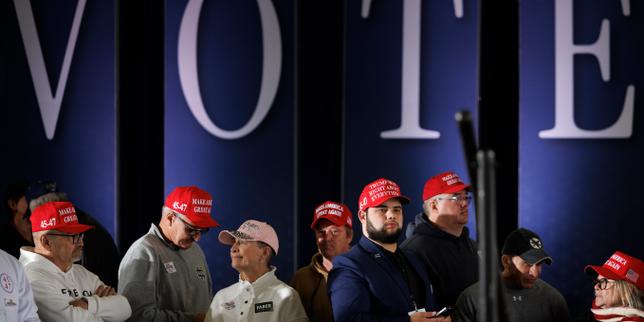
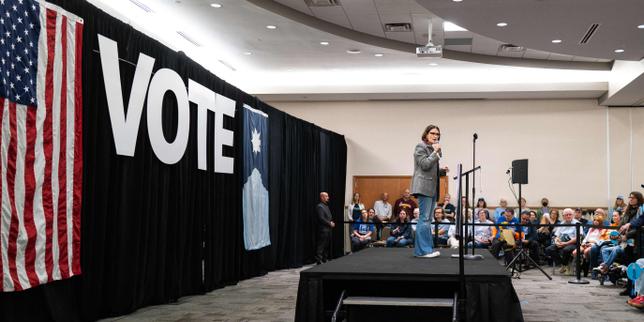
That spirit is surging again. You can see it in the packed town halls where Republican members of Congress face relentless questioning from their own constituents about healthcare costs, the national debt, and the rule of law. You can see it in the surge of small-dollar donations flowing to challengers in districts that were considered safely partisan just two years ago.
Beyond the Noise
It is easy, when staring at the fractured state of American politics, to surrender to cynicism. To believe that nothing ever changes, that the tribal lines are permanently etched in stone, and that outrage will always triumph over common sense. I have felt that cynicism myself, sitting in press rooms late at night, watching complex policy debates get reduced to thirty-second shouting matches.
Yet, spending time in communities like Minnesota reminds you that politics is ultimately a lagging indicator of culture, not its master. Beneath the deafening noise of partisan warfare, ordinary people still possess a remarkable capacity for self-correction. They watch. They listen. They weigh the promises made against the reality delivered. And when the gap between the two becomes an abyss, they act.
The massive rejection of Donald Trump unfolding across Minnesota—and mirroring a broader national awakening from Pennsylvania to Arizona—is not driven by blind ideological hatred. It is driven by something far more enduring: a demand for basic competence, economic honesty, and a return to sanity.
People are tired of being angry all the time. They are tired of watching their neighbors treated as enemies. They are tired of leaders who demand absolute loyalty while offering nothing in return except another fight.
As the November twilight settles over the Mississippi River, the ballots cast in school gymnasiums, church basements, and community centers across the North Star State will send a message that echoes far beyond the borders of the Midwest. It is a quiet, stubborn reminder that in a democracy, power is never owned—it is only borrowed, and the bill always comes due.