At six in the morning in a bakery just outside Lyon, the air smells of warm butter, scorched yeast, and exhaustion.
Consider a hypothetical baker—let’s call him Henri—who wakes up three hours before dawn every day to knead dough by hand. For twenty years, Henri has voted the way his father voted, out of habit and a quiet faith that the people in suits in Paris and Brussels knew how to keep the lights on. Last winter, when his electricity bill tripled in a single month, that faith cracked. He didn't read a white paper on European monetary policy or the geopolitical fallout of Russian gas pipelines. He just stared at a piece of paper on his flour-dusted counter and realized he couldn't afford to heat his ovens and pay his apprentice at the same time.
Multiply Henri by forty million. Put him on a tractor blocking a highway in Poland, in a cramped apartment in Lisbon where rent eats seventy percent of a teacher’s salary, or on a factory floor in northern Italy watching orders dry up.
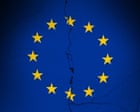
Europe is not merely entering a busy political calendar. Over the coming months and years, the continent is walking straight into a historic supercycle of national elections—a relentless, domino-like cascade of ballots from the Baltic states to the Mediterranean that threatens to rattle the very foundations of the European Union.
To understand why this moment feels so heavy, you have to strip away the sterile jargon of political science. Pundits love to talk about "institutional friction" and "voter volatility." Those are clean words for a messy, terrifying human reality. People across twenty-seven nations are tired. They are tired of inflation chewing through their savings, tired of feeling like strangers in their own neighborhoods, and deeply suspicious that the grand European project—once promised as a shield against war and poverty—has become a distant machine that no longer hears them.
The Architecture of a Fragile Peace
To see what is at risk, we have to remember what Europe actually is.
It is easy, sitting in a café in Vienna or a train station in Amsterdam, to take the European Union for granted. You cross borders without showing a passport. You buy coffee in Rome with the same coins you used in Dublin. For three generations, Western Europe has enjoyed the longest stretch of uninterrupted peace in its blood-soaked history.
Think of the EU not as a government, but as an intricate, load-bearing bridge built over a canyon of centuries-old hatreds. Every national government is a pillar supporting that bridge. For decades, those pillars were poured from the same concrete: moderate, center-left and center-right parties that disagreed on tax rates and healthcare budgets, yet agreed entirely on the fundamental rules of the road. They believed in open borders, shared currency, collective security, and the slow, grinding compromise of Brussels.
Now, the concrete is crumbling.
When we talk about an electoral supercycle, we are talking about a concentrated wave of national parliamentary and presidential votes happening back-to-back across Europe’s largest economies and its most strategic borderlands. Unlike the European Parliament elections—which voters historically treated as a low-stakes protest venue—national elections are where real power lives. National leaders sit in the European Council. They hold the veto pen. They decide whether the EU sends billions in aid to Ukraine, whether green energy mandates survive, how borders are policed, and whether the bloc expands or fractures.
And right now, across almost every corner of the map, the political center is losing its grip.
Inside the Pressure Cooker
Walk through the streets of any mid-sized European town today, and you can feel the static electricity in the air. I have spent years watching how economic anxiety curdles into political rage, and the pattern is always the same. It starts quietly, at the kitchen table, before it ever reaches the ballot box.
First comes the squeeze. Since the pandemic shattered supply chains and Russia’s invasion of Ukraine upended global energy markets, European households have absorbed shock after shock. Even as headline inflation cools, the price of groceries, heating, and housing remains stubbornly perched at heights that make middle-class life feel like a high-wire act without a net.
Then comes the blame.
When life gets harder, people look for someone to hold responsible. For a rising tide of populist, nationalist, and anti-establishment movements—from the far-right to the radical left—the culprit is obvious: Brussels. They point to ambitious climate regulations that force farmers to fallow land or homeowners to replace gas boilers at massive personal expense. They point to migration figures that have strained local schools, hospitals, and housing markets from Sweden to Spain.
"They care more about polar bears and foreign borders than they do about you," is the unspoken subtext of a thousand campaign speeches echoing across the continent.
It is a seductive message because it contains just enough truth to sting. Brussels has often moved faster than its citizens were ready to go. Technocrats drafted sweeping green transitions and regulatory frameworks in sterile glass buildings, assuming ordinary workers would gladly absorb the short-term pain for a cleaner, more integrated future. They forgot that when you are worried about next month's rent, twenty-year climate targets sound like a luxury meant for someone else.
The Domino Effect in Brussels
Here is where the mechanics of the supercycle become genuinely dangerous for the union's survival.
In the European Union, unanimity is required for the biggest decisions—foreign policy, taxation, treaty changes, and admitting new members. One angry prime minister can bring the entire continent to a screeching halt. We have already seen how Hungary’s Viktor Orbán has used his veto power as a bargaining chip, delaying critical aid packages and forcing painful concessions from the other twenty-six leaders.
Imagine what happens when it isn't just one leader playing spoiler, but four, five, or six.
Consider what happens next: a major founding member—say, France or Germany—experiences a political earthquake in its national vote. Suppose a nationalist party takes the reins of government, or forces a paralyzed coalition that cannot govern without appeasing hardliners. Suddenly, the Franco-German engine that has pulled Europe forward since the 1950s stalls out in the middle of the highway.
Without Berlin and Paris aligned, who leads?
If a critical mass of national governments shifts toward "Europe of Nations" nationalism, the EU doesn't necessarily collapse in a dramatic, overnight explosion like the fall of the Berlin Wall. Nobody needs to hold another Brexit referendum. Instead, something far quieter and more insidious happens: hollowing out.
Laws passed in Brussels simply go unenforced in Warsaw, Rome, or Bratislava. Border controls quietly creep back along highways that haven't seen a customs officer since the 1990s, strangling the single market that keeps European businesses alive. Defense spending remains fragmented and weak just as American security guarantees grow uncertain and Russian aggression tests NATO’s eastern flank.
The bridge doesn't fall into the canyon all at once. People just stop maintaining it until the steel rusts through.
The Human Cost of Paralysis
It is easy to treat this like a thrilling spectator sport—a high-stakes chess match between seasoned technocrats and charismatic firebrands. But step away from the polling charts and look at the people caught in the gears.
Think about a young software engineer in Bucharest, whose entire adult life has been shaped by the promise that Romania’s integration into Europe meant escaping corruption and building a modern economy. If Europe turns inward and stalls enlargement or cuts cohesion funds, her horizon shrinks overnight.
Think about a Ukrainian soldier in a muddy trench near Kharkiv, whose ammunition supply depends directly on whether European capitals can agree on joint defense manufacturing and financial aid. A shift in three or four European parliaments isn't an academic debate to him; it is the difference between holding the line and running out of shells.
And think back to Henri, our baker in Lyon.
Does a nationalist government in Paris or a fractured coalition in Berlin actually lower the price of his flour or stabilize global energy markets? History suggests the opposite. Economic nationalism—tariffs, border friction, currency instability, and the fracturing of the world’s largest single trading bloc—almost always hits small businesses and working families first. When investors lose faith in European stability, borrowing costs rise for governments, which means fewer subsidies, higher taxes, and steeper interest rates on the loans Henri needs to keep his bakery running.
The tragedy of this political moment is that the cure voters are reaching for may poison the patient. Yet you cannot lecture a drowning person about the flaws of the lifeboat they are grabbing onto.
The Reckoning
I wish I could tell you there is a neat, painless exit ramp from this crisis. There isn't. Anyone pretending the European project is invincible hasn't been paying attention to history, and anyone cheering for its demise hasn't thought through what replaces a unified continent in a world dominated by ruthless superpowers like the United States and China.
Alone, even Germany or France is a mid-sized economy trying to negotiate with giants. Together, four hundred and fifty million Europeans possess immense economic gravity, regulatory power, and cultural clout. Dividing that strength into twenty-seven competing fragments doesn't restore sovereignty; it guarantees irrelevance.
Yet survival requires more than fearmongering about the alternative. The leaders defending the European idea have to stop treating voters like unruly children who simply don't understand how good they have it.
If the center wants to hold through this electoral storm, it has to prove that Europe works for the people who wake up at three in the morning to bake the bread, drive the trucks, and teach the classes. That means slowing down regulations that crush small producers without offering real financial lifelines. It means securing external borders humanely and competently so communities don't feel abandoned. Most of all, it means speaking honestly about the costs of security and climate transition instead of hiding behind bureaucratic euphemisms.
The ballots are already being printed. Over the next few years, millions of hands will drop paper slips into plastic boxes from Helsinki to Madrid, each voter carrying their own private weight of fear, pride, anger, and hope.
By the time the dust settles on this supercycle, the map of Europe will look the same on paper. The rivers will still run to the sea, the trains will still cross the Alps, and the flags will still fly outside the glass towers in Brussels. The only question left will be whether the promise behind them is still alive—or whether Europe quietly voted to dismantle the greatest peace project the world has ever known, one election at a time.