Silence.
In the windowless basement of the West Wing, beneath the hum of air scrubbers and the low murmur of encrypted phones, silence is rarely peaceful—it is usually the breath held right before someone orders a strike that cannot be undone.
Consider a hypothetical scene, grounded in the real geopolitical reality reported by outlets like Arab News and echoed across Washington briefing rooms. Imagine a Marine veteran from Ohio—a man who spent twenty years watching young men from towns like Middletown come home in flag-draped boxes from wars that started with confident speeches and ended in endless quagmires—sitting across a mahogany table from intelligence directors and four-star generals. Vice President JD Vance is looking at satellite imagery of burning refineries, choked shipping lanes in the Strait of Hormuz, and missile batteries pointed at American bases across the Persian Gulf. The generals have a menu of targets. The hawks on cable news have a menu of slogans. Vance, according to recent reporting, is considering something far more dangerous to a politician’s career, and far more necessary for the rest of us: picking up the phone and talking directly to Iran to end the war.
Wait. Stop and feel the shockwave of that sentence.
For nearly half a century, talking directly to the Islamic Republic of Iran has been treated in Washington like touching a third rail wrapped in barbed wire. Every president since Jimmy Carter has danced around the ghost of the 1979 hostage crisis, terrified of looking weak, terrified of appearing to appease a regime whose proxies have spilled American blood from Beirut to Baghdad. Yet here we are, staring down the barrel of a widening Middle Eastern war, and the vice president of the United States—a man whose political brand was forged in populist skepticism of foreign intervention—is weighing direct diplomacy with Tehran.
To understand why this matters, you have to step outside the sterile briefing rooms and look at what war actually costs when nobody is looking at the cameras.
The Invisible Arithmetic of Escalation
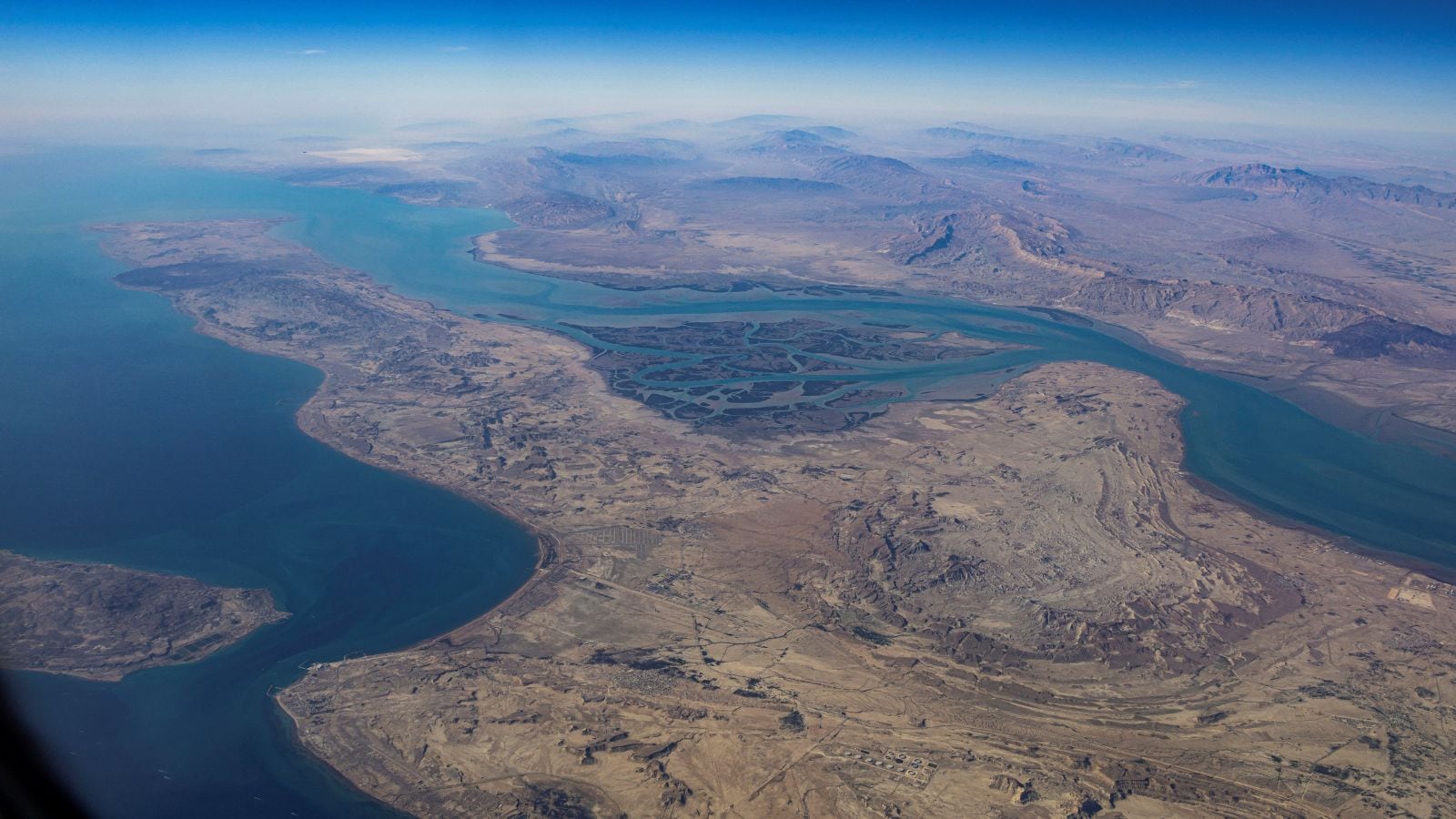
Let us leave Washington for a moment and picture another hypothetical human being—call her Elena—standing in front of a grocery store shelf in Toledo, Ohio, or maybe a small business owner in Tampa, Florida. Elena does not follow diplomatic cables. She does not know the difference between the Islamic Revolutionary Guard Corps and Iran’s regular army. What she knows is that when missiles fly over the Strait of Hormuz, where roughly a fifth of the world’s petroleum liquids pass through a narrow chokepoint barely twenty-one miles wide at its tightest point, the price of diesel jumps overnight.
When diesel jumps, the semi-truck hauling apples from Washington State or fertilizer to Iowa farms costs hundreds of dollars more to fill up. That cost lands on Elena’s receipt at the register. Meanwhile, twenty-two-year-old kids from her neighborhood—kids who joined the Navy to pay for college or learn a trade—are sitting on destroyers in the Red Sea and the Persian Gulf, watching radar screens glow green with incoming drones and ballistic missiles, knowing that a single software glitch or a single saturated air-defense battery means they never see their mothers again.
This is the invisible arithmetic of modern conflict. Politicians talk about "deterrence" and "red lines" as if they are chess pieces made of carved ivory. They are not. Every move on that board is paid for in blood, inflation, and years of stolen sleep.
I remember sitting in a crowded, fluorescent-lit waiting room at a VA clinic years ago, listening to a former tank mechanic describe what happens when a war loses its exit ramp. He smelled faintly of coffee and rain, his hands resting flat on his knees as he spoke with the quiet, unhurried certainty of someone who had already survived the worst day of his life. "Getting in takes ten minutes and a press conference," he told me. "Getting out takes twenty years and a generation of kids who don't know why they were there."
That memory sits heavy whenever Washington starts beating the drums for another round of kinetic escalation. Because once a war begins, pride becomes the deadliest weapon on the battlefield. Neither side wants to blink first. Tehran’s leadership, fractured between hardline clerics and pragmatic survivalists, fears that stopping without a concession will look like surrender to their own restive population. Washington’s hawks fear that offering an off-ramp will look like capitulation to an adversary that has chanted "Death to America" since the Carter administration.
And so both sides keep swinging, each blow slightly harder than the last, locked in a feedback loop that nobody controls.
Why Direct Diplomacy Terrifies the Establishment
You might wonder why a simple conversation between two governments causes so much panic in the halls of Congress. Why not just talk? After all, isn't that what diplomats are paid to do?
Think of international diplomacy not as a friendly chat over coffee, but as two people holding loaded weapons in a dark room trying to figure out how to set them down at the exact same second without getting shot. If you drop yours first, you are vulnerable. If you refuse to lower yours at all, eventually someone’s finger slips on the trigger.
For decades, the United States and Iran have relied on intermediaries—Omani sultans, Swiss diplomats, Qatari envoys—passing notes back and forth like schoolchildren afraid to look each other in the eye. Indirect diplomacy feels safe because it offers plausible deniability. If a message goes wrong, you can blame the messenger or claim you were misquoted.
Direct diplomacy strips away that safety net.
According to reports from Arab News and diplomatic observers tracking the administration's internal debates, Vance’s willingness to consider direct engagement with Tehran represents a sharp break from conventional Washington orthodoxy. When a vice president sits down—or authorizes a direct, unmediated channel—with Iranian officials during active hostilities, it sends an unmistakable signal: the status quo is unsustainable, and military force alone cannot produce a durable peace.
Look at history, and you will see this pattern repeat itself with uncanny precision.
In October 1962, during the thirteen days of the Cuban Missile Crisis, John F. Kennedy was surrounded by military advisors urging immediate airstrikes and an invasion of Cuba. Had Kennedy followed the textbook logic of looking "tough," nuclear war would almost certainly have followed. Instead, he opened a direct, back-channel conversation with Nikita Khrushchev through Robert Kennedy and Soviet Ambassador Anatoly Dobrynin. They traded quiet concessions—the removal of Soviet missiles in Cuba for the eventual, quiet removal of American Jupiter missiles in Turkey—and stepped back from the abyss.
A decade later, Richard Nixon, a man who built his entire political career on ferocious anti-communism, flew to Beijing to shake hands with Mao Zedong. Only someone with unimpeachable nationalist credentials could survive the political fallout of talking to an ideological enemy.
That is the paradox of political courage: sometimes it takes a hawk, or a populist skeptic of liberal internationalism, to break the taboo that keeps a nation trapped in a forever war.
Inside the Resistance to Peace
Of course, the moment whispers of direct diplomacy with Iran leak to the press, the counteroffensive begins in Washington. It is predictable, loud, and deeply persuasive if you only listen to the surface arguments.
Critics argue—and they are not entirely wrong to raise the alarm—that Iran’s government has a long, documented history of using negotiations to buy time. They point to the 2015 Joint Comprehensive Plan of Action, arguing that sanctions relief simply filled Tehran’s coffers to fund regional militias like Hezbollah, Hamas, and the Houthis. They warn that talking while missiles are still flying rewards aggression and tells every authoritarian regime from Moscow to Pyongyang that if you shoot at American forces long enough, Washington will eventually come to the table begging for peace.
These fears are real. Pretending otherwise would be dishonest. Dealing with Tehran is not like negotiating a trade deal with Canada. The Iranian leadership is opaque, ideologically rigid, and deeply suspicious of American intentions—especially after the United States unilaterally withdrew from the nuclear accord in 2018. Trust does not exist between these two capitals. Not a drop of it.
But consider what happens next if those arguments win the day and direct talks are rejected.
What is the alternative? Let us look squarely at the options on the table if diplomacy is off-limits:
- Sustained aerial bombardment: We can destroy Iranian radar sites, naval vessels, and missile factories. Yet history—from Vietnam to Iraq to Gaza—proves that airpower alone rarely breaks the political will of an entrenched regime. Instead, bombs falling on Iranian soil tend to rally ordinary Iranians, even those who despise their own government, around the flag.
- Full-scale regime change: Anyone who remembers the rubble of Fallujah or the trillion-dollar graveyard of the 2003 Iraq invasion knows what a ground war in a mountainous nation of nearly ninety million people would look like. It would not be a surgical strike. It would be an generational catastrophe that would dwarf every Middle Eastern conflict of the twenty-first century.
- Frozen attrition: We stay in a permanent state of low-grade war—intercepting drones at a million dollars a pop while Iran launches them for twenty thousand dollars each, bleeding our treasury and exhausting our military readiness while China watches quietly from the sidelines.
When you lay those options bare, the criticism of diplomacy suddenly looks very different. Talking to an enemy is not a gift you give them. It is a tool you use to protect your own people when bullets and bombs have reached the limit of what they can achieve.
The Human Stakes Behind Closed Doors
Let us return to that quiet room in Washington, and let us think about the weight resting on JD Vance’s shoulders—and on the shoulders of anyone advising him.
Publicly, politics is theater. It is soundbites clipped for social media, sharp elbows at rallies, and ideological purity tests designed to keep donors happy. Privately, governing in wartime is lonely, terrifying work. You are reading intelligence assessments stamped with words like high confidence or low confidence, knowing that both phrases can mask catastrophic blind spots. You are looking at maps where red arrows represent human beings—American sailors, Israeli civilians, Iranian conscripts who had no say in the policies of the ayatollahs—all caught inside a machine that grinds lives into statistics.
Vance’s background gives him a lens that few in the foreign policy establishment possess. Having served in the Marines during the Iraq War, he saw firsthand the gap between the clean, confident promises made in Washington think tanks and the messy, brutal reality on the ground. You do not walk away from that experience believing that military force is a magic wand. You walk away knowing that every war eventually ends at a table—the only question is how many people have to die before someone pulls up a chair.
If Vance pushes forward with direct diplomacy, he will face ferocious blowback from allies in Congress, from regional partners who want Iran permanently crippled, and from commentators who equate any conversation with weakness. He will have to navigate a labyrinth of demands: halting attacks on commercial shipping, reining in regional proxies, addressing Iran’s nuclear threshold, and establishing verifiable guardrails so neither side stumbles into accidental escalation.
And there is no guarantee it will work.
That is the hardest truth to swallow. Diplomacy is not a fairytale where two enemies shake hands and suddenly become friends. Even if direct talks happen, they will be tense, ugly, and filled with walkouts, threats, and broken promises. Tehran may overplay its hand, demanding concessions no American administration could ever grant. Hardliners in the IRGC may launch a provocation specifically designed to sabotage the talks and humiliate the diplomats.
Yet trying—and risking political bruising to find an exit—is infinitely braver than standing behind a podium and ordering another round of airstrikes simply because it polls well on cable news.
What Peace Actually Looks Like
If you expect a peace agreement with Iran to look like a triumphant parade down Pennsylvania Avenue, you will be disappointed. Real diplomacy never looks like victory. It looks like compromise. It looks like two exhausted adversaries agreeing on a set of rules they both dislike, simply because the alternative is ruin for everyone involved.
In practical terms, direct engagement led or backed by Vance would likely focus on immediate de-escalation rather than solving forty-seven years of hostility overnight. It means establishing a direct hotline between military commanders so a misread radar blip in the Persian Gulf does not trigger an accidental war. It means trading targeted relief from crippling economic isolation for concrete, verifiable freezes on missile strikes and nuclear enrichment. It means recognizing that Iran is a permanent geographic reality in the Middle East, and that coexistence—however cold, guarded, and transactional—beats endless war.
Think back to Elena standing in that grocery aisle in Toledo, checking the price of eggs and milk while her nephew packs his sea bag for a deployment to the Fifth Fleet. She does not care whether Washington scores ideological points against Tehran. She cares whether her nephew comes home whole, and whether her family can afford to live without the constant shadow of a global energy shock hanging over their kitchen table.
Diplomacy is how you honor that quiet, everyday hope.
Outside the West Wing, the evening traffic creeps along Constitution Avenue, headlights washing over wet asphalt as commuters head home to dinner tables and bedtime stories, unaware of how close the world sits to the edge of another abyss. Somewhere in the dark below, a secure line waits to be picked up, carrying the fragile, terrifying possibility that two enemies might finally choose to speak before the guns speak for them.