The Demilitarized Zone has long served as a fragile scar across the Korean Peninsula, separating two heavily armed adversaries by mere centimeters of concrete and barbed wire. When an explosion shattered the quiet of a routine patrol along that border, injuring three South Korean soldiers, the immediate aftermath followed a depressingly familiar script. Seoul pointed an accusing finger northwards, citing explosive devices deliberately planted within the southern sector. Pyongyang responded with flat denials, dismissing the entire incident as an elaborate fabrication designed to escalate regional hostility.
This diplomatic collision reveals far more than routine border posturing. It exposes the structural fragility of the armistice architecture that has governed the peninsula since nineteen fifty-three. Every explosion, every movement of troops, and every public statement carries immense weight, capable of converting a localized tactical accident into a wider geopolitical crisis. Understanding the trajectory of this dispute requires looking past the immediate rhetorical volleys and examining the operational realities of the inter-Korean border, where trust has been entirely replaced by mutual suspicion.
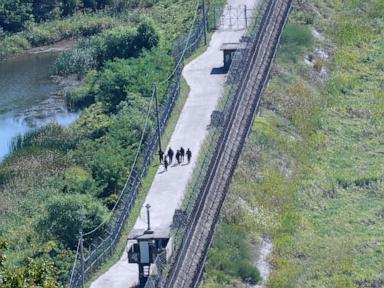
The incident occurred during a standard patrol operation inside the southern portion of the Demilitarized Zone. Investigators from the South Korean military reported that landmines detonated unexpectedly, causing severe injuries to personnel and immediate emergency evacuations. Subsequent analysis of the shrapnel and detonation patterns led defense officials in Seoul to conclude that modern explosive devices had been recently laid beneath the surface, bypassing legacy minefields dating back to the Korean War. This technical assertion formed the backbone of the official accusation, framing the event not as a tragic malfunction of aging munitions, but as a deliberate hostile act.
Pyongyang rejected these claims through state-controlled media channels, categorizing the episode as a complete falsehood orchestrated by authorities in Seoul. The official stance from North Korea argued that accusing the northern leadership of planting ordnance within the southern zone defies logic, suggesting instead that the southern military manufactured the crisis to justify increased defense spending and closer alignment with external security partners. This defensive posture relies on standard rhetorical playbooks that inverse responsibility, portraying the accuser as the actual aggressor.
Beneath the dueling narratives lies a deeply entrenched operational environment. The Demilitarized Zone, despite its name, remains one of the most heavily fortified frontiers on earth. Millions of unexploded ordnance items from the mid-century conflict still litter the terrain, alongside newer defensive networks established by both sides over decades of confrontation. Because military intelligence departments on both sides monitor every square meter through high-resolution optics, acoustic sensors, and reconnaissance patrols, neither military operates in a vacuum. Yet, the fog of the borderland often
Pyongyang Denies the DMZ Mine Blasts Behind the Rhetoric
news, world
Pyongyang rejected any responsibility for the border explosions that severely maimed three South Korean soldiers in the demilitarized zone, labeling the incident an elaborate fabrication by Seoul.
The denial fits a familiar choreography of confrontation along the world's most heavily fortified frontier. When an explosion shattered the silence of the demilitarized zone, permanently altering the lives of three young men on patrol, the immediate aftermath followed a well-worn path of accusation and flat-faced rejection. North Korea insists the wood-box landmine detonation never happened, or if it did, the South manufactured the crisis to justify an escalation in psychological warfare and cross-border broadcasts.
Decades of reporting from the edges of the Korean peninsula teach a cynical lesson. Every meter of the four-kilometer-wide buffer zone is mapped, wired, and watched. Nothing happens by accident in the strip of earth dividing the two nations.
The Anatomy of a Frontier Provocation
The incident itself involves a specific kind of ordnance. Older wooden-box mines, packed with high explosives and encased in wood to evade basic metal detectors, are vintage weapons still favored for low-signature area denial. When a soldier steps on one, the result is catastrophic orthopedic trauma. The blast pattern directs energy upward, destroying limbs and shattering pelvises while leaving the rest of the body intact enough to ensure a heavy medical and logistical burden on the opposing force.
Seoul points the finger at reconnaissance units creeping across the Military Demarcation Line under the cover of night to plant these lethal packages along known patrol tracks. Pyongyang counters that such an operation is technologically absurd, logistically impossible, and politically counterproductive, accusing the South Korean intelligence apparatus of staging the event to manufacture domestic political consensus.
This standoff exposes the fundamental fracture of the border. Both sides lie, both sides spin, and both sides operate with a paranoia born of an armistice that has never been finalized into a permanent peace treaty.
Behind the Propaganda Wall
To understand why North Korea reacts with such immediate, flat denials, one has to examine the domestic utility of external crises for the regime. External threats justify internal sacrifices. Every border skirmish, every verbal assault from the state news agency, and every rejected allegation serves a dual purpose. It hardens the domestic population against an external enemy and tests the resolve of the alliance between Seoul and Washington.
When an explosion maims soldiers, the political shockwaves ripple far beyond the immediate blast site. South Korea responds with measures that sting, such as restarting loudspeaker broadcasts blaring K-pop, news, and political commentary across the border. For an isolated regime that relies on absolute information control, those audio waves are more dangerous than conventional artillery. They punch holes in the state narrative.
By denying the mine-laying operation entirely, Pyongyang attempts to short-circuit the justification for those broadcasts. If the mines were never planted, the propaganda campaign is unprovoked aggression. It is a classic inversion of reality, executed with the routine efficiency of a state apparatus that has spent three quarters of a century perfecting the art of psychological warfare.
The Cost of Perpetual Suspense
The real tragedy of the demilitarized zone is not just the physical devastation wrought by hidden explosives, but the systemic numbness it induces in the international community. Incidents flare, statements are issued, emergency meetings are called, and then the news cycle moves on. The soldiers live with the lifelong consequences of missing limbs and chronic pain. The families carry the grief. The governments return to their entrenched positions, waiting for the next spark.
No amount of diplomatic maneuvering or investigative bluster changes the brutal geometry of the border. Mines remain in the soil, rust eats away at old metal and wood, and young patrols continue to walk the line between routine vigilance and sudden violence. The denials will keep coming, smooth and predictable, masking the grim reality of a war that never truly ended.