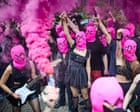
Art and politics don't just sit next to each other at the Venice Biennale. They collide. When Pussy Riot showed up at the Russian pavilion, they weren't there for the prosecco or the networking. They came to shut it down. They succeeded, even if it was only for a moment. This wasn't some polite disagreement in a gallery. It was a visceral reaction to war, state-sponsored violence, and the role of culture in a world that’s currently on fire.
If you think art festivals are just for the elite to look at pretty things, you're missing the point. The Russian pavilion became a ghost ship in 2022 and 2024 because the artists and curators realized they couldn't represent a country while its government was dropping bombs. Pussy Riot just made sure the world didn't look away from that empty building. They forced a conversation about what it means to represent a nation when that nation is committing atrocities.
The day the music stopped at the Russian pavilion
The scene was chaotic. Maria Alyokhina and her team didn't ask for permission. They stood in front of the padlocked Russian pavilion with signs and photos documenting the devastation in Ukraine. This wasn't about "dialogue" or "nuance." It was about accountability. The Italian police arrived quickly, but the images had already gone viral. That’s the power of the group. They know how to weaponize a visual.
You have to understand the geography of Venice to get why this worked. The Giardini is a cluster of permanent national pavilions. It’s like a cultural United Nations. When one of those buildings stays empty or gets picketed, it creates a massive, uncomfortable void. You can't ignore it. You walk past the French pavilion, the British pavilion, and then you hit the Russian one. It stands there as a monument to what’s wrong.
Pussy Riot used this space to remind the art world that neutrality is a lie. If you're silent, you're helping the status quo. Their protest forced the Biennale organizers to take a harder stance. It wasn't just a PR stunt. It was a tactical strike on a symbol of Russian soft power.
Why the art world can't stay neutral anymore
For years, big art events tried to stay "above" politics. That era is dead. The Pussy Riot protest proved that the venue itself is a message. By forcing the pavilion to close or highlighting its vacancy, they turned a building into a witness.
Think about the risk these women take. Alyokhina had literally just escaped Russia by disguising herself as a food delivery rider to dodge the police. She didn't fly to Venice for a vacation. She came because she knows that the Kremlin uses culture to look "normal" on the world stage. When you strip away that normalcy, the regime loses one of its most effective masks.
The protest also highlighted a massive divide in the Russian art community. On one side, you have the state-funded bureaucrats who want to keep the lights on and the champagne flowing. On the other, you have artists who would rather see their careers burn than serve as a billboard for Putin. The closure of the pavilion wasn't just a victory for activists; it was a heartbreaking moment for Russian artists who actually believe in freedom.
The logistics of a high-stakes protest
How do you pull this off? You don't just walk in with a sharpie. You need a team. You need timing. Pussy Riot has spent years perfecting the art of the "hit and run" protest.
- Timing is everything: They struck during the preview days when the world's most influential critics and collectors were on-site.
- Visual impact: They used high-contrast posters and neon clothing. It's designed to be photographed.
- Message clarity: They didn't use academic jargon. They used photos of bombed buildings.
They knew the police would come. They knew they might be detained. But the goal was the digital footprint. In 2026, a protest that isn't captured on a smartphone didn't happen. By the time the police cleared the area, the photos were already on every major news feed in Europe.
What this means for the future of the Biennale
The Venice Biennale is now at a crossroads. Can it continue to be a collection of national pavilions? When countries are at war, the Giardini feels like a minefield. There’s been talk about moving away from the national model entirely. Critics argue it's an outdated 19th-century concept that doesn't fit a globalized, fractured world.
Pussy Riot’s intervention pushed this debate to the forefront. If a pavilion can be "briefly closed" by a few activists with posters, how much power does that national symbol actually have? It’s fragile. It’s vulnerable.
Some people say art should be a bridge. Pussy Riot says some bridges deserve to be burned. They aren't interested in building a bridge to a government that poisons its critics and invades its neighbors. They want to burn the bridge so the people on the other side are forced to choose a different path.
How you can support dissident art today
You don't have to fly to Italy and get chased by the Carabinieri to make a difference. The ripple effect of the Venice protest is about awareness and funding. Dissident artists are often broke, in exile, or in prison.
Don't just watch the news; look at where the money goes. Supporting organizations like the Voice of Free Russia or local Ukrainian relief funds is a direct way to counter the narrative the Russian state tries to project. Pay attention to the artists who are being censored. Read their work. Share their stories.
The Pussy Riot protest wasn't an isolated event. It was a blueprint. It showed that even in the most guarded, elite spaces in the world, a small group of determined people can disrupt the machine. The Russian pavilion might have only closed "briefly," but the message stayed open. Stop waiting for institutions to do the right thing. They usually only act when someone makes it too embarrassing for them to stay silent. Keep making things uncomfortable for the people in power. That's how things actually change.
Check the schedules of local independent galleries. They often host exiled artists who don't have the backing of a national pavilion. Go to their shows. Buy their prints. The best way to fight state-controlled art is to fund the people the state is trying to silence. The protest in Venice was a spark, but you're the one who keeps the fire going.


