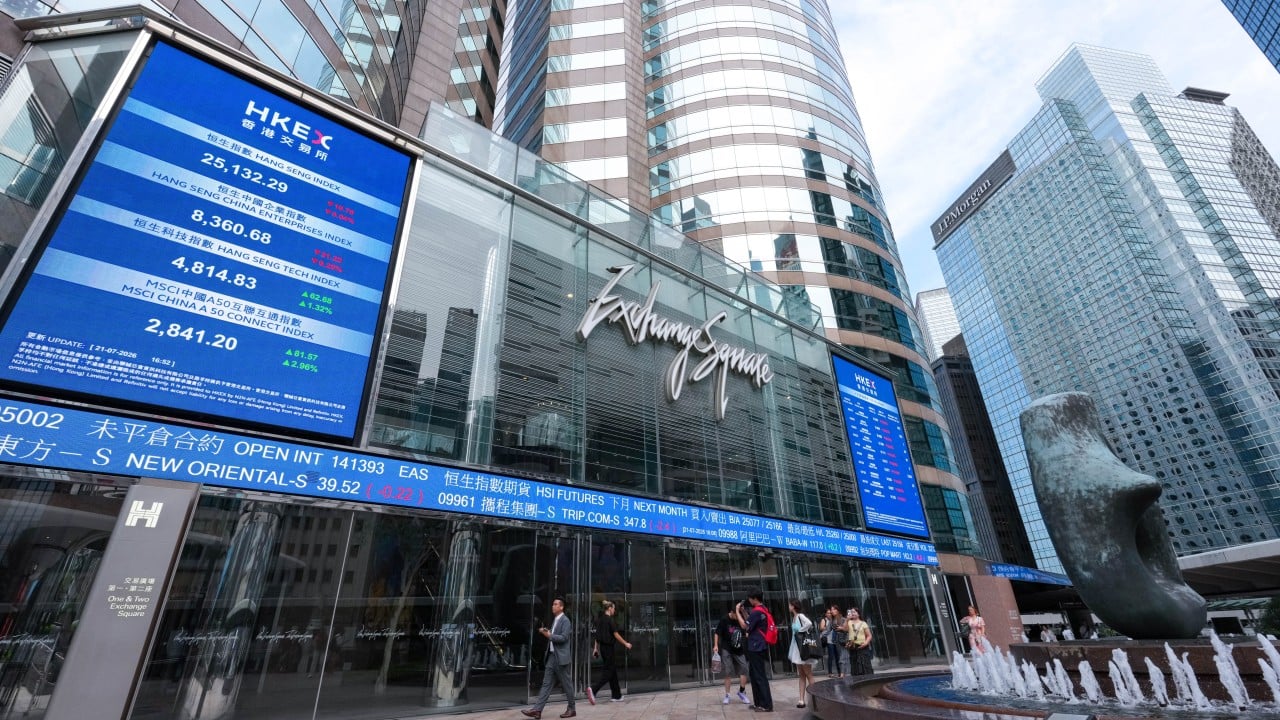
Capital allocation shifts rarely occur in smooth, linear gradients; instead, they represent violent systemic reactions to localized overexposure. As speculative capital cycles face steep depreciation pressures across Western technology indices, a distinct structural rotation is targeting the Hong Kong exchange. This behavior is mischaracterized in mainstream commentary as a simple "flight to safety". In operational reality, institutional positioning within the Hang Seng Index reflects a calculated response to compressed pricing multiples, domestic liquidity hoarding, and changing capital expenditure models in machine learning hardware. Deconstructing this capital migration requires analyzing the pricing anomalies, institutional cost functions, and fundamental macroeconomic variables dictating asset reallocation.
The Mechanics of Multiplied Disparities
The fundamental driver behind the recent capital rotation into Hong Kong equities is an extreme valuation divergence between mainland renminbi-denominated A-shares and Hong Kong-listed H-shares. Historically, identical corporate entities listed across both venues traded at varying spreads due to capital controls and differing investor bases. However, the current discount of H-shares relative to their A-share counterparts exceeds historical baseline deviations, reaching over thirty percent for key industrial and semiconductor constituents.
This valuation gap creates an immediate structural arbitrage window for institutional allocators. When global technology equities experience margin contraction driven by excessive infrastructure spending and uncertain monetization timelines, capital seeks assets with protected downside coefficients. The Hang Seng Index functions as a liquidity valve. It offers direct exposure to localized cash-generative conglomerates and platform companies whose price-to-earnings ratios sit well below global sector medians, often trading at single-digit or low double-digit multiples.
Yet, treating this index purely as a discounted asset pool ignores the macro constraints operating within the domestic Chinese economy. Elevated household savings rates, persistent real estate debt restructuring, and a contraction in localized property fixed-asset formation create a domestic liquidity trap. Capital cannot find adequate organic yield within mainland commercial property or private credit channels. Institutional funds are forced outward or toward liquid public equities that maintain international clearing access. Consequently, the accumulation of Hang Seng constituents is less an endorsement of regional growth acceleration and more a defensive positioning maneuver designed to acquire hard-asset exposure at distressed historical valuations.
Structural Pressures and Artificial Intelligence Disruption
Market commentary often treats artificial intelligence development as a uniform tailwind or headwind for Asian equities, missing the internal bifurcation occurring within the supply chain. The emergence of highly efficient, low-compute foundational models originating from domestic market competitors has altered the capital expenditure calculus for hardware providers.
Traditional market logic dictated that exponential demand for compute would permanently underwrite high valuations for upstream semiconductor fabricators and hyperscalers. The market validation of architectures requiring a fraction of the parameter-training compute, however, introduces a deflationary impulse to the AI infrastructure stack. Companies heavily exposed to high-end GPU clusters face compressed unit economics if inference costs drop precipitously.
This technological shift impacts the Hang Seng Index through two opposing vectors:
- Upstream Margin Compression: Capital-intensive hardware suppliers and legacy platform aggregators face valuation downgrades as investors reprice future cash flows under lower infrastructure intensity assumptions.
- Downstream Operational Efficiency: Enterprises capable of integrating low-cost generative models into existing logistics, e-commerce, and enterprise software stacks realize immediate operational expenditure reductions, expanding net margins independent of top-line revenue expansion.
This bifurcation explains why broad index movements mask sharp intraday sector rotations. Capital is actively pruning high-duration, speculative tech exposure while concentrating in companies with robust free cash flow yields and tangible dividend distribution policies.
Liquidity Channels and Institutional Re-Rating Catalysts
Understanding the velocity of capital inflows into the Hong Kong market requires tracking the mechanics of cross-border investment conduits and primary market liquidity injections. Large-scale initial public offerings from dominant mainland enterprises—spanning advanced manufacturing, battery ecosystems, and specialized pharmaceuticals—have successfully tested the market's absorption capacity. Crucially, the proceeds from these capital raises are earmarked primarily for operational research and development rather than speculative balance sheet engineering. This operational deployment of capital provides a fundamental floor for institutional confidence.
Furthermore, currency dynamics play a deterministic role in shaping foreign institutional participation. As the structural strength of the US dollar fluctuates under changing sovereign debt issuance patterns and shifting interest rate expectations, the Hong Kong dollar peg anchors foreign capital against severe currency depreciation risks. When combined with localized monetary interventions aimed at stabilizing capital markets, institutional allocators find a predictable settlement environment that reduces foreign exchange volatility penalties.
Quantitative Limitations and Tail Risks
Despite the structural attractiveness of discounted valuations, asset managers executing this rotation face distinct operational bottlenecks. The primary risk variable is regulatory unpredictability. Because a substantial percentage of the Hang Seng Index market capitalization comprises platform enterprises subject to shifting administrative mandates, equity risk premiums must incorporate regulatory intervention vectors that do not exist in Western jurisdictions.
Additionally, correlation risks remain high. When global macroeconomic shocks trigger broad emerging market liquidations, foreign institutional funds frequently execute blanket sell programs, treating liquid Hong Kong proxies as a convenient cash-raising vehicle regardless of individual corporate fundamentals. The arbitrage opportunity presented by the A-H share discount can therefore persist—and even widen—during periods of generalized systemic stress, punishing leveraged participants who fail to account for duration risk.
Reallocate capital exposure toward Hang Seng constituents exhibiting a price-to-earnings ratio beneath sector medians, free cash flow yields exceeding five percent, and zero dependency on high-leverage property assets. Isolate holdings away from high-beta infrastructure suppliers facing pricing deflation from low-compute architectural shifts, concentrating instead on vertically integrated logistics and enterprise software platforms monetizing operational efficiencies today.