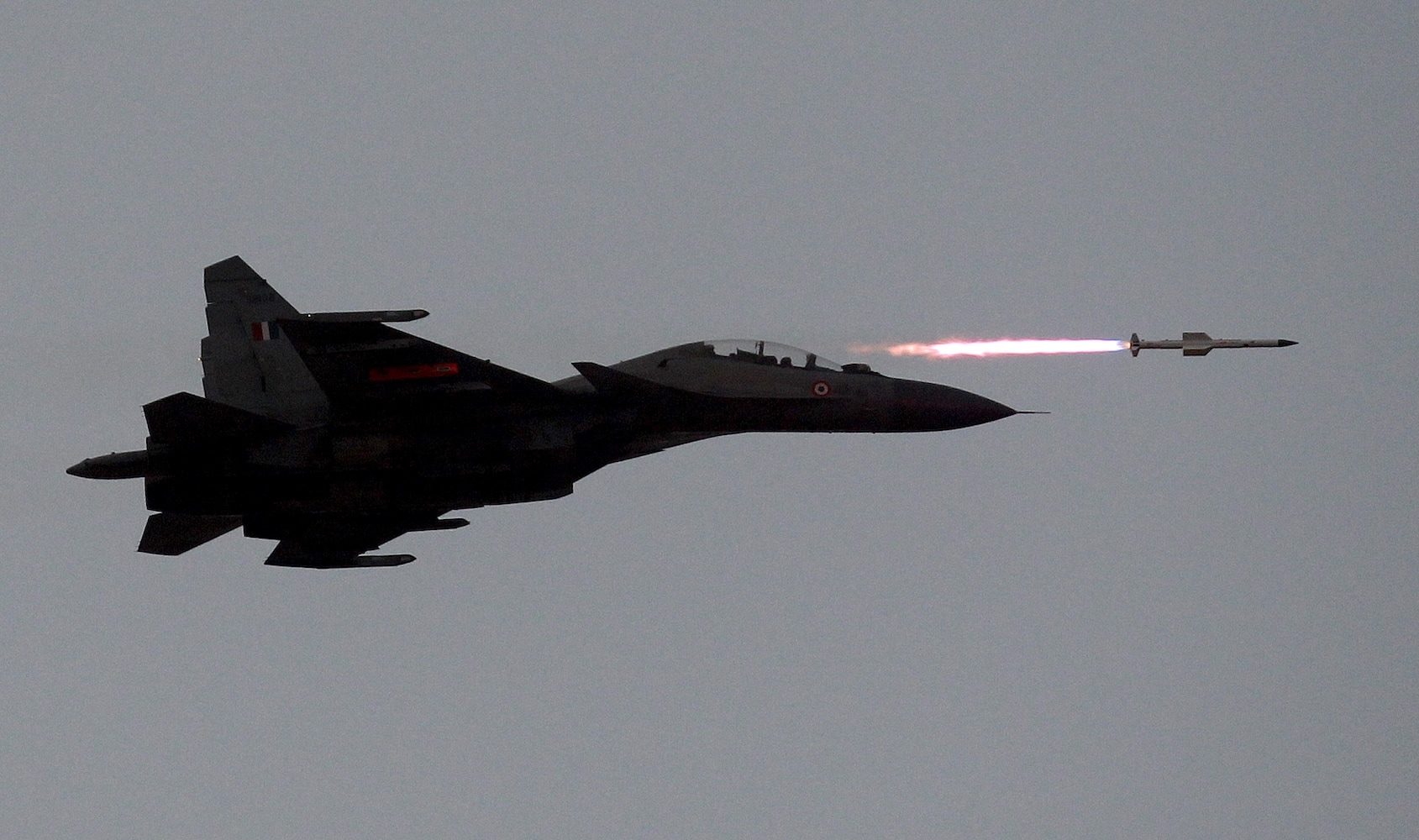
The ledger of human anxiety is measured in thirteen digits.
Last year, the global ledger for military spending reached an astronomical checkpoint: $2.44 trillion. It is a number so vast that it ceases to mean anything to the human brain. It becomes a statistic, a bloodless constellation of zeros shifting across a spreadsheet. We look at it, nod, and turn the page.
But numbers do not bleed. People do.
To understand what $2.44 trillion actually means, you have to leave the glass towers of think tanks and sit in a drafty room in a border village, or look at the calloused hands of a machinist tooling a shell casing, or watch a software engineer in Bengaluru optimize a targeting algorithm instead of a medical diagnostic tool. That staggering sum is not just capital; it is the diverted kinetic energy of our species. It is the cost of our collective inability to trust one another.
The Weight of the Ledger
Imagine a woman named Priya. She is fictional, but she represents millions of real people living along the shifting geopolitical fault lines of South Asia. Priya runs a small electronics repair shop in a town not far from the northern frontier. She knows the exact price of a lithium-ion battery, the cost of kerosene, and how much she needs to save each month for her daughter’s education.
She does not think about global military expenditure.
Yet, the invisible gravity of that $2.44 trillion shapes her life every single day. When the Stockholm International Peace Research Institute (SIPRI) released its annual accounting, the data revealed that global military spending had surged by 6.8 percent in real terms. This was the steepest year-on-year increase since 2009. Every single geographic region monitored by analysts saw its defense budgets swell.
The world is arming itself at a pace not seen since the frostiest depths of the Cold War.
For Priya, this macro-trend manifests locally. India now sits firmly as the fourth-largest military spender on the planet, allocating roughly $83.6 billion to its defense apparatus. It is a staggering commitment. When you walk through Priya’s town, you see the physical manifestations of this priority. You see the transport trucks rumbling down the highway, the upgraded radar installations on the ridgeline, the recruit posters in the market square.
But you also see the potholes that swallow truck tires whole. You see the government clinics waiting on basic equipment.
This is the central, agonizing paradox of the modern nation-state. Is a country secure if its borders are impregnable, but its children are malnourished? Conversely, can a country afford to fund healthcare and education if its neighbors are stockpiling precision-guided munitions just across the river?
There are no clean answers. Only trade-offs.
The Neighborhood and the Scale
To criticize India’s defense budget without context is an exercise in profound naivety. Nations do not build armies in a vacuum. They build them in response to the shadows cast by their neighbors.
Look at the map. To the north lies China, a geopolitical behemoth that spent an estimated $296 billion on its military last year. That is more than three times India’s budget. Beijing’s defense spending has grown for 29 consecutive years, a relentless, multi-decade modernization effort that has fundamentally altered the balance of power in the Indo-Pacific.
To the west sits Pakistan, a state fraught with internal volatility, yet perpetually locked in an existential arms race with New Delhi.
Global Defense Spending Leaders (Billions USD)
┌──────────────────────────────────────┐
│ United States                 $916   │
├──────────────────────────────────────┤
│ China                         $296   │
├──────────────────────────────────────┤
│ Russia                        $109   │
├──────────────────────────────────────┤
│ India                         $83.6  │
└──────────────────────────────────────┘
When you are flanked by nuclear-armed neighbors and unresolved territorial disputes, defense spending is not a luxury or a political talking point. It is an insurance premium. And right now, the neighborhood is getting increasingly dangerous.
The real tragedy of this dynamic is its cyclical nature. Security is a zero-sum game in the minds of generals. When New Delhi purchases Rafale fighter jets to counter Beijing’s growing air power, Islamabad perceives it as a direct threat and scrambles to acquire new air defense systems from whatever source it can find. This, in turn, forces New Delhi to invest in longer-range artillery or advanced surveillance drones.
The wheel turns. The numbers grow. The stakes rise.
Consider the composition of India’s $83.6 billion budget. It is easy to think of this money as a giant war chest for buying tanks and missiles. It is not. A massive chunk of that capital—roughly 60 percent—does not go toward shiny new hardware. It goes toward the human cost of maintaining a 1.4-million-strong standing army. It goes toward salaries. It goes toward pensions for millions of veterans who gave their youth to the state.
The Indian military is one of the largest employers in the world. It sustains families, educates children, and provides healthcare to millions of households across the subcontinent. If you cut the budget drastically tomorrow, you would not just be canceling missile contracts; you would be plunging millions of families into financial precarity.
The money is woven into the social fabric.
The Shift Toward the Indigenous
But the remaining 40 percent—the capital budget—is where the future is being forged. For decades, India held a dubious distinction: it was the world’s largest importer of major arms. It bought fighter jets from France, air defense systems from Russia, and artillery from Israel.
This strategy was exposed as incredibly brittle.
When Russia invaded Ukraine, global supply chains for military hardware shattered. Suddenly, a country that relied on Moscow for spare parts for its fighter fleet found itself in a precarious bottleneck. A nation cannot claim to be a global superpower if its ability to defend its borders depends on the logistical whims of a foreign capital thousands of miles away.
This realization sparked a quiet revolution within the Indian defense establishment. The buzzword in New Delhi is Atmanirbhar Bharat—self-reliance.
The goal is to stop buying foreign weapons and start building them at home. It sounds sensible, even patriotic. But transitioning an entire military-industrial complex from an import-dependent model to a domestic production powerhouse is like trying to rebuild a jet engine while the plane is flying at Mach 2.
Let us step into a hypothetical design bureau in Hyderabad. Meet Amit, a young aerospace engineer. He could have taken a lucrative job at a Silicon Valley satellite startup. Instead, he spends twelve hours a day analyzing the thermal signatures of indigenous drone prototypes.
Amit is driven by a genuine sense of national duty. He watches the news. He sees the drone warfare tearing apart the landscapes of Eastern Europe and the Middle East. He knows that the next conflict his country faces will not be fought with infantry charges; it will be fought with algorithms, electronic jamming, and swarms of autonomous quadcopters.
"The math is brutal," Amit might tell you over a cup of sweet chai. "A drone that costs $2,000 to build can destroy a main battle tank that costs $8 million. If we don't master this technology ourselves, we are obsolete before the first shot is even fired."
Amit’s work is funded by that $83.6 billion budget. When India spends money on domestic defense research, it is trying to create a high-tech ecosystem that ripples out into the civilian economy. The metallurgy developed for naval destroyers can be used to build better civilian bridges. The radar technologies can improve weather forecasting for farmers.
This is the narrative defense ministries use to justify the expense. It is a valid point. But it still feels like a detour. We are inventing brilliant things for the purpose of destruction, hoping we can occasionally use the scraps to build something peaceful.
The Global Cascade
India is merely a microcosm of a global contagion. The SIPRI report paints a picture of a world on edge, a planet where trust has completely eroded.
Look at Europe. For decades after the fall of the Berlin Wall, European nations enjoyed what economists called the "peace dividend." They slashed their military budgets, dismantled regiments, and channeled that wealth into robust social safety nets, high-speed rail, and green energy transitions.
That era is dead.
Russia’s defense spending leaped by 24 percent last year, reaching an estimated $109 billion. In response, NATO members are frantically trying to meet their self-imposed target of spending 2 percent of GDP on defense. Poland is spending over 4 percent of its economic output on its military, turning itself into a continental fortress. Germany, a nation haunted by its 20th-century history, has overturned decades of pacifist policy to create a massive €100 billion defense modernization fund.
Even in places far removed from active battlefields, the anxiety is palpable. Look at the Middle East, where regional rivalries have pushed military spending to its highest level in a decade. Look at South America, where border disputes that slept for a century are suddenly waking up, growling.
The United States remains in an orbital tier of its own. At $916 billion, Washington spends more on its military than the next nine countries combined. It is an empire of hardware, maintaining a global network of bases, carrier strike groups, and satellite constellations designed to project power into every corner of the globe.
Yet, despite this unimaginable firepower, do the citizens of these nations feel safer?
They do not. The collective anxiety of the world has never been higher. The stockpiling of weapons does not deter fear; it codifies it. It signals to your rival that you expect a fight, which ensures that they expect one too.
The Invisible Stakes
It is easy to get lost in the grand strategy of it all. It is easy to talk about deterrence theory, power projection, and multi-domain operations. These are comfortable, clinical terms that shield us from the raw reality of what is happening.
The real cost of the $2.44 trillion record high is found in the things we choose not to build.
Every dollar spent on an artillery shell is a dollar not spent on researching a cure for pancreatic cancer. Every billion allocated to an aircraft carrier is a billion not spent on desalinating water for drought-stricken regions, or upgrading a power grid to survive the realities of climate change.
We are playing a high-stakes game of poker against our own shadow.
If you ask defense planners in New Delhi, Washington, or Beijing why they keep raising the stakes, they will all give you the exact same answer: "We have no choice." And the terrifying part is that they are all telling the truth. In the current international system, weakness is an invitation to aggression. Ukraine showed the world what happens to a country that relinquishes its strategic leverage. No one wants to be the next cautionary tale.
So the budgets will continue to grow. Next year, the record will likely be broken again. The zeros will pile up on the spreadsheets.
Back in her village, Priya closes the shutter of her repair shop as night falls. The air is cool, carrying the scent of woodsmoke and damp earth from the mountains. A pair of military helicopters threshes the dark sky above, their rotor wash rattling the corrugated tin roof of her home.
She looks up, her face illuminated for a fleeting second by their navigation lights. She does not know the statistics. She does not know where her country ranks on the global leaderboard of military might. She only knows the sound of the machines, the weight of the air, and the fragile, beautiful, terrifying thinness of the ice upon which we all walk.



:max_bytes(150000):strip_icc():focal(665x0:667x2)/gettyimages-50733149-2000-8b129a2475974982a915418ce92a73d8.jpg)