The phone call usually comes at three in the morning. That hour carries a specific, hollow weight in a transplant coordinator's life. It is the time when the world sleeps, but the machinery of human salvage runs entirely on adrenaline and cold fluorescence.
Someone has died. Someone else is about to live. Learn more on a connected issue: this related article.
Except, occasionally, the machinery breaks.
We talk about organ donation in the language of saints and heroes. We paint it in broad, noble strokes of absolute selflessness. A piece of your liver, a spare kidney floating quietly in a sterile cooler, handed across an operating table to pull a stranger back from the edge of the grave. It is an act of profound grace. But grace, when scaled into a national medical industry, requires rules. It requires oversight. It requires guardrails built of heavy steel because human desperation is a powerful solvent. Further reporting by World Health Organization explores comparable perspectives on the subject.
A recent, harrowing case in the United States has blown those guardrails wide open. Federal authorities and medical boards are now scrambling to clamp down on a system that allowed a living donor horror story to pierce the veil of our most trusted hospitals. A system designed to save lives was allegedly manipulated in ways that treat human organs not as sacred gifts, but as commodities traded in the shadows.
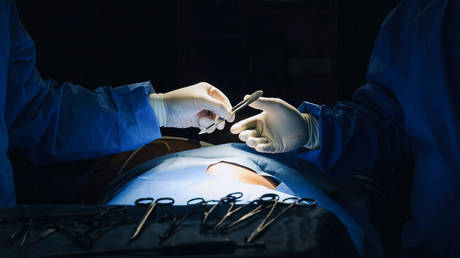
To understand how we arrived at this grim juncture, we have to look past the sanitized hospital corridors and stare directly into the blinding light of the operating theater.
The Anatomy of a Gift
Let us be entirely clear about what a living donation actually means. This is not a deceased donor situation, where a tragic accident yields a harvest authorized by an advance directive or a grieving family's final act of mercy. A living donation is elective surgery performed on a completely healthy person.
Imagine walking into a hospital with two functioning kidneys, feeling fine, breathing steady, and walking out weeks later with one. You do this because someone you love—a spouse, a child, a sibling—is dying of renal failure. The dialysis machine has turned their blood into sludge, their skin has taken on the grey, waxy hue of old parchment, and time is a thief with a stopwatch.
Medically, living donation is a marvel. Kidneys from living donors last significantly longer than those from deceased donors. They start working faster. They bypass the agonizing years-long purgatory of the national waitlist.
Ethically, it is a tightrope walk over an abyss.
The core principle of medical ethics is simple: First, do no harm. Performing major abdominal surgery on a healthy human being violates that maxim on its face. We justify it only because the psychological and emotional benefit to the donor—saving a loved one—outweighs the physical risk.
What happens, then, when that emotional calculus is poisoned? What happens when the person on the table didn't give that organ freely?
When Coercion Wears a Friendly Face
The recent federal crackdown was triggered not by a routine audit, but by allegations that strike at the moral foundation of modern medicine. While details of the specific case involve ongoing investigations and sealed indictments, the underlying mechanics point toward a terrifying vulnerability: coercion and illicit financial entanglement.
Let us construct a hypothetical scenario—one built directly from the warnings issued by federal investigators examining these loopholes—to understand how vulnerability is exploited.
Imagine a desperate immigrant worker in a bustling city. Their legal status is precarious. Their debt is mounting. They live in the orbit of someone powerful, someone who holds the keys to their livelihood or their residency. Now imagine that person has a relative dying of kidney failure.
Suddenly, a conversation happens. It is not shouted. It is whispered over a kitchen table or implied in an office with closed blinds. Suggestions are made about how a "generous gift" might secure a permanent visa, wipe out a debt, or simply ensure that the worker is not cast out into the cold.
Is that a gift?
No. That is extraction. That is biological mining.
When money changes hands for human organs outside the tightly regulated, altruistic channels of the United Network for Organ Sharing, the medical system ceases to be a sanctuary. It becomes a black market operating in plain sight, hidden behind forged letters of emotional attachment and coached interviews with independent donor advocates.
The Blind Spots of the Gatekeepers
Hospitals are designed to heal, not to run forensic background checks on human relationships.
When a living donor steps forward, transplant centers assign a battery of safeguards. There is a surgeon who evaluates the physical anatomy. There is a nephrologist who assesses long-term kidney function. And, crucially, there is an independent living donor advocate—a social worker or physician whose sole job is to protect the donor, completely divorced from the transplant team trying to save the recipient.
These advocates are the last line of defense. They pull the potential donor into a room, close the door, and ask the hardest questions imaginable.
Are you being paid?
Does anyone pressuring you?
If you say no right now, what happens to you tomorrow?
For decades, the system operated on a baseline of trust. If a donor looked the advocate in the eye and swore on their life that the gift was purely altruistic, the machine moved forward. The tests were run. The operating room was booked. The scalpel met flesh.
Consider what happens when that trust is weaponized. Predators are adaptable. They coach their victims. They rehearse the answers. They manufacture backstories of lifelong friendship or deep familial devotion that can withstand a ten-minute psychiatric evaluation.
The recent federal crackdown is a brutal acknowledgment of this reality: the gatekeepers were being lied to, and the financial and legal penalties for doing so were not severe enough to deter transnational brokers of human flesh.
The Ripple Effect of the Crackdown
A crackdown in medicine is rarely a quiet affair. When federal regulators step in with subpoenas, heightened scrutiny, and threats of pulling Medicare funding, the entire ecosystem convulses.
Transplant centers across the country are now slamming the brakes on living donor evaluations. Protocols that once took weeks are stretching into months. Extra layers of verification are being bolted onto an already exhausting process.
This creates a cruel paradox.
On one side, the crackdown is vital. Every single illegal or coerced transplant represents a horrific violation of human rights. If we allow exploitation to fester in our transplant wards, the entire edifice of voluntary donation collapses under a wave of public distrust. If people believe their donated kidney might end up on an illicit ledger rather than saving a dying mother, the altruistic well runs dry.
On the other side, every new hurdle thrown in front of legitimate, loving donors means more time on dialysis for patients whose kidneys are failing today.
Consider a husband trying to save his wife. He is healthy. He is willing. He loves her with a quiet, fierce devotion that needs no script. Yet now, he finds his paperwork sitting in a compliance queue behind three layers of federal audits and institutional anxiety. He watches her skin turn greyer. He counts the hours between her treatments. He is innocent, caught in the shrapnel of a crime he did not commit.
This is the hidden cost of corruption in medicine. It doesn't just harm the direct victim on the table; it casts a long, cold shadow over every honest person desperately trying to perform an act of pure grace.
The Uncomfortable Mirror
We like to think of organ trafficking as the stuff of grim dystopian fiction—dark alleys, stolen ambulances, organized crime rings operating in lawless zones overseas. We comfort ourselves with the belief that our pristine American medical centers are immune to such barbarism.
The recent horror case shatters that comfort. It reminds us that supply and demand apply to human organs just as surely as they apply to oil or real estate. When there are thousands of people waiting for a lifesaving organ and only a fraction of those organs available, a market is born. And where a black market is born, desperate people will be exploited by those who see human bodies as spare parts.
Regulating this space requires more than just administrative memos. It requires aggressive federal prosecution, ironclad financial tracing, and a willingness by hospital administrators to look past the prestige of high transplant volumes and ask the uncomfortable questions.
We are forced to confront a deeply unsettling truth. The miracle of modern transplantation relies entirely on our collective willingness to protect the vulnerable. If we fail to safeguard the donor, the gift loses its meaning.
The operating lights hum in the dark. The scrub nurses pull on their gloves. Somewhere in the city, a machine hums, filtering blood that is slowly poisoning its host. The system grinds forward, heavy, flawed, and desperately in need of our watchful eye, holding the fragile balance between life and the price we are willing to pay for it.