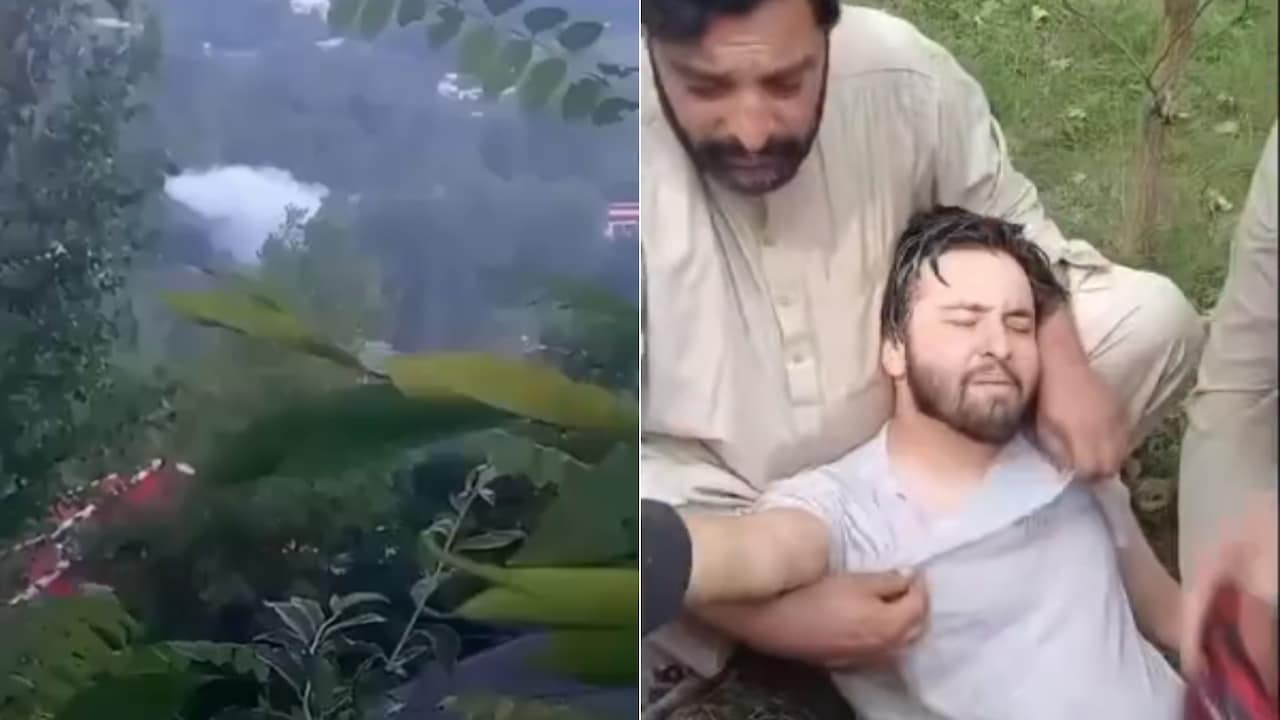
The metallic click of an assault rifle bolt chambering a round is a sound that doesn’t belong in a marketplace. In the mountain-shadowed streets of Rawalakot, that sound did not signal a military operation against an armed enemy. It signaled the end of a line that thousands of ordinary, unarmed people had spent months walking.
When the gunfire began at the Eidgah Ground, it wasn’t just a crowd that was shattered. It was the fragile, long-held illusion that peace can be bought with patience.
For decades, the global narrative surrounding Kashmir has been painted in the broad, geometric strokes of geopolitics. It is treated as a map to be carved up, a territorial chess match between nuclear-armed giants. But on the ground, far from the sterile briefing rooms of Islamabad or New Delhi, the stakes are not measured in kilometers. They are measured in the cost of a bag of flour. They are measured in utility bills that cost more than a family's monthly wage.
To understand how a protest over basic living costs transformed into a blood-soaked confrontation that left sixteen dead and dozens wounded, we have to look past the political rhetoric and look at the kitchen table.
The Boiling Point of Necessity
Let us consider a hypothetical resident of the region. We will call him Tariq.
Tariq does not spend his mornings analyzing troop movements or debating international treaties. He spends them trying to figure out how to stretch his meager earnings from a small dry-goods stall to feed his four children. In recent months, that equation has become mathematically impossible.
The cost of wheat flour—the literal baseline of survival—had climbed to heights that felt like a deliberate punishment. Alongside it, electricity bills arrived like eviction notices. The irony is bitter. This region, lush with rivers and mountainous terrain, generates massive amounts of hydroelectric power. Yet, the people living alongside the dams are forced to pay premium rates for electricity they helped produce, while watching their own resources siphoned away.
"We are sitting on the water, but we are dying of thirst," is a sentiment whispered in the tea stalls of Muzaffarabad and Rawalakot long before the crowds gathered.
When the Jammu Kashmir Joint Awami Action Committee (JAAC) issued its call for a strike, it wasn't an act of war. It was a collective sigh of exhaustion. They wanted subsidised wheat flour. They wanted electricity rates tied to the actual cost of local hydropower production. They wanted an end to the lavish, taxpayer-funded privileges enjoyed by the ruling elite.
These are not the demands of seasoned revolutionaries. They are the demands of parents who want to feed their children.
The Day the Valley Bled
On that Tuesday morning, the Eidgah Ground was a sea of humanity. Estimates place the crowd at upwards of sixty thousand people. There were young men with college degrees and no jobs, elderly grandfathers who remembered quieter times, and shopkeepers who had locked their doors to join the march.
The atmosphere, initially, was charged but peaceful. Slogans rose through the thin mountain air—not for war, but for dignity.
Then came the paramilitary forces.
To the authorities, sixty thousand desperate citizens do not look like a community asking for help. They look like a threat. When the first tear gas canisters were fired, the crowd surged. Panic is a liquid thing; it flows into whatever space it can find, building pressure until something breaks.
What broke was the restraint of the armed forces.
Witnesses describe the terrifying transition from the hiss of tear gas to the sharp, unmistakable crack of live ammunition. AK-47 rifles, designed for the battlefield, were turned toward the thickest parts of the crowd.
Imagine the confusion. One moment you are chanting alongside your neighbor; the next, you are dragging him behind a concrete barrier, his blood soaking into the dusty ground of the Eidgah.
Sixteen lives ended in those chaotic hours. More than thirty-seven people were left wounded, their bodies torn by bullets meant for combatants. The aftermath was not a political victory for anyone. It was a landscape of abandoned sandals, blood-stained signs demanding cheap bread, and the heavy, suffocated silence that always follows state violence.
The Broken Compact
In the wake of the tragedy, the government attempted to do what governments always do: throw money at a structural fire. A massive subsidy package worth billions of rupees was hastily approved.
But a subsidy cannot patch a bullet hole.
The tragedy has shifted the tectonic plates of the region's relationship with the state. What began as a protest over economic survival has evolved into something far more potent. It has become a question of legitimacy. When a state answers a demand for bread with lead, it forfeits the right to expect quiet obedience.
In nearby Khai Gala and surrounding villages, the markets remain closed. The streets are empty of commerce but full of grief. People are not looking for temporary relief packages anymore; they are looking at the blood-stained soil and asking how they are supposed to move forward under the shadow of the guns that fired on them.
We often talk about geopolitical conflicts as if they are grand games played on a board by brilliant strategists. We lose ourselves in the jargon of bilateral relations, sovereignty, and regional stability.
But the truth of Kashmir is found in the quiet homes of Rawalakot tonight, where sixteen families are staring at empty chairs, and the price of a loaf of bread has been paid in blood.