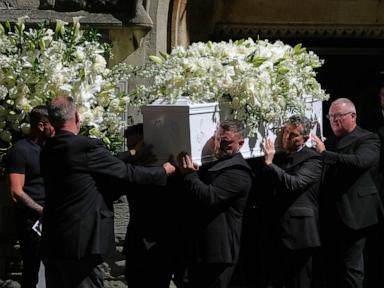
The gavel falls with a sound that mimics a gunshot. In a Texas courtroom, thirty-five years becomes the magic number. It is a mathematical equation scrawled across a man’s remaining decades, meant to balance the scales of justice for a life cut violently short.
But out in the hallway, and across the digital expanse where millions watch the legal system grind away, the math does not add up.
When a jury handed down a thirty-five-year sentence to the killer of Karmelo Anthony—a young man whose name now joins a devastatingly long ledger of the stolen—it was supposed to represent closure. Instead, it exposed a jagged, bleeding fracture in how America defines accountability. Among those refusing to look away was Cardi B. Her reaction was not the polished, focus-grouped statement of a distant celebrity. It was the raw, unfiltered fury of a mother, a Bronx native, and a human being looking at a broken scale.
Justice is supposed to be blind. Often, it just feels numb.
The Weight of the Concrete
To understand why a courtroom verdict can feel like a second assault, you have to leave the wood-paneled sanctity of the courthouse. You have to stand on the pavement where the violence actually happens.
Imagine a young man with everything ahead of him. Let us call him the proxy for every kid who ever walked down a street thinking about his future, his family, his next meal. When that life is snuffed out, the loss ripples outward in concentric circles of grief. The mother who buried him does not experience a thirty-five-year depression; she experiences a lifetime sentence of absence. Every empty chair at Thanksgiving, every milestone passed in silence, is a permanent punishment.
Yet, the legal machinery treats these tragedies like a transaction. A life is taken, a specific number of years is issued, and the state checks a box.
When Cardi B took to her platform to condemn the verdict, she tapped into a collective exhaustion. She did not speak with the detached vocabulary of a legal analyst. She spoke with the frantic, heartbroken cadence of someone who knows exactly how cheap life can feel in the eyes of the law. Her public outcry was a refusal to let the headline fade into the background noise of daily news cycles. She demanded that people feel the weight of what had been lost, rather than just reading the number of years the perpetrator would serve.
The public reaction was instantaneous, polarizing, and deeply revealing. Some argued that thirty-five years behind bars is a lifetime. Others knew the truth. In the labyrinth of the penal system, numbers are deceptive. Parole eligibility, good behavior credits, and bureaucratic loopholes mean that thirty-five rarely means thirty-five. The system offers a discount on devastation.
The Anatomy of an Outcry
Critics of celebrity activism love to tell artists to stick to entertainment. They claim that a rapper from New York has no business dissecting a judicial outcome in Texas. But that argument willfully ignores how culture and justice intersect.
Artists like Cardi B do not exist in a vacuum. They are conduits for the communities they left behind. When she reacts to a violent crime and a subsequent courtroom disappointment, she is carrying the voices of thousands who have stood in those exact corridors, watching murderers receive sentences that feel like a slap on the wrist.
Consider the mechanics of the trial. The prosecution builds a narrative out of evidence, forensics, and timelines. They recreate the final, terrifying moments of a victim's life. The defense attempts to humanize the attacker, finding mitigating circumstances, carving away at the potential sentence day by day, month by month. The jury, insulated from the long-term fallout, arrives at a compromise.
That compromise is where the system fails the human heart.
Thirty-five years suggests a calculation. It implies that after a certain amount of time, the debt is paid. The ledger is clear. But how do you calculate the interest on a stolen future? How do you measure the value of the kids Karmelo Anthony will never have, the career he will never build, the simple, quiet mornings he was denied?
The anger circulating online after the verdict was not just about revenge. It was about validation. When the state hands down a sentence that feels inadequate, it sends a quiet, insidious message to the victim’s loved ones: This is what your boy was worth to us.
The Fiction of the Finish Line
We are conditioned by television dramas to believe that the reading of a verdict is the end of the story. The music swells, the family cries, and the screen fades to black.
Real life is cruel. The verdict is merely the beginning of a different kind of endurance test.
Behind the statistics of the Texas penal system lies a stark reality about violent crime sentences. A thirty-five-year term often means the possibility of walking free while still young enough to enjoy a second act. The perpetrator gets a chance to see the sun, to touch grass, to breathe open air again. The victim remains locked in the unchanging dark of a grave.
This asymmetry is what drives the public rage. It is a visceral realization that the legal system is designed to process bodies, not to heal souls. It manages logistics. It does not provide justice, because true justice would require restoration, and you cannot restore ashes.
But the real problem lies elsewhere. The debate surrounding this verdict exposes a deeper, more uncomfortable truth about our society's relationship with violence. We have become consumers of tragedy. We watch the trial like a sport, picking sides, analyzing body language, and waiting for the score. When the score is announced, we argue about it for forty-eight hours before the next headline distracts us.
Cardi B’s intervention disrupted that consumption. By using her massive reach to shout down the verdict, she forced a pause in the endless scroll. She made her audience look at the gap between what the law allows and what morality demands. It was an act of radical empathy, forcing millions of people who did not know Karmelo Anthony to feel, even for a second, the searing injustice of his absence.
The Echoes in the Room
Walk into any courtroom after a sentencing and you will smell the distinct scent of cheap floor wax and stale adrenaline. The lawyers pack their briefcases. The bailiffs stretch their legs. The reporters rush to the lobby to file their stories.
In the middle of that clearing room, the family of the victim usually sits frozen. The world is moving on around them, but they are stuck in the concrete reality of their loss. The thirty-five-year number bounces off the walls, sounding hollow, small, and entirely insufficient.
The Texas jury likely believed they were doing the right thing. They followed the guidelines. They weighed the arguments. They picked a number that sat comfortably in the middle of the legal spectrum, avoiding the extremes. They sought balance.
But some things cannot be balanced.
When we look back at this moment, the significance will not lie in the specific legal precedent set in a Texas courtroom. It will lie in the refusal to accept the bare minimum from our institutions. It will lie in the furious, uncompromising voices that refuse to let a thirty-five-year sentence masquerade as a victory.
The true cost of violence is permanent. Until the system reflects that permanence, every verdict will just be another set of numbers yelled into an empty room, leaving us to wonder how many years it takes to equal the worth of a human soul.