The rain in the dense forests of Central Africa does not just fall. It thuds. It blankets the canopy, turns the red earth into thick grease, and locks villages away from the rest of the world. In a small clearing, miles from the nearest paved road, a man named Alphonse—a hypothetical composite of the dozens of fathers I have interviewed in makeshift field clinics—reaches out to steady his ailing brother.
It is an instinctive, deeply human gesture. We reach for those we love when they stumble.
But in the quiet undergrowth of this region, that touch carries a terrifying weight. Within days, the fever takes hold. Then the vomiting begins. By the time the local clinic realizes what they are looking at, the invisible clock has already ticked past the point of easy containment.
Ebola has returned.
Epidemiologists look at this scene and see data points. They see a reproductive rate, a transmission vector, and a looming statistical catastrophe. When a computer model digests the current trajectory of this latest outbreak, the numbers it spits out are chilling. Without a massive, immediate intervention, this flare-up is projected to explode to 20,000 cases.
Stop and feel that number. Twenty thousand.
That is not just a statistic. It is twenty thousand individual stories of agony. It is twenty thousand families shattered, twenty thousand community pillars pulled down, and a region thrown into absolute economic and social paralysis. The dry, clinical press releases from international health agencies call it a "potential humanitarian crisis."
Let us call it what it actually is: a wildfire burning through human flesh, fueled by isolation and our own collective delay.
The Arithmetic of Disaster
Contagion is a math problem wrapped in human behavior. To understand how a handful of isolated cases in a remote forest can swell into a five-figure disaster, you have to look at the fragility of the local healthcare infrastructure.
Imagine a clinic.
It is not the sterile, stainless-steel environment of a Western metropolis. It is a concrete room with a corrugated tin roof that amplifies the heat until the air feels like soup. There are three nurses for a population of thousands. They have no running water. Their supply of personal protective equipment—the basic plastic gowns and gloves that stand between a healthcare worker and a agonizing death—fits inside a single cardboard box.
When the first Ebola patients arrive, they are often misdiagnosed. The early symptoms of the virus look exactly like malaria, typhoid, or severe flu. High fever. Fatigue. Muscle pain.
So, the nurses do what they have always done. They comfort the patient. They wipe away sweat with bare hands or reuse a single pair of gloves because they do not know when the next shipment will arrive.
This is where the math turns vicious. Every single person who contracts Ebola transmits it to an average of two or three others in the absence of strict isolation protocols. It is an exponential curve. It starts slowly, a flat line creeping across a chart, almost invisible to the outside world. Two cases become four. Four become eight. Eight become sixteen.
By the time the line on the graph starts to bend upward, the virus is already miles away, hitching a ride on the back of a motorbike taxi, traveling down dirt tracks to the next market town.
The mathematical projection of 20,000 cases is based on this exact vulnerability. If international aid organizations and local governments do not flood the zone with isolation tents, clean water, and protective gear within weeks, the virus breaches the forest. It enters the crowded urban centers where social distancing is an economic impossibility for people who must work every day just to eat. Once it takes root there, tracing contacts becomes a nightmare. The curve turns vertical.
The War on Trust
The physical virus is only half the battle. The more insidious enemy is the fear and misinformation that follows in its wake.
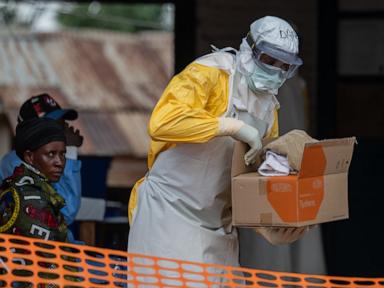
During my time tracking outbreaks alongside field teams, I learned quickly that a uniform can be a barrier. When outsiders arrive in a village wearing white biohazard suits, looking like terrifying astronauts from another planet, the natural human reaction is not relief. It is terror.
Rumors spread faster than the pathogen. Word goes around that the white tents are where people go to die, or worse, that the foreigners brought the disease to harvest local organs.
Consider the perspective of a mother whose child is burning with fever. She has two choices. She can hand her son over to masked strangers who will isolate him behind plastic sheets, where she cannot touch him or comfort him, and where, if he dies, his body will be buried in a body bag without the traditional, sacred funeral rites. Or she can hide him in her home, treating him with traditional remedies, surrounded by family.
She chooses love. She chooses tradition.
And in doing so, the virus wins again.
Traditional burial practices in Central Africa involve washing and touching the deceased. Because the Ebola virus remains highly concentrated in bodily fluids even after death, these funerals become super-spreader events. A single burial can infect dozens of mourning relatives, who then carry the virus back to their respective villages.
This is why health measures cannot just be medical; they must be anthropological. You cannot fight a virus with science alone if you do not understand the heart of the community you are trying to save.
True containment only happens when local leaders—the village chiefs, the pastors, the traditional healers—are brought into the tent. They are the ones who must explain that the isolation centers are places of healing, not execution. They are the ones who must find ways to adapt sacred burial traditions so that they are both respectful to the ancestors and safe for the living. Without that trust, every piece of high-tech medical equipment we send is useless.
The Global Cost of Looking Away
There is a dangerous complacency that tends to settle over the international community when an outbreak is confined to Central Africa. It feels distant. It feels like someone else's problem, a recurring tragedy native to a faraway geography.
This is a profound misunderstanding of the modern world.
We live in an era of unprecedented connectivity. A logger in a remote Central African forest sells his yield to a regional trader. That trader drives to a provincial capital. From there, he takes a commercial flight to a global transport hub. The distance between a bleeding patient in a mud clinic and an international airport terminal is measured in hours, not weeks.
If the current outbreak is allowed to reach 20,000 cases, the probability of the virus escaping the region skyrockets. This is not alarmism; it is simple probability. The more chances the virus has to jump into a highly mobile population, the greater the risk to global health security.
Furthermore, the economic devastation of an uncontrolled outbreak cascades outward. When a region goes into lockdown, mines close, agricultural supply chains snap, and international trade grinds to a halt. The cost of containing a 20,000-case epidemic is hundreds of times higher than the cost of suffocating a 200-case outbreak in its infancy.
We have a choice right now. We can pay the modest price of proactive prevention today, or we will pay the catastrophic price of reactive containment tomorrow.
The window of opportunity is closing with every sunset. The response requires more than just money; it requires logistics. It means shipping thousands of doses of the experimental vaccines that have proven highly effective if deployed quickly enough. It means training local health workers on infection control. It means ensuring that every clinic, no matter how remote, has a reliable supply of clean water and chlorine.
A Single Candle in the Dark
Back in the forest, the rain finally stops. The air is thick with the scent of damp earth and woodsmoke.
Alphonse sits outside a hastily erected isolation tent, watching through a clear plastic window as a nurse in a heavy protective suit checks his brother’s vitals. The brother is weak, but he is breathing. He is receiving intravenous fluids and experimental monoclonal antibodies. He has a fighting chance because a mobile medical team arrived just in time, before the virus could ripple out to the rest of the household.
This single tent represents the line between containment and catastrophe.
Multiply this scene by thousands, and you have the blueprint for stopping an epidemic. It is a grueling, unglamorous, terrifyingly expensive effort. It requires doctors to risk their lives, logistics experts to solve impossible transport puzzles, and local communities to override their deepest cultural instincts in the name of survival.
The mathematical models tell us that 20,000 cases are coming if we stand still. But models are not destinies. They are warnings. They show us the worst-case scenario so that we have the sense to change our course before we arrive there.
The true measure of our global healthcare system is not how we treat the wealthy in our gleaming city hospitals. It is how quickly we run to the aid of a man named Alphonse, sitting in the mud, waiting to see if his brother will open his eyes.