Two apartments sit six thousand miles apart, yet they share the exact same secret.
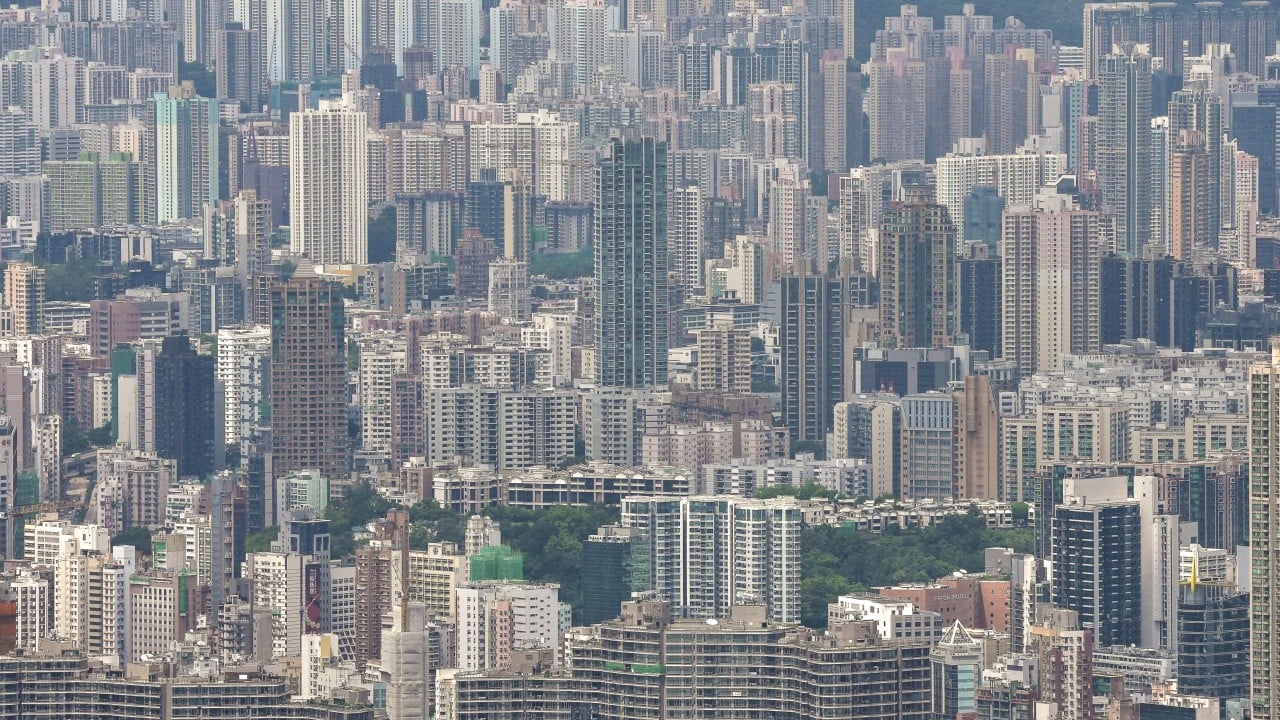
The first is a cramped, three-bedroom flat on the twenty-fourth floor of a concrete tower in Kowloon, Hong Kong. The afternoon sun hits the harbor, throwing gold reflections across the Victoria Peak skyline, yet the living room feels cold. Not from the air conditioning, which has been off for six months, but from the silence. A year ago, a man ended his life in the master bedroom. Today, the apartment is listed at forty percent below market value in a city where square footage is traded like bullion, and nobody wants to touch it.
The second is a limestone townhouse in Lyon, France, overlooking a quiet cobblestone square where chestnut trees drop their leaves onto parked Peugeots. Three months ago, a ninety-two-year-old woman named Claire passed away in her sleep upstairs, surrounded by oil paintings and porcelain. By Tuesday, three buyers had placed offers above the asking price, not in spite of her passing, but because they had been waiting for it for eleven years.
Same reality. Two completely opposite worlds.
When we talk about real estate, we pretend we are talking about math. We talk about interest rates, cap rates, square footage, neighborhood comps, and twenty-year amortization schedules. I used to believe that lie myself. Years ago, when I was hunting for my first home in a hyper-competitive market, I walked into a sunlit corner unit that was priced suspiciously low—nearly thirty percent cheaper than the identical unit directly below it. The floorboards were spotless, the view was unobstructed, and the kitchen had been recently remodeled. Then the agent pulled me aside in the hallway, lowered his voice, and told me the previous owner had died violently in the hallway three months prior.
I walked out of that building in thirty seconds. My pulse was hammering, and I couldn't even explain why.
That visceral flinch is the invisible hand driving one of the strangest economic divides on earth. While Western markets treat death in a home as an awkward footnote—or, in France, an actual financial strategy—Hong Kong has built an entire shadow economy around avoiding it.
The Architecture of Fear in Hong Kong
To understand why a Hong Kong buyer will walk away from a million-dollar discount, you have to understand what happens when extreme density collides with ancient spiritual conviction.
In Cantonese, there is a specific, chilling word for a property where an unnatural death has occurred—murder, suicide, or a fatal accident. They call it a hung zhai. Literally translated, it means a haunted house, though the weight of the phrase goes far deeper than Hollywood ghost stories. In traditional Chinese belief, particularly within the frameworks of Feng Shui and folk religion, a sudden or violent death disrupts the natural cycle of transition. The spirit, caught off guard and full of grief or resentment, lingers in the physical space. Moving into that space isn't just uncomfortable; it is seen as inviting bad luck, financial ruin, and illness directly into your family's bloodstream.
Consider a hypothetical young couple—let's call them Jason and Mei—who have spent eight years saving every spare Hong Kong dollar for a down payment. In one of the most expensive housing markets on the planet, where median home prices regularly exceed eighteen times the median annual household income, owning property isn't just a milestone. It is the ultimate marker of adulthood and security.
Jason and Mei find a flat in Quarry Bay listed at $6.5 million HKD when everything else on the street is trading at $9.5 million. On paper, it is a miracle. They could afford it tomorrow and still have money left over to renovate.
Then Jason checks the online registries.
In Hong Kong, you don't even have to rely on neighborhood gossip to uncover a property's dark history. Dedicated websites and real estate portals maintain searchable databases of hung zhai, mapping out exact floors, unit numbers, and dates of tragedies going back decades. Banks maintain their own internal blacklists. Even if Jason and Mei decide they don't believe in ghosts—even if they are entirely secular, pragmatic professionals—they immediately hit a brick wall made of cold institutional finance.
Major banks in Hong Kong routinely refuse to issue standard mortgages on stigmatized properties, or they slash the valuation so drastically that the buyer has to front almost the entire purchase price in cash. Why? Because the bank doesn't care about spirits; the bank cares about liquidity. If Jason and Mei default on their loan five years from now, the bank has to auction off that flat. And if ninety percent of the local population refuses to live there, the bank is stuck holding an asset nobody will buy.
Even worse, the stigma bleeds outward like ink on wet paper.
In Hong Kong's high-rise towers, a tragic death on the fourteenth floor doesn't just tank the value of Unit 14B. It depresses the value of 14A and 14C. Sometimes it knocks ten to fifteen percent off the units directly above on the fifteenth floor and directly below on the thirteenth, because local buyers worry about negative energy seeping through the floorboards and ceilings. One tragic afternoon in a single bedroom can evaporate millions of dollars in collective wealth across an entire residential block within hours.
Enter the Contrarian Investors
Where fear creates a vacuum, capital eventually rushes in.
Over the past fifteen years, a small, unsentimental class of investors in Hong Kong has made a fortune buying what nobody else will touch. The most famous among them, an investor named Ng Chun-for, earned the nickname "King of Haunted Houses" by systematically acquiring dozens of hung zhai across the territory at discounts ranging from twenty to fifty percent.
His strategy reveals just how deeply psychological the discount really is.
Ng doesn't flip these apartments to superstitious local families. Instead, he renovates them, strips away every physical trace of the past, and rents them out to expatriates from Europe, North America, and Australia—people who arrive in Hong Kong with zero cultural conditioning around Feng Shui and view a forty percent discount on a luxury harbor-view flat as the deal of a lifetime. Other investors hold the properties for ten or fifteen years, waiting for neighborhood turnover and urban memory to fade before quietly reintroducing the unit to the market.
Yet even for the boldest investors, the friction never completely disappears. Legal disclosure rules in Hong Kong sit in a murky gray zone. While real estate agents are legally prohibited from lying if a buyer explicitly asks whether someone died in the unit, they are not always obligated to volunteer the information unprompted unless the stigma materially affects the property's value. That gray zone has sparked fierce lawsuits, terrified buyers demanding their deposits back, and an industry-wide obsession with due diligence that has no parallel anywhere else in the world.
Meanwhile, in France, Death is a Business Model
Now cross the Eurasian landmass to Paris, Nice, or Lyon, and watch the entire moral and financial logic flip upside down.
In France, a natural death inside a home isn't a stain on the walls. It is just life reaching its natural end inside architecture built to outlast five generations. When you buy a three-hundred-year-old Haussmannian apartment in Paris, you don't ask if someone died there. You assume dozens of people did.
More than that, France has institutionalized the countdown to death into one of the most legally sophisticated real estate mechanisms in Europe: the viager.
To understand how a viager works, picture another hypothetical scenario. Imagine Henri, an eighty-two-year-old retired professor living alone in a sprawling, sun-drenched apartment in Nice. Henri is asset-rich and cash-poor. His apartment is worth €800,000, but his monthly pension barely covers his groceries, property taxes, and heating bills. He doesn't want to leave the neighborhood where he has lived for fifty years, and he certainly doesn't want to move into an assisted living facility.
Enter Sophie, a forty-year-old architect looking to build long-term wealth without taking on a crushing bank mortgage.
Under a viager occupé contract, Sophie buys Henri's apartment while Henri is still living in it—and keeps living in it until the day he dies. Instead of paying €800,000 upfront, Sophie pays a down payment called the bouquet, typically around twenty to thirty percent of the property's discounted value, say €150,000. After that, she pays Henri a fixed monthly annuity—the rente—of roughly €1,500 a month for the rest of his life.
Henri gets immediate cash, a guaranteed monthly income that turns his lonely final years into comfortable ones, and the legal right to stay in his own bed until the very end. Sophie gets an €800,000 apartment at a steep discount, bypassing bank interest rates entirely, with the understanding that she cannot move in until Henri passes away.
Let that sink in.
In Hong Kong, a death inside the home destroys the transaction. In France, a death inside the home completes the transaction.
The Gambler's Math of French Real Estate
The viager system isn't some fringe loophole; it dates back to the ninth century under King Charles the Bald and was formally codified into the French Civil Code under Napoleon in 1804. Today, roughly five to ten thousand viager transactions take place across France every year, driven by an aging population and soaring longevity.
And it carries its own famous, darkly comic cautionary tale.
In 1965, a forty-seven-year-old French lawyer named André-François Raffray signed a viager contract to buy the apartment of a ninety-year-old woman named Jeanne Calment in Arles. Raffray agreed to pay her 2,500 francs a month until she died. At ninety years old, the actuarial tables were overwhelmingly in his favor. He figured he would pay for two, maybe three years, and own a prime piece of real estate for pennies on the franc.
Jeanne Calment didn't die in 1968. She didn't die in 1978. She didn't even die in 1988.
She became the oldest verified human being in recorded history, living to the age of 122. André-François Raffray died of cancer in 1995 at the age of seventy-seven, having paid Calment more than double the market value of the apartment without ever spending a single night inside it. His widow was legally required to keep sending the monthly checks until Calment finally passed away in 1997.
When asked about the arrangement near the end of her life, Calment famously shrugged and said, "In life, one sometimes makes bad deals."
Under French law, a viager contract is classified as an aléatoire—a contract based on chance. If the seller dies within twenty days of signing the contract from an illness that was already known at the time of the sale, the heirs can challenge and void the agreement because there was no genuine element of uncertainty. The law literally requires the timing of death to remain an open wager.
Even outside the viager system, ordinary French real estate law treats death with complete emotional detachment. Under French disclosure rules, a seller must reveal structural defects, asbestos, lead paint, termite damage, flood zones, and proximity to industrial hazards. What happened to the previous occupant's soul—or how their life ended—is legally irrelevant unless it caused physical damage to the structure itself. If someone died peacefully in the upstairs bedroom last week, the real estate agent isn't required to mention it, and most French buyers wouldn't blink if they did.
What We Actually Buy When We Buy a Home
Why does the same human event trigger financial panic in Victoria Harbour and actuarial calculation on the French Riviera?
It comes down to what a home represents in the collective imagination of each culture.
In Hong Kong, land is scarce, vertical, and fiercely contested. A home is a fortress against chaos—a carefully calibrated sanctuary where energy, luck, and family lineage must be protected from outside contamination. When tragedy strikes inside those four walls, the walls themselves absorb the trauma. The space becomes compromised, no longer capable of performing its primary spiritual job: keeping the living safe and prosperous.
In France, architecture is older than the families who inhabit it. Stone walls, oak beams, and limestone facades carry a sense of historical continuity that dwarfs any single human lifespan. Death isn't an intruder that ruins a house; it is simply the natural rhythm of generations passing through rooms that were built long before them and will stand long after they are gone. Even the viager turns mortality into a social contract—a quiet bridge between an elderly generation needing dignity and a younger generation needing shelter.
If you ask an economist which market is rational, they will point to France and call Hong Kong superstitious.
They would be missing the point.
Markets are never purely rational, because human beings are never purely rational. Every price tag on every house in the world is just a mathematical translation of what a society fears, what it values, and what it believes happens when the lights go out. In Lyon, buyers look at an old house and see history waiting to be inherited. In Kowloon, buyers look at a discounted flat and feel a chill that no coat of white paint can ever cover up.
Walk into an empty apartment at dusk, stand in the center of the living room, and listen to the floorboards settle. Whether you hear a bargain, a wager, or a warning depends entirely on where you were taught to look for ghosts.