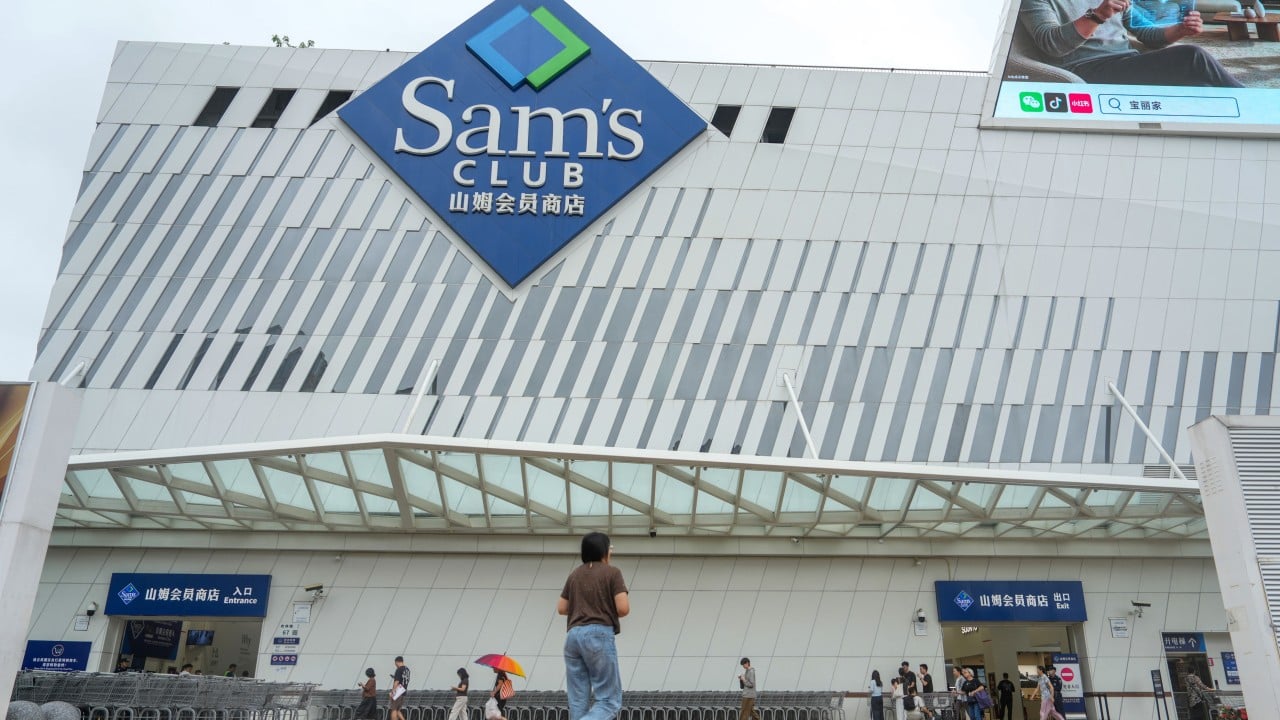
The air inside the tour bus smelled faintly of damp umbrellas and diesel exhaust. Outside, the neon glare of Hong Kong’s high-rises gave way to the sprawling, industrial gray of Shenzhen. It was barely 7:00 AM on a Saturday, a time when most people are still buried under their duvets. Yet here were forty-five ordinary citizens, clutching empty canvas tote bags and insulated cooler pouches like soldiers marching into battle.
They weren't traveling for scenery. They were traveling for groceries.
For the past year, a quiet migration has redefined the border between Hong Kong and mainland China. Every weekend, tens of thousands of Hong Kong residents board chartered buses, cross the boundary checkpoints, and descend upon Sam’s Club—the American warehouse giant owned by Walmart. They come for the scale. They come for the novelty. Most of all, they come for the prices. In a city ranked consistently as one of the most expensive places to live on earth, the allure of a cavernous aisle stocked with deeply discounted goods is more than a shopping trip. It is a financial relief valve.
Then came the report that should have stopped the buses in their tracks.
Mainland regulatory bodies launched an investigation into the retail giant. A popular Swiss roll cake—a staple in nearly every Hong Konger’s oversized shopping cart—was flagged during a routine food safety probe. Reports surfaced of potential contamination, the kind of news that usually sends consumers running for the hills, demanding refunds, and scrubbing their pantries.
But a funny thing happened on the border the following weekend. The buses were still full. The lines at the checkout counters still snaked around the massive tire displays. The registers kept ringing.
To understand why a food safety scare failed to dent the armor of a retail titan, you have to look past the spreadsheets and delve into the kitchen tables of Hong Kong. Consider a hypothetical shopper based on the very real people who make this weekly trek. Let’s call her Mrs. Wong. She is a fifty-two-year-old accounting clerk living in a forty-square-meter apartment in Kwun Tong. Every month, her salary is cannibalized by rent, utility bills, and the skyrocketing cost of fresh produce at her local wet market.
For Mrs. Wong, a trip to the mainland isn't a betrayal of her city; it is a mathematical necessity.
When you ask a shopper like Mrs. Wong about the safety probe, she doesn't shrug it off because she doesn't care about her health. She pauses. She glances at her cart, piled high with giant boxes of toilet paper, bulk packs of frozen chicken breasts, and yes, maybe even a box of pastries. Then she tells you about the price of a single bell pepper back home.
The human brain is a master at calculating risk, but it weighs those risks on a scale calibrated by immediate anxiety. A abstract, bureaucratic investigation into a product batch on the other side of the border feels distant. The suffocating weight of the monthly credit card bill feels immediate. It is a classic trade-off: trading a hypothetical future risk for guaranteed, present survival.
The contrast between the two shopping experiences is sensory shock therapy. In Hong Kong, supermarkets are cramped, vertical affairs. Aisle spaces are fiercely contested territory. Packages are small, designed to fit into miniature refrigerators and tiny kitchen cupboards. The prices, however, are monumental. A modest basket of organic groceries can easily clear a hundred US dollars.
Cross the border into the warehouse club, and the world opens up. The ceilings disappear into the shadows. The shopping carts are the size of small vehicles. There is a psychological intoxication to that kind of space, especially for people who live their lives in some of the densest urban architecture in the world. The sheer abundance feels like a luxury, even if that abundance comes in a cardboard box containing three dozen eggs.
It is an economic oasis that creates a strange kind of loyalty. When the news of the Swiss roll investigation broke, local social media groups dedicated to cross-border shopping did not explode with panic. Instead, they filled with practical advice. Shoppers traded tips on which items to buy instead, which batches to avoid, and how to properly store meat during the long bus ride home.
The institutional trust that local authorities rely on to police consumer behavior has been eclipsed by a different kind of trust—the trust in one's own ability to spot a bargain and manage the risk. People have looked at the cost of living in their own backyard and decided that they are willing to become their own quality control inspectors if it means saving thirty percent on their monthly expenses.
This is the invisible thread pulling thousands across the border every week. It isn't just about greed or a love for cheap consumer goods. It is about control. In a world where the cost of housing, healthcare, and education feels entirely out of reach, deciding where to buy your groceries is one of the few levers of control an ordinary family has left.
If that lever happens to be located in a massive warehouse in Shenzhen, so be it.
The sun began to set as the tour bus crawled back toward the Hong Kong border crossing. The mood inside was different now. The nervous energy of the morning had transformed into the quiet satisfaction of a successful harvest. The luggage compartment below was jammed to capacity with identical red and blue insulated bags.
Mrs. Wong sat near the middle of the bus, her knees pressed against the seat in front of her, holding a large box of baked goods on her lap. It wasn't the Swiss roll. She had decided to skip that one this time, opting instead for a tray of Danish pastries that cost a fraction of what her neighborhood bakery charged.
She looked out the window as the high-rises of the city appeared on the horizon, glowing like vertical shards of glass in the twilight. She was tired. Her back ached from lifting heavy boxes. But as she calculated the savings in her head, the anxiety that usually sat like a stone in her chest felt just a little bit lighter.
Tomorrow, the headlines would continue to dissect the safety probes, the regulations, and the political implications of the cross-border shopping craze. Analysts would write reports on retail shifts and economic indicators. But on Monday morning, the kitchens of Hong Kong would still be filled with the scent of cheap coffee and mainland pastries, served on plates bought by people who simply figured out a way to get by.


