The fluorescent lights of aisle four do something strange to a person’s spirit. They strip away nuance. Under that relentless, buzzing glare, life shrinks down to a series of stark choices printed on small plastic tags.
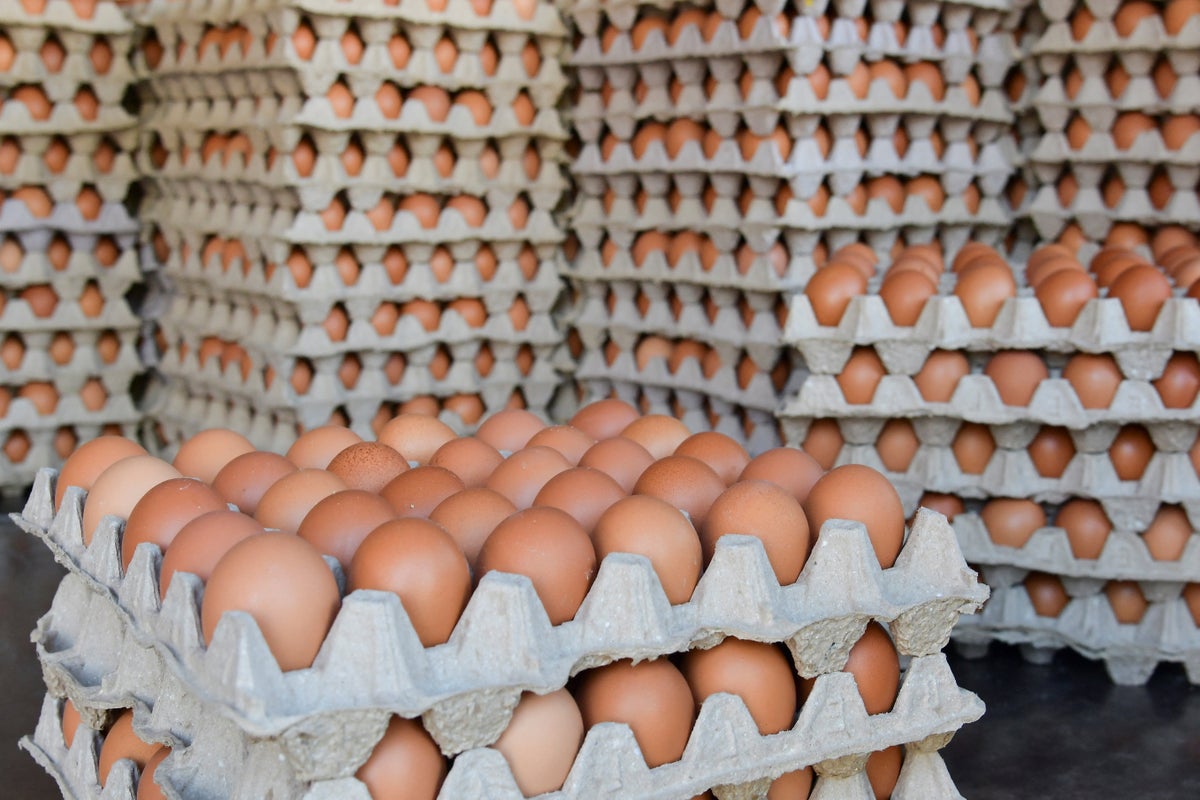
For decades, the bottom shelf of the dairy case offered a quiet certainty. There lay the humble styrofoam or recycled-paper carton of large white eggs. It was the ultimate safety net of the American kitchen. When the rent crawled upward, when the car transmission began to whine, or when the hours at the shop were cut, you could always rely on eggs. They were cheap protein. They were breakfast, dinner, baking, and survival.
Then, the world shifted.
Consider a hypothetical shopper named Maria. She stands in front of that refrigerator case, her fingers hovering over a dozen large whites. The price tag reads $4.89. Two years ago, it was $1.50. She calculates the mental math of a tight budget, balancing the carton against a gallon of milk or a loaf of bread. She notes the news reports blaming a tragic outbreak of avian flu. She swallows the bitter pill of "inflation," a vague, atmospheric term that makes corporate pricing strategies sound like bad weather.
But behind those soaring prices lies a narrative far more calculated than a virus or a fluctuating market. The federal government recently pulled back the curtain on this exact scene, filing a massive antitrust lawsuit against the nation’s largest egg producers. The allegation is simple yet devastating: corporate executives didn't just survive a crisis; they allegedly engineered a scheme to fix prices, using the cover of national economic anxiety to pad their own pockets at the expense of millions of dinner tables.
The Chemistry of an Artificial Squeeze
To understand how a basic grocery staple becomes a luxury item, we have to look past the farm gates and into the quiet air-conditioned boardrooms where competition goes to die.
In a healthy capitalist system, supply and demand play a violent, beautiful game of seesaw. If one farm raises its prices too high, a neighbor cuts theirs to win over the local supermarket chain. The consumer wins. Price gouging is kept in check by the sheer terror of losing market share to a rival.
But what happens when the rivals stop fighting?
According to the legal framework laid out by federal prosecutors, the country’s dominant egg producers realized they could make far more money by cooperating than by competing. The mechanism of a classic price-fixing conspiracy does not require a smoky room filled with villains in pinstripe suits. In the modern era, it happens through sophisticated data-sharing networks, trade association meetings, and coded public statements that signal to competitors exactly when to choke off supply.
When the avian flu tore through American poultry farms, it was an undeniable tragedy for the agricultural sector. Millions of birds had to be culled. Supply genuinely dropped. In any economic textbook, a drop in supply causes a corresponding rise in price. That is natural.
The lawsuit alleges that the corporate response was entirely unnatural.
Instead of working at breakneck speed to repopulate barns and bring prices back down as the disease subsided, the major producers allegedly saw an unprecedented opportunity. They realized that consumers had already accepted the narrative of scarcity. People expected eggs to be expensive. Therefore, the producers kept production artificially low. They allegedly coordinated to maintain a choked supply line, ensuring that even as their operational costs stabilized, the prices on the grocery store shelves remained stratospheric.
The numbers tell a sickening story. While families were cutting back on fresh produce to afford basic protein, the net profits of major egg distributors didn't just grow; they multiplied. Profit margins soared by hundreds of percent. It was an economic miracle for a select few, built entirely on the quiet desperation of the many.
The Anatomy of Collusion
Market manipulation is a ghost that is incredibly difficult to catch. It leaves few fingerprints. If three major companies all raise their prices by fifty cents in the span of a week, they can easily claim they are all reacting to the same external pressures—diesel costs, chicken feed prices, labor shortages.
To prove a conspiracy, investigators must find the connective tissue. They have to show that these companies were not acting as independent ships navigating the same storm, but rather as a fleet moving under a singular, hidden command.
The legal complaint details a pattern of behavior that looks less like free enterprise and more like a cartel. It points to a series of industry-wide agreements regarding "flock management." In plain terms, this means the companies allegedly agreed to kill off older hens early and delay the hatching of new chicks.
If a single company does this, they lose money because their competitors will fill the void. But if everyone does it simultaneously, the entire market is starved of product. The price stays high, the volume goes down, and the profit per egg skyrockets.
This is the invisible tax that hurts the most. It is a tax levied not by an elected government to fund roads or schools, but by private entities to enrich shareholders. It exploits a fundamental flaw in human biology: we have to eat. You can defer buying a new television. You can patch up an old pair of shoes. You cannot tell a growing child to wait six months for breakfast until the market corrects itself.
The Long Journey to Accountability
Taking on agricultural giants is an agonizingly slow process. The legal machinery of the state moves with a heavy, grinding momentum that can take years to yield a result. For the average consumer, a lawsuit filed today does nothing to lower the receipt total at the register this afternoon.
Yet, the symbolic and structural weight of this legal action cannot be overstated. For years, the prevailing political wind suggested that Washington had lost its appetite for antitrust enforcement. Big tech, big pharma, and big agriculture grew into massive, unassailable monopolies, safe in the assumption that the government lacked the will or the resources to untangle their corporate webs.
This lawsuit signals a sharp shift in the wind. It asserts a fundamental principle that has been neglected for too long: a free market is only free if it is fair.
When the Department of Justice steps into the agricultural market, it is trying to restore the terror of competition. The goal is to force these massive entities to look over their shoulders again. They want the executive who is contemplating an artificial production cut to worry about a federal subpoena rather than a quarterly bonus.
It is easy to get lost in the dry vocabulary of the courtroom—words like injunctive relief, treble damages, and sherman antitrust act. But these terms are just the sterile instruments used to operate on a deeply human problem. The true stakes are found in the subtle shifts of daily life. They are found in the diner owner who has to rewrite her menu because a three-egg omelet now costs more to produce than a burger. They are found in the food bank directors who watch their budgets evaporate because the cost of a basic donation staple has doubled.
The Broken Trust of the American Table
There is a deeper, more insidious damage caused by corporate price-fixing that cannot be quantified in a legal brief. It is the erosion of societal trust.
We are told from childhood that if we work hard and play by the rules, the system will treat us fairly. We accept that life is expensive, that resources are finite, and that hard times come for us all. When a global pandemic or a natural disaster disrupts the world, communities generally pull together. We endure the lines, we accept the shortages, and we pay the higher prices because we believe we are all weathering the same crisis.
Discovering that the crisis was used as a smoke screen for corporate greed breaks that unwritten social contract. It breeds a profound, cynical resentment. It convinces the average citizen that the game is rigged from the start, and that no matter how hard they save or how carefully they budget, someone in a high-rise office is finding a way to skim off the top.
The lawsuit against the egg producers is a test case for whether that trust can be repaired. It is an attempt to prove that the rules apply to the powerful just as they do to the powerless.
The corporate defense teams will undoubtedly mount a fierce, expensive counteroffensive. They will hire economic experts to produce dizzying charts showing that every penny of profit was justified by market volatility. They will argue that the government is overreaching, interfering with the natural lifecycle of American farming, and threatening the stability of our food supply chain.
The judges and juries will have to sift through those mountains of data. They will have to decide where legitimate business strategy ends and criminal collusion begins.
But as the legal battle plays out over the coming months, the real judgment is already happening every single day in grocery stores across the country. It happens every time a shopper looks at a carton of eggs, sighs, and puts it back on the shelf. The system failed them, and no matter how the lawsuit ends, the true cost has already been paid.