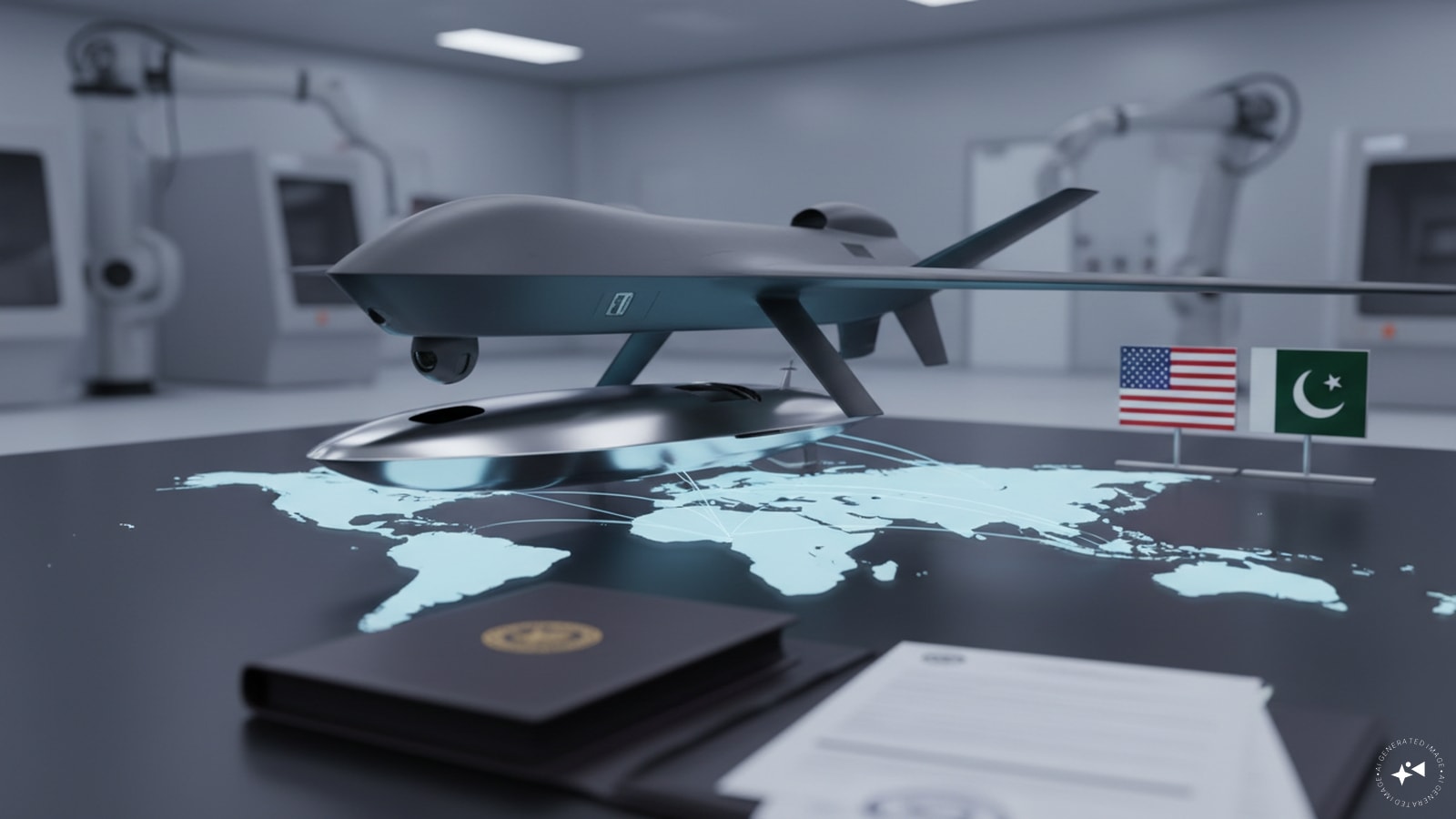
Everyone in defense tech is hyperventilating over the ink drying on the Powerus memorandum of understanding with the Pakistan Army. Industry pundits are treating this initial order like a seismic shift in South Asian military hardware procurement. Headlines scream about market penetration, geopolitical positioning, and a new era of unmanned aerial vehicle dominance.
They are missing the plot entirely.
I have spent the last fifteen years watching hardware manufacturers pop champagne over initial memorandums of understanding, only to watch those same contracts dissolve into bureaucratic quicksand before a single production unit clears customs. An initial order in Islamabad is not a victory lap. It is a probation period wrapped in red tape.
Powerus just stepped into a high-stakes operational minefield. To understand why this deal is simultaneously a masterclass in opportunistic positioning and an absolute operational trap, we need to look past the press releases and strip away the defense sector mythology.
The Mirage of the Initial Order
Let us address the fundamental misconception driving the market enthusiasm. An MOU paired with a small initial order does not mean sustainable volume. In the defense contracting ecosystem, foreign military sales to nations like Pakistan operate on a chronically delayed timeline dictated by foreign exchange reserves, shifting political alliances, and redundant bureaucratic gatekeeping.
When a defense manufacturer announces an early-stage procurement agreement with a state military, the uninitiated assume mass deployment is around the corner. The reality is far less glamorous. These initial batches usually serve as evaluation units. They go straight to testing wings, where engineers pull them apart, reverse-engineer proprietary software interfaces, and assess vulnerability to electronic warfare environments native to the region.
Powerus is not securing a golden goose. They are handing over their intellectual property blueprint to a sovereign military customer under the guise of an acquisition trial.
I have seen mid-tier hardware startups hand over their best platforms for initial evaluation, only to watch local state-owned defense conglomerates absorb the design logic and pivot toward domestic production alternatives within eighteen months. If Powerus management thinks this initial purchase order represents steady recurring revenue, they are suffering from executive delusion.
The Regional Reality Check
South Asia is not a standard procurement market. It is a hyper-competitive theater where hardware must survive extreme thermal stress, dense radio-frequency jamming, and supply chain fragmentation.
The conventional wisdom claims that securing a foothold in Pakistan opens up adjacent regional markets. This is a fairy tale told by consultants who have never managed a foreign military sales compliance audit. Selling hardware to Islamabad introduces complex export control hurdles, stringent end-use monitoring requirements, and immediate friction with alternative international clients who view the region through a lens of acute geopolitical sensitivity.
Furthermore, let us look at how the Pakistan Army actually procures and deploys tactical assets. They do not operate like venture-backed software companies. Procurement cycles are notoriously sluggish, prone to sudden budget reallocations, and heavily influenced by bilateral financing terms. If Powerus had to extend favorable credit terms or agree to extensive local coproduction clauses to secure this signature, the margins on this deal will evaporate before the second batch leaves the assembly line.
True leverage in defense manufacturing does not come from landing a logo on a client roster. It comes from owning the proprietary subsystem stack that the client cannot swap out without crippling their own operational readiness. Powerus has not achieved that level of lock-in yet. They have simply secured a ticket to a very expensive, very demanding proving ground.
What Real Market Penetration Looks Like
If you want to dominate the unmanned aerial systems space, you stop chasing vanity MOUs with cash-strapped state militaries. You build high-attrition, low-cost attritable systems that can be manufactured at scale without relying on fragile global supply chains, or you secure platform integration inside tier-one allied defense frameworks where procurement budgets are guaranteed by multi-year legislative appropriations.
Powerus took the flashy route because the market loves a foreign contract announcement. It moves the needle on short-term sentiment. But sentiment does not keep a factory floor running when supply chain bottlenecks hit or when regulatory hurdles freeze shipments midway through fulfillment.
The contrarian truth is simple. This deal is a massive distraction dressed up as a milestone. It forces engineering talent and compliance resources away from core product durability and into the quagmire of foreign bureaucracy and customized localization demands.
Stop reading the press releases. Start looking at the balance sheet twelve months from now when the milestone payments actually hit—or fail to hit—the bank.
The market wants to believe this is a paradigm shift. It is just another transaction in a notoriously volatile industry where the only thing harder than winning a contract is surviving the consequences of fulfilling it.