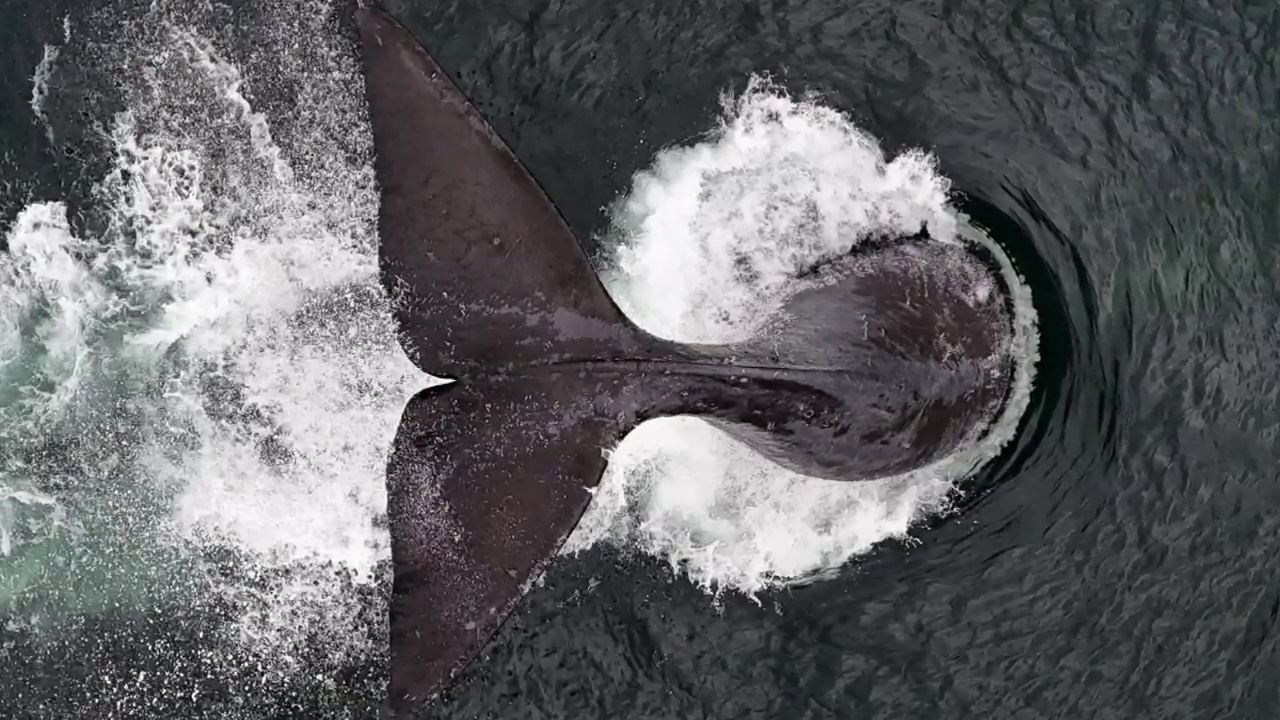
The sighting of a critically endangered North Pacific right whale or a rare blue whale variant off Vancouver Island is frequently framed by general media as an isolated milestone of ecological hope. This perspective miscalculates the systemic reality of marine megafauna recovery. The re-emergence of a apex cetacean in a historical feeding ground is not a random event, nor does it inherently signal a self-sustaining population trajectory. Instead, it represents a data point at the intersection of shifting thermal corridors, trophic cascades, and localized anthropogenic risk variables.
To accurately evaluate what a single sighting means for the broader species, the event must be deconstructed using quantitative ecological frameworks. Marine conservation biology relies on specific variables to differentiate between a terminal population decay and a genuine geographic expansion. The viability of these apex predators depends on a delicate balance between metabolic demands, reproductive rates, and human interference.
The Trophic Triad: Mapping the Triggers of Cetacean Range Expansion
A cetacean sighting in the coastal waters of British Columbia is directly tied to the availability of resources. Large baleen whales (Mysticeti) operate on strict metabolic budgets dictated by immense body mass. The presence of these animals in specific geographic coordinates is governed by three primary environmental drivers.
                  [ Thermal Shift Corridors ]
                              │
                              ▼
[ Trophic Cascades ] ──► Spatial Realignment ◄── [ Anthropogenic Pressures ]
1. Thermal Shift Corridors
Marine isotherms are moving poleward due to fluctuating sea surface temperatures. This shifting thermal baseline alters the boundaries of traditional foraging grounds. For a species like the North Pacific right whale—where the eastern population is estimated to be in the low dozens—changes in water temperature force individual animals to explore peripheral habitats outside their standard regulatory sanctuaries. The Vancouver Island observation suggests a spatial realignment driven by these thermal boundaries rather than an absolute increase in population density.
2. Micro-Prey Density Bottlenecks
Baleen whales require high concentrations of zooplankton, specifically copepods (Calanus species) and euphausiids (krill). The energetic cost of lunge-feeding or skim-feeding demands that prey density exceed a specific mathematical threshold before the caloric intake surpasses the metabolic energy expended to capture it.
$$\text{Net Energy Gained} = \text{Caloric Intake (Prey Density)} - \text{Metabolic Cost of Feeding}$$
Consequently, a whale's presence indicates a localized bloom of micro-prey, likely caused by upwelling systems off the continental shelf of British Columbia. This localized abundance acts as an ecological magnet, drawing deep-ocean foragers into high-risk coastal zones.
3. Apex Predator Recolonization Vectors
When a depleted species begins to recover, it does not expand evenly across its historic range. Instead, it follows a fragmented pattern of recolonization. Younger or non-reproductive individuals typically act as scouts, venturing into high-risk, high-reward coastal zones where prey is abundant but human activity is dense. Determining the age class and reproductive status of the sighted individual is essential to understanding the species' status. A lone sub-adult implies exploratory behavior driven by competition in core habitats, whereas a reproductive female indicates a structural shift in the population's core nursery grounds.
Anthropogenic Kinetic Friction: The Reality of Coastal Convergence
The primary threat to recovering cetacean populations shifts from historic commercial whaling to modern industrial overlap. The waters surrounding Vancouver Island serve as major international shipping lanes, creating a dangerous intersection between commercial shipping and whale migration routes.
Ship Strike Kinetics
The probability of a fatal ship strike is a function of vessel speed, draft depth, and the whale's subsurface behavior. Large baleen whales exhibit low maneuverability and spend significant time in the upper 15 meters of the water column when feeding or resting, making them highly vulnerable to vessel traffic.
Data shows that the hydrodynamic forces generated by a vessel traveling over 14 knots pull nearby animals toward the hull, making it difficult for them to escape. When a vessel travels above this threshold, the probability of a strike causing death approaches 100%. Managing this risk requires strict vessel speed restrictions in areas where whales are spotted, rather than relying on voluntary slowdowns.
Vessel Speed > 14 Knots ──► Hydrodynamic Suction ──► Inability to Evade ──► ~100% Mortality
Acoustic Masking and Foraging Efficiency
The Juan de Fuca Strait and the Salish Sea suffer from chronic low-frequency anthropogenic noise generated by commercial shipping. This ambient noise directly overlaps with the vocalization frequencies used by baleen whales for communication and navigation. This acoustic interference limits the distance over which these animals can communicate, breaking down social structures and reducing foraging efficiency.
When ambient noise levels rise, whales must increase the amplitude of their calls—a response known as the Lombard Effect—or alter their dive profiles. Both reactions consume valuable energy, increasing their daily caloric requirements.
The Genetic Bottleneck: Calculating Minimum Viable Population Limits
A common error in public conservation discourse is equating a single sighting with genetic recovery. Small, isolated populations face significant challenges that cannot be resolved by the survival of a few individuals.
- Inbreeding Depression: When a population drops below a critical threshold, the lack of genetic diversity leads to the expression of harmful recessive alleles. This reduces reproductive success, increases juvenile mortality, and weakens the immune systems of surviving individuals.
- Allee Effect: This biological phenomenon occurs when a population density falls so low that individuals struggle to find mates. For wide-ranging marine mammals, a small population scattered across millions of square kilometers of ocean reduces the probability of successful mating encounters, causing the population growth rate to decline even when resources are abundant.
- Stochastic Demographic Ruin: In ultra-low populations, a single random event—such as a localized disease outbreak, a toxic algal bloom, or a cluster of ship strikes—can wipe out an entire reproductive cohort, pushing the species toward extinction regardless of broader conservation efforts.
Technical Frameworks for Verifiable Cetacean Tracking
To transition from sporadic public sightings to data-driven conservation strategies, researchers rely on a multi-layered verification framework. Relying on visual reports from commercial vessels or whale-watching tours introduces observation bias, as sightings concentrate only along heavily trafficked routes.
┌─────────────────────────────────────────────────────────┐
│              Multi-Layered Verification                 │
└────────────────────────────┬────────────────────────────┘
                             │
       ┌─────────────────────┼─────────────────────┐
       ▼                     ▼                     ▼
┌──────────────┐      ┌──────────────┐      ┌──────────────┐
│  Continuous  │      │Environmental │      │ Satellite    │
│  Hydrophone  │      │  DNA (eDNA)  │      │ Telemetry    │
│  Monitoring  │      │   Sampling   │      │  Overlays    │
└──────────────┘      └──────────────┘      └──────────────┘
Continuous Hydrophone Monitoring
Bottom-mounted hydrophone arrays offer continuous acoustic tracking that functions regardless of weather or daylight. By analyzing the unique frequency, repetition rate, and sweep patterns of a call, researchers can identify the specific species and estimate the number of unique vocalizing individuals within a specific area. This acoustic data provides an unbiased baseline of how whales use these habitats over time.
Environmental DNA (eDNA) Sampling
When a whale travels through water, it leaves behind a trail of biological material, including skin cells, metabolic waste, and mucus. By sampling water from the path of a recent sighting, labs can extract and sequence eDNA. This technique confirms the species identity and can identify sex, individual identity, and health markers without needing a physical biopsy.
Satellite Telemetry Overlays
Deploying minimal-impact satellite tags provides real-time data on diving behavior and migration paths. Overlaying this telemetry data onto commercial shipping schedules allows authorities to dynamically manage ship traffic, implementing temporary speed zones or re-routing vessels when a whale enters a high-risk sector.
Strategic Asset Realignment for Marine Sanctuaries
Relying on static marine protected areas is ineffective for protecting migratory species whose ranges shift due to changing climates. Protecting these animals requires a dynamic approach to habitat management.
The Canadian Department of Fisheries and Oceans (DFO), alongside international transport authorities, must transition to data-driven, real-time zoning. When a verified sighting or acoustic detection occurs within a high-risk shipping lane, a mandatory 10-knot speed restriction must automatically trigger within a defined radius. This restriction should remain active until eDNA and acoustic monitoring confirm the animal has left the zone.
Furthermore, port fees should be structured to incentivize acoustic retrofitting for commercial vessels. Ships equipped with quiet propulsion systems and insulated machinery should receive preferential docking priority and lower tariffs. This approach addresses the root cause of underwater noise pollution, improving the acoustic environment across entire migratory corridors. Conservation metrics must shift their focus from tracking isolated sightings to measuring the continuous reduction of underwater noise and ship-strike risks along major migration routes.