You have probably seen it in movies or read about it in viral social media posts. A person in deep trouble dials the emergency services and pretends to order a fast-food meal. It sounds like a Hollywood script device, but a recent crisis in the UAE proved that this covert distress tactic saves lives in the real world.
An expatriate woman living in Sharjah found herself trapped inside her own home, facing severe threats from her husband. He was in what authorities later described as an abnormal state. She couldn't openly call the police. Doing so would have triggered immediate violence. Instead, she took a gamble on a strategy used by abuse victims worldwide. She dialed 999 and asked to order a pizza.
The strategy only works if the person on the other end of the line knows how to listen. Fortunately for this woman, the Sharjah Police emergency control room didn't just hang up or dismiss her as a prank caller.
Decoding the emergency pizza signal
When the woman made her call, she didn't waver. Even after the operator told her she had reached the police emergency line and not a restaurant, she kept pushing the narrative. She insisted she needed a pizza delivered to her address immediately.
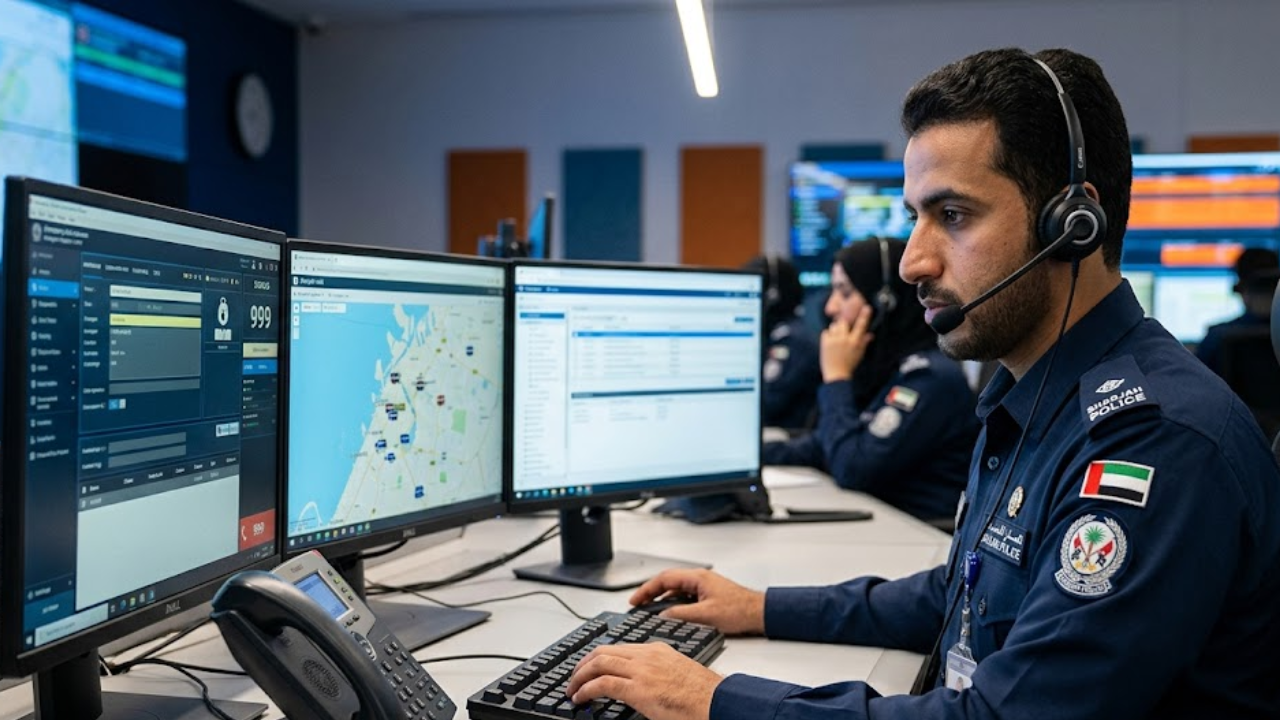
The duty officer on shift, identified as Khamis, noticed something off about her voice. There was no giggling. No background noise of a prank. Just a tense, controlled assertiveness. He realized she was speaking under duress and decided to play along to protect her cover.
Instead of breaking the illusion, Khamis leaned into the order. He began asking specific questions designed to gather intelligence without tipping off the husband standing nearby.
- "How many pizzas do you want?" He asked. She answered "one." That told the police there was likely only one aggressor in the room.
- "What drinks do you need?" She answered "two." That confirmed exactly how many people were inside the house.
While Khamis kept the conversation flowing naturally to keep the victim calm and the abuser unsuspecting, he signaled his supervisor. The operations team immediately initiated location-tracing protocols to pinpoint her exact coordinates within Sharjah.
The tactical response behind the scenes
Emergency dispatch isn't just about answering phones. It's about high-stakes pattern recognition. While Khamis maintained the pizza delivery ruse, dispatchers routed the location data directly to field units.
Sharjah Police patrols arrived at the residence within minutes. They breached the location, secured the scene, and separated the woman from her husband. The quick intervention defused what could have easily become a tragic domestic violence statistic.
Captain Majid Al Bas, Head of the Communications Operations Branch at Sharjah Police, later highlighted the incident during the Aman Ya Biladi radio program. He pointed out that these disguised emergency calls are part of specialized training for UAE emergency call handlers. Operators are trained to catch subtle linguistic indicators, tonal shifts, and behavioral cues that signal a caller is in danger but unable to speak freely.
What to do if you can't speak safely during an emergency
The pizza order trick worked in Sharjah because of an intuitive dispatcher, but safety experts generally warn against relying solely on it if other options exist. If you find yourself in a domestic abuse situation or a crisis where speaking out loud will put you in danger, you need a backup plan.
First, if you are using a mobile phone in a country that supports it, look into silent solutions. In many regions, dialing the emergency number and tapping specific digits alerts the operator that you cannot speak. For example, in the UK, pressing 55 during a silent 999 call routes you directly to the police as an emergency.
Second, utilize text-based emergency services if they are active in your area. The Sharjah Police manage non-urgent requests through their 901 line and app features, but for absolute life-and-death situations, the 999 emergency line remains the fastest route to dispatch physical help.
If you must use a coded phrase like ordering food, state your address clearly as part of the "delivery location" as early as possible in the conversation. The most critical piece of information the police need is your location; they cannot help you if they don't know where you are.
If you or someone you know in the UAE is experiencing domestic instability or threats to personal safety, don't wait for a crisis to escalate. You can reach out to local support systems, use the official police applications, or contact dedicated family protection support services before situations turn volatile.


