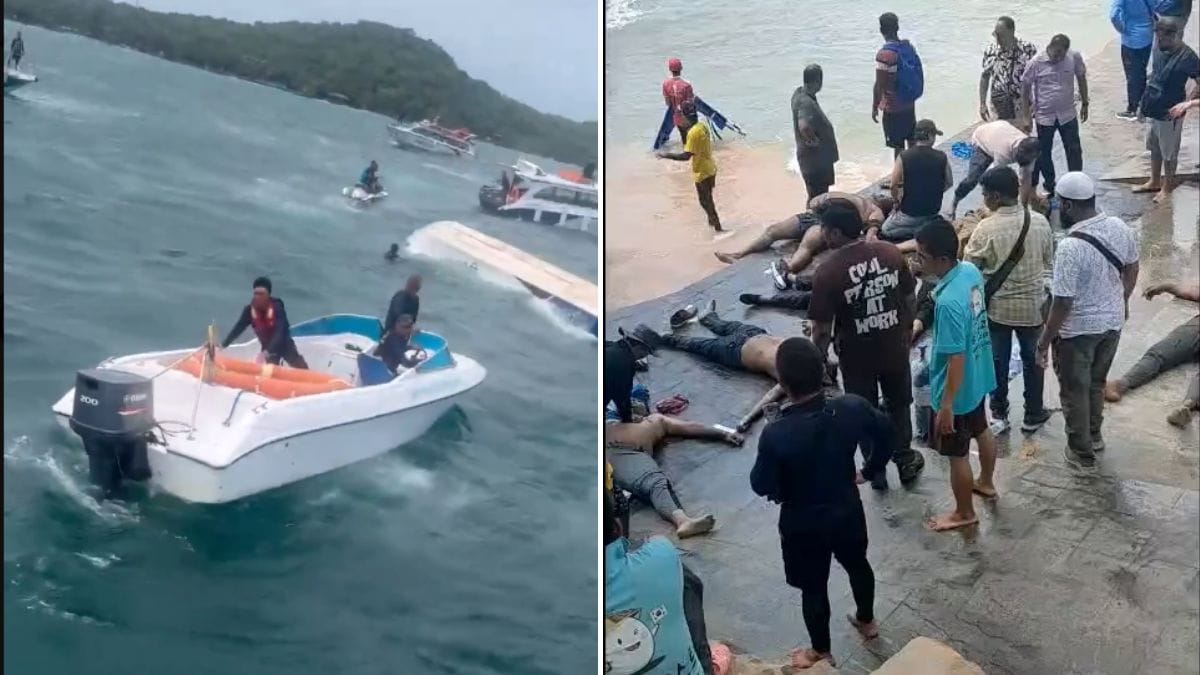
What was supposed to be a celebratory corporate reward trip ended in a horrific maritime disaster. On July 11, 2026, a high-speed tourist boat carrying 32 Indian passengers and four crew members flipped entirely upside down in the waters off southern Vietnam. The vessel, registered as AG 26751 and operated by the Ocean Pearl Island Company, capsized just 400 meters after departing Hon May Rut Ngoai Island.
Fifteen people died. Most of the victims were employees and corporate partners of India's Lava International smartphone brand, enjoying an incentive tour earned through exceptional sales performance. Instead of flying home with trophies, 15 families are now receiving bodies. The dead include ten individuals from Tamil Nadu, three from Andhra Pradesh, and two from Kerala, including prominent Kottarakkara business owner A.C. Thomas and his wife Loveni Thomas. In similar updates, we also covered: The Structural Failure of Resort Security Models Why Isolated Paradigms Mask Systemic Risk.
The tragedy raises immediate, uncomfortable questions about how Southeast Asia regulates its booming island-hopping excursions. Was this an unpredictable freak weather event, or a systemic failure of safety protocols disguised as a mechanical issue?
High Waves or Overloading The Chaotic Realities Behind the Capsize
Initial reports from regional officials, including Nguyen Tien Hai of the ruling Communist Party, point toward sudden heavy winds and massive waves that destabilized the speedboat. Eyewitnesses confirmed the sea near the An Thoi port was aggressively rough, even though it wasn't actively raining at 1:00 PM when the boat went under. The captain, a man in his 50s with decades of experience, reportedly struggled against a sudden shift in water dynamics before the hull completely turned over. The Points Guy has provided coverage on this fascinating issue in extensive detail.
But weather rarely acts alone in tragedies like this. Maritime investigators are currently probing whether a sudden mechanical failure locked the steering mechanism, preventing the captain from turning the bow into the waves. When a speedboat takes a heavy wave broadside rather than cutting through it straight on, capsize happens in seconds.
The speed of the disaster trapped victims inside the overturned cabin. While jet skis and neighboring civilian vessels rushed to the scene within five minutes, pulling 21 survivors out of the water, those inside the hull had no escape route. Rescuers had to perform desperate CPR on the sand, and two survivors remain in critical condition at a local hospital.
The Exploitative Reality of Rapid Tourism Growth
Vietnam's tourism sector is growing at a breakneck pace. Phu Quoc alone welcomed over 5.7 million visitors in the first half of 2026, with Indian tourists representing one of the fastest-growing demographics due to relaxed e-visa policies and cheap direct flights. But infrastructure cannot always keep up with demand.
Survivors and witnesses on the beach noted a staggering lack of immediate emergency medical care when the injured were brought ashore. Relying on local beachgoers and tour guides to administer life-saving resuscitation highlights a dangerous gap in remote island safety. This isn't isolated to Vietnam either. Just last year, 39 people perished when a ferry capsized in Ha Long Bay during a sudden squall. Southeast Asia's marine tourism sector frequently treats safety guidelines as optional suggestions until a tragedy forces local governments to react.
Vietnamese Prime Minister Le Minh Hung has demanded a thorough investigation to hold the operators legally accountable, but systemic changes are what actually save lives.
How to Protect Yourself on Southeast Asian Boat Tours
You can't control the ocean currents, but you can control whether you step onto a compromised vessel. If you are planning an island holiday in Vietnam, Thailand, or Indonesia, you need to take safety into your own hands.
Inspect the life jackets immediately. Don't just sit on them. Put them on before the boat leaves the dock. If the crew tells you it isn't necessary because the water is calm, ignore them. In the Phu Quoc incident, victims were trapped inside an enclosed space; if you are inside a cabin, keep your life jacket unclipped or easily accessible so it doesn't pin you against the ceiling if the boat flips.
Refuse to board an enclosed speedboat during choppy weather. Open-air speedboats give you a throwing chance to swim clear if the hull capsizes. Enclosed speedboats essentially become floating metal coffins when inverted. If the sky looks dark or the dock is rocking violently, cancel the trip. No excursion is worth your life.
Look at the boat's capacity. If you notice the crew cramming people into every available square inch of seating, step off. Overloaded speedboats lose their center of gravity, making them incredibly vulnerable to rogue waves.
The Indian Embassy in Hanoi and the Consulate General in Ho Chi Minh City have set up emergency response units to handle repatriation of the deceased. For those traveling, remember that local operators compete aggressively for your dollars, and their priority is volume, not necessarily your personal defense against the sea. Trust your gut, watch the weather charts, and prioritize survival over the itinerary.