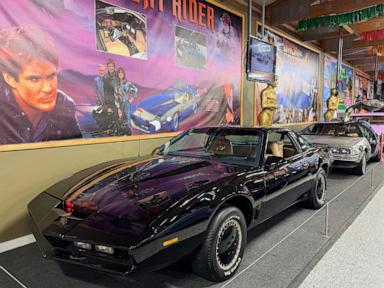
In early 2024, a resident of the United Kingdom opened an official envelope to find a speeding ticket issued to his vehicle. The evidence was clear. A camera had captured a black Pontiac Firebird—customized to look exactly like KITT from the 1980s television show Knight Rider—traveling well above the legal limit. There was just one problem. The car had been a non-functioning shell for years, sitting stationary in a garage under a layer of dust.
This incident is not a quirky anecdote about a television prop. It is a damning indictment of the "set it and forget it" nature of modern traffic surveillance. For years, municipal governments have pitched automated speed and license plate recognition systems as a way to remove human bias and increase efficiency. What this case reveals is a systemic breakdown in the verification process. When a machine makes a mistake, the burden of proof shifts unfairly to the citizen, who must prove their car didn't teleport into a different city while they were sleeping.
The Ghost in the Machine
Most people assume that when a speeding camera flashes, a human being eventually looks at the photo to confirm the details. The reality is far more automated. Modern systems use Optical Character Recognition (OCR) to scan license plates and automatically cross-reference them with national vehicle databases. If the plate matches a registration, the fine is generated and mailed without a second thought.
In the case of the Knight Rider replica, the system failed to account for a simple, physical reality. Cloned plates are a massive, growing issue. Criminals frequently spot a unique car online or in their neighborhood, print a set of fake plates with that specific number, and bolt them onto a similar make and model. The automated system sees a black Pontiac with the correct plate and checks the box.
The software isn't looking for the nuance of the dashboard or the specific "red scanner" on the nose of the car. It is looking for a string of alphanumeric characters. Because the system is designed for volume rather than precision, the "human in the loop" becomes a myth. If a human had spent five seconds looking at the image compared to the registered status of the vehicle, they would have seen a car that was SORN (Statutory Off Road Notification)—a legal status indicating the car is not driven on public roads.
The Profit Margin Over Public Safety
Why are these systems so prone to errors that a stationary car can be "caught" speeding? The answer lies in the business model of traffic enforcement technology. Many of these camera systems are not owned or operated by the police departments themselves. Instead, they are managed by private third-party contractors.
These companies often operate on a fee-per-citation basis or a monthly management contract that rewards high-volume throughput. Under this structure, there is no financial incentive to add rigorous human verification layers. Every additional second a human spends reviewing a flag is a second that costs the company money. From a purely corporate perspective, it is cheaper to mail out 10,000 tickets and handle the 1% of complaints manually than it is to verify all 10,000 before they hit the mail.
This turns the justice system into a numbers game. The "presumption of innocence" is effectively discarded. When the registered owner of the Knight Rider replica received his ticket, he wasn't being asked for his version of events. He was being told he was guilty and given a deadline to pay.
The Technological Blind Spots of OCR
Optical Character Recognition is impressive, but it is far from infallible. Shadows, dirt, or even the specific font used on a plate can trigger a false positive. In the broader industry, we see "ghost" reads where a camera picks up text from a billboard or a passerby’s t-shirt and interprets it as a license plate.
The Problem with Contextual Recognition
Modern AI-driven cameras are supposed to be getting better at identifying the "make and model" of a vehicle to ensure it matches the plate. However, this technology struggles with:
- Customized Vehicles: Modified cars like the Knight Rider replica confuse standard recognition algorithms because they deviate from the factory silhouette.
- Low Light Conditions: At night, most systems rely heavily on the reflective coating of the license plate, ignoring the rest of the car’s features.
- Environmental Interference: Heavy rain or fog can distort the "character" of a plate, leading the software to guess the closest match.
When a guess is made, the software doesn't flag it as "uncertain." It outputs a data string that the administrative system treats as a hard fact. This creates a feedback loop of bad data.
The Burden of Proof Trap
If you receive a ticket for a car that hasn't moved in years, you might think a simple phone call would resolve it. It rarely does. The bureaucracy behind automated fines is designed to be a one-way street. To fight a "phantom" ticket, the owner often has to provide:
- Time-stamped photos of the car in its current state.
- Mechanic receipts or records showing the car is non-operational.
- Witness statements or GPS data from their own mobile devices to prove they were elsewhere.
This represents a massive shift in legal labor. The state is no longer proving you committed a crime; you are proving that a machine is lying. For the average citizen, the time and stress required to fight a $100 fine often outweigh the cost of simply paying it. This is exactly what the system counts on. It is a tax on the path of least resistance.
Data Privacy and the Surveillance Web
The Knight Rider incident highlights a secondary, more sinister issue. To catch that "speeding" car, the system had to be scanning every single car that passed that point. We have built a massive, interconnected web of Plate Recognition (ALPR) cameras that track the movement of every citizen, regardless of whether they have done anything wrong.
These databases are often poorly secured and shared between various government and private entities. If a system is so poorly calibrated that it cannot tell the difference between a moving car and a stationary replica with a cloned plate, why should we trust it with the massive responsibility of tracking public movement? The lack of oversight in the "identification" phase suggests an equal lack of oversight in the "storage and privacy" phase.
The Cloned Plate Epidemic
The owner of the replica car was likely the victim of "plate cloning," a crime that has exploded in the last five years. With the rise of high-quality, low-cost plastic printing, anyone can create a set of plates in their basement.
The automated system is the criminal's best friend. By putting the plates of a similar-looking car on their own vehicle, they can bypass tolls, speed with impunity, and enter restricted zones. The "system" does exactly what it was programmed to do: it finds the innocent owner of the original plate and sends them the bill. Because the enforcement is automated, the criminal is long gone before a human ever realizes there is a discrepancy.
We are essentially using 20th-century identification methods (stamped metal or plastic plates) to feed 21st-century automated enforcement. The two are fundamentally mismatched.
Verification is Not Optional
If we are going to allow machines to act as judge and jury on our highways, the standard for evidence must be higher than a simple OCR match. A "smart" system should be required to cross-reference multiple data points before a fine is issued.
If the car is registered as SORN or non-operational, the system should automatically flag the image for immediate human review. If the make and model detected by the AI does not match the registration data—even if the plate does—the fine should be blocked. These are simple logic gates that could be implemented tomorrow, but they aren't, because they would reduce the total volume of fines processed.
The Knight Rider case isn't a glitch. It is the logical outcome of a system that prizes revenue and automation over accuracy and the rule of law. We have handed the keys to the kingdom to algorithms that don't know the difference between a fictional TV car and a real-world violation.
The next time you see a speed camera, remember that it doesn't see a person, a story, or a context. It sees a string of numbers. And if those numbers match your name in a database, the machine doesn't care if your car has been sitting in a garage since 1985. It just wants the payment processed.
The solution isn't better cameras. It is the mandatory re-insertion of human judgment into a process that has become dangerously detached from reality. Stop accepting the machine’s word as gospel and start demanding that the entities profiting from these systems prove their "evidence" is more than just a digital hallucination.