Backup quarterback debuts usually go one of two ways. Either the coaching staff hides the kid behind thirty screen passes and prays the defense scores, or the whole operation catches fire before halftime.
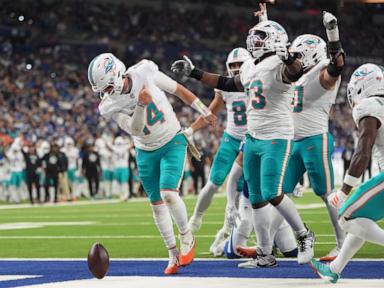
When Kyle McCord trotted onto the field for his first NFL start with the Miami Dolphins in place of an injured Malik Willis, nobody expected fireworks. Most fans braced for a conservative, watered-down game plan designed simply to survive the afternoon without turning the ball over three times. Instead, McCord looked surprisingly comfortable running a real pro offense, showing pocket poise and timing that immediately sparked a debate across South Florida.
Hold on. Before anyone starts engraving a plaque or declaring a quarterback controversy in Miami, we need to look closely at what actually happened on the tape. Because the box score only tells half the story, and the context around Willis's injury changes how you have to evaluate McCord's afternoon.
Why Kyle McCord Ended Up Under Center For Miami
Let's backtrack for a second. How did we even get to a scenario where Kyle McCord is starting an NFL game for the Dolphins while filling in for Malik Willis?
Quarterback rooms in the modern NFL churn faster than almost any other position group. Injuries pile up, schemes evolve, and front offices constantly cycle through developmental arms hoping one sticks. Willis arrived in Miami bringing elite athleticism, off-script playmaking, and a cannon for an arm—traits that make defensive coordinators lose sleep when he's healthy. When Willis went down with an injury, the Dolphins suddenly had to pivot to a completely different style of quarterback.
McCord isn't winning any footraces against NFL edge rushers. We knew that watching him sling it in college at Ohio State before his massive statistical resurgence at Syracuse. What McCord does bring to the table is fast eyes, quick pre-snap processing, and the willingness to throw into tight windows over the middle of the field before a receiver even clears his break.
You can't just copy-paste Malik Willis's playbook and hand it to Kyle McCord. Designing an offense for Willis means incorporating designed quarterback runs, heavy zone-read looks, and bootlegs that stress the perimeter. Designing an offense for McCord means living in the quick-passing game, trusting timing routes, and letting him operate from the pocket like a traditional rhythm passer.
Honestly, credit the Miami coaching staff here. Rather than forcing a square peg into a round hole, they leaned directly into what McCord does well right from the opening script.
Breaking Down What Actually Worked In McCord's First Start
If you watched the broadcast casually, you probably noticed that the Dolphins' offense didn't look panicked. That alone is a massive win for a guy making his first career NFL start. Most young backups speed up their internal clock by about half a second when live bullets start flying, leading to happy feet, bailing out of clean pockets, and airmailing routine checkdowns.
McCord kept his base calm.
Pocket Presence Under Real Pressure
The biggest difference between college football and Sunday afternoons is how fast throwing lanes close. Even when Miami's protection got muddy up the middle, McCord didn't drop his eyes to the pass rush. He climbed the pocket subtly—just a step or two forward—to buy an extra beat for his receivers to uncover downfield.
That tiny movement is something you simply can't coach easily. Either a quarterback feels the rush instinctively while keeping his eyes downfield, or he panics and drifts backward into ten-yard sacks. McCord stayed composed, took a couple of hits right after releasing the football, and delivered catchable throws in rhythm.
Attacking The Intermediate Middle
Defenses love daring inexperienced backups to throw between the numbers. Why? Because linebacker underneath drops and rotating safeties bait young quarterbacks into terrible interceptions.
McCord didn't take the bait. He showed genuine confidence hitting dig routes and deep curls right behind the second level of the defense. When a quarterback proves early in a game that he will punish soft zone coverage over the middle, safeties have to creep down. Once those safeties creep down, the explosive outside concepts that Miami loves to run suddenly open back up.
Managing The Operation
Pre-snap penalties kill backup quarterbacks faster than bad throws. Getting the play call in from the sideline, breaking the huddle cleanly, identifying the Mike linebacker, and shifting protections before the play clock hits zero takes serious mental bandwidth.
Miami operated smoothly. There weren't wasted timeouts in the first half because of confusion at the line of scrimmage. McCord commanded the huddle like he'd been taking first-team reps for months rather than stepping in on short notice for an injured starter.
The Reality Check Nobody Wants To Hear
Now let's pump the brakes. Saying Kyle McCord "showed promise" is completely accurate, but treating one solid start as proof that he's ready to take over a franchise is where fans get burned every single season.
NFL defensive coordinators are ruthless. When a backup quarterback makes his first start, the opposing defense often lacks recent NFL tape on his specific tendencies within that system. They don't know yet which coverage rotations confuse him, which side of the field he favors when his first read is covered, or how he handles disguised zero-blitzes on third-and-long.
Once there is actual NFL game film circulating around the league, everything gets harder.
By week two or three of a backup's run, defenses start sitting on his favorite timing routes. They show him two-high safety shells pre-snap and spin down into single-high right at the snap. They test his arm strength on deep outs toward the boundary—a throw that demands serious velocity so cornerbacks can't jump the route for a pick-six.
McCord also benefited from a game plan specifically tailored to protect him from obvious passing downs. Staying ahead of the chains on first and second down makes every quarterback look sharper. What happens when penalties or negative runs put him in third-and-eleven against a ferocious four-man rush while the defense drops seven into coverage? That's the real litmus test for any pocket passer without elite escape speed.
How Kyle McCord Compares To Malik Willis In This Offense
Comparing McCord and Willis isn't about picking who is the "better" football player in a vacuum. It's about understanding two wildly different ways to stress an NFL defense.
Malik Willis gives a coaching staff an automatic numbers advantage in the run game. Because defenses have to account for his legs on every snap, linebackers hesitate for a split second at the mesh point. That hesitation creates natural running lanes for the backs and opens up massive play-action shots down the field. When Willis is healthy, defenses have to defend all eleven players on the field.
Kyle McCord forces defenses to play disciplined coverage. Because he gets the ball out on time and distributes it evenly across all his weapons, pass rushers often arrive a fraction of a second too late. Instead of creating explosive plays by breaking containment and extending plays for five seconds, McCord creates efficiency by keeping the offense on schedule and moving the chains methodically.
Here is the truth about modern NFL roster building—having two quarterbacks with contrasting skill sets is actually a headache for opponents preparing during a short week, even if coaches publicly claim they prefer continuity. When Willis gets healthy, his ceiling as a dynamic dual-threat weapon gives Miami an element McCord simply cannot replicate physically. At the same time, McCord just proved to the entire locker room that the season doesn't instantly derail if Willis misses time.
What To Watch Moving Forward In Miami's Quarterback Room
Whether Malik Willis returns immediately or needs extra recovery time, McCord's debut permanently shifted his standing in the organization. You don't put clean, composed NFL starter tape out there and quietly disappear back into obscurity.
If you're tracking how this quarterback situation unfolds over the coming weeks, pay attention to three specific indicators rather than raw passing yards:
- Red zone efficiency. Moving the ball between the twenties is great, especially when defenses play softer zones. Once the field shrinks inside the twenty-yard line, windows vanish and athletic limitations get exposed fast. Watch how Miami calls plays in the low red zone if McCord gets more snaps.
- Third-down conversion rates on medium-to-long distances. Anyone can look sharp throwing quick hitches on first down. Keep an eye on third-and-six or longer—that's where you see whether a young quarterback can hold the ball an extra tick and deliver under duress.
- Practice rep distribution once Willis is cleared. Coaches tell you what they really think through practice reps, not press conferences. Watch closely how the staff splits first-team work the moment Willis gets the green light from the medical staff.
Kyle McCord earned himself real NFL credibility in a tough spot, proving he can run a pro offense without flinching when the starter goes down. Keep your expectations grounded in the tape, watch how defenses adjust once they have film on him, and enjoy having a genuinely capable backup option in a league where most teams fold the second QB1 gets hurt.