Diplomats are flying into Tehran while missile batteries stay loaded across the Levant. That contrast tells you everything about where the Middle East stands right now.
When international delegations meet in Iran with the Mideast region on edge over potential for renewed fighting, casual observers usually assume one of two things. Either peace is right around the corner, or the talks are pure theater designed to stall for time while armies reload. Both takes are wrong. Having tracked regional diplomacy and security briefings across the Persian Gulf and the Eastern Mediterranean for years, I can tell you these meetings serve a much colder, more practical purpose. They're crisis-management mechanics operating inside an active shadow war.
Why Diplomats Rush to Tehran When Tensions Spike
You don't send senior envoys into a volatile capital because everyone suddenly agrees on the future. You send them because nobody wants an accidental war that spirals past the point of control.
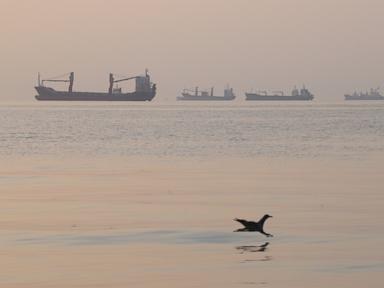
In the Middle East, miscalculation kills faster than intent. A single drone strike hitting the wrong barracks, or a maritime incident in the Strait of Hormuz, can force leaders into public corners where backing down looks like political suicide. When delegations converge on Tehran during periods of acute friction, their immediate job isn't solving decades-old ideological disputes. It's establishing red lines and keeping backchannels open so an isolated clash doesn't trigger a multi-front regional firestorm.
Regional neighbors like Oman, Qatar, and Iraq often act as the connective tissue here. If you've ever watched how Gulf diplomacy actually works behind closed doors, you know Muscat and Doha don't wait for formal summits. They pass messages quietly, verify intentions, and test whether Tehran's leadership is looking for an off-ramp or preparing to absorb another round of kinetic strikes.
The Difference Between Public Rhetoric and Private Signals
Listen to the speeches coming out of state media and you'd think full-scale conflict is guaranteed by Tuesday. Watch the flight trackers and diplomatic manifests, and a different picture emerges.
Governments routinely use aggressive public statements to satisfy domestic hardliners and reassure regional allies that they aren't going soft. Meanwhile, inside closed meeting rooms in Tehran, envoys discuss de-escalation frameworks, prisoner swaps, maritime security, and economic relief mechanisms. If you only read the headlines quoting fiery press conferences, you're missing ninety percent of the actual negotiation.
Who Actually Shows Up at the Table
Not every delegation arriving in Iran carries the same weight, and confusing a ceremonial visit with a substantive security negotiation is a classic analytical mistake.
- Regional Gulf Interlocutors: Officials from Oman, Qatar, Saudi Arabia, and the United Arab Emirates carry real leverage because their economies and shipping lanes sit directly in the line of fire. Since the China-brokered rapprochement between Riyadh and Tehran in 2023, Gulf states have prioritized regional stability to protect massive domestic infrastructure plans like Saudi Vision 2030.
- European Envoys: Representatives from the E3—France, Germany, and the United Kingdom—alongside European Union diplomats, usually focus on nuclear monitoring, ballistic missile transfers, and detained dual nationals. Their leverage has shrunk compared to a decade ago, yet they remain vital conduits between Washington and Tehran when direct American talks are politically toxic.
- Axis of Resistance Coordinators: Leaders and senior commanders from allied groups in Lebanon, Iraq, and Yemen frequently travel to Tehran to synchronize strategy. These aren't diplomatic peace talks. They're operational alignment meetings to decide how much pressure to apply without crossing thresholds that invite overwhelming retaliation.
- Eurasian Powers: Russian and Chinese officials regularly engage Tehran on trade, energy, and security coordination. Beijing wants oil flowing smoothly through the Persian Gulf without disruption, which quietly puts China in the camp of curbing major regional war, even while backing Iran diplomatically at the United Nations.
The Structural Triggers Keeping the Region on Edge
Why does the Mideast region remain perpetually on the brink of renewed fighting even while diplomats shake hands? Because the underlying drivers haven't been resolved. They've just been managed.
First, there's the deterrence equation. Following direct exchanges of fire between Iran and Israel in 2024—a historic shift after decades of purely covert conflict—both sides realized the old rules of engagement had broken down. Once direct strikes happen, every subsequent move carries higher stakes. Neither side wants to look weak, so every strike demands a calibrated response.
Second, proxy dynamics complicate central control. While Tehran supplies funding, weaponry, and intelligence to allied militias across the region, those groups also possess local political agendas and autonomous command structures. A commander on the ground in southern Lebanon, northern Iraq, or the Red Sea coast can initiate an attack that forces Tehran to manage the fallout after the fact.
Third, economic pressure shapes internal Iranian politics. Decades of international sanctions, currency depreciation, and domestic inflation create intense pressure on Iran's civilian government to find diplomatic breathing room. At the same time, security institutions like the Islamic Revolutionary Guard Corps (IRGC) prioritize forward defense and regional deterrence. When delegations visit Tehran, they're navigating the friction between those two competing priorities inside the Iranian state itself.
What Most Analysts Get Wrong About De-Escalation
There's a persistent myth in Western commentary that diplomatic engagement automatically means concessions, or that refusing to talk projects strength. Both assumptions fail in practice.
Talking to adversaries isn't a favor you grant them. It's an intelligence-gathering and risk-reduction tool. When international delegations sit across from Iranian officials—whether from the Foreign Ministry or the Supreme National Security Council—they get to read body language, test specific proposals, and see who actually holds decision-making authority in the room.
Another common error is treating Iran as a monolith. Anyone who has followed Iranian politics closely knows the divide between pragmatic technocrats who want sanctions lifted and ideological hardliners who view Western engagement as a trap. Ignoring that internal tug-of-war leads to bad predictions. Sometimes a delegation meets with the Foreign Ministry and gets a warm reception, only to see security forces take a hardline action days later to remind everyone who controls military policy.
The Role of the International Atomic Energy Agency
Whenever security tensions flare, nuclear oversight immediately enters the conversation. Visits by International Atomic Energy Agency (IAEA) chief Rafael Grossi to Tehran often coincide with wider diplomatic pushes. Why? Because enrichment levels, centrifuge deployments, and camera access at nuclear facilities serve as bargaining chips. When the region edges closer to military conflict, nuclear diplomacy becomes both more urgent and vastly harder to sustain.
How to Read Diplomatic News Without Getting Misled
If you want to understand whether a round of meetings in Tehran is actually lowering the temperature or just marking time before the next clash, stop reading opinion pieces and track concrete indicators instead.
Look at maritime insurance rates in the Persian Gulf and the Red Sea. Underwriters put real money behind risk assessments; if shipping premiums drop after a round of talks, the market believes the threat of immediate escalation has eased. Watch troop posture and naval deployments reported by defense outlets like USNI News or Janes rather than anonymous social media accounts claiming imminent strikes. Pay attention to whether follow-up technical committees are scheduled, because real diplomacy moves from high-level photo ops into boring, granular working groups.
Track official readouts from neutral mediators like Oman's Ministry of Foreign Affairs, which tend to be sparse, disciplined, and free of ideological spin. Compare what Tehran says in English for international audiences against what appears in Persian-language outlets aimed at domestic constituencies. When those two messages start converging around restraint and stability, de-escalation has genuine traction—and when they diverge sharply, keep your eyes on the headlines for the next flashpoint.