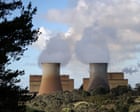
Victoria's power grid is walking straight into a brick wall, and partisan slogans won't soften the impact.
Yesterday's seismic state election result—which swept Jess Wilson and the Liberal-National Coalition into majority government after 12 years of Labor rule—changes the political furniture in Spring Street. It doesn't change the physics of the National Electricity Market. By June 30, 2028, EnergyAustralia will permanently switch off the Yallourn coal-fired power station in the Latrobe Valley. That single retirement rips out roughly a fifth of Victoria's electricity generation in one stroke.
If you think the state has a clean, stress-free replacement ready to plug that hole, you haven't read the engineering audits. Both major sides of politics spent the 2026 campaign treating Victoria's electricity supply like a culture war prop rather than an urgent infrastructure deadline. Now the election is over, the new government faces an unforgiving calendar, rising demand, and delayed transmission lines that threaten both winter reliability and household power bills.
The 2028 Cliff Edge Nobody Can Legislate Away
Most energy debates get bogged down in ideological talking points about coal versus renewables. Ignore the noise and look at the megawatts. Victoria currently relies on three remaining brown coal generators—Yallourn, Loy Yang A, and Loy Yang B. Under a binding agreement with the state, Yallourn shuts down in mid-2028. Loy Yang A follows in 2035.
You can't wish a 1,480-megawatt baseload generator back into existence with a press release. Yallourn is an ageing, increasingly fragile asset that requires massive capital just to keep limping along. Even if a government wanted to delay its exit, global supply chains for heavy coal-plant components and commercial realities make an eleventh-hour U-turn wildly expensive.
Meanwhile, electricity demand isn't sitting still. According to Oliver Nunn, managing director at energy consultancy Endgame Analytics, Victorian electricity demand is climbing at roughly 5% year-on-year. Data centers, population growth, and the gradual electrification of homes and transport are pulling power consumption upward at the exact moment a giant slice of supply disappears. When supply tightens and demand grows, wholesale prices spike. Those wholesale spikes flow straight into retail bills.
Why Both Major Political Playbooks Fall Short
During the 2026 campaign, voters were handed two competing stories on how to keep the lights on. Neither holds up under close inspection.
Under the outgoing Labor administration, Victoria actually built generation at a brisk pace. Over the past decade, the state expanded from 14 wind farms to 44, and from just two large-scale solar farms to 57. The Victorian Auditor-General confirmed the state hit its 2025 target of 40% renewable electricity generation. That sounds great on a brochure. The catch is that generating clean electrons in western Victoria or Gippsland means nothing if you can't transport them to Melbourne's suburbs.
Labor's transmission rollout stalled badly. Both the Victoria to New South Wales Interconnector West (VNI West) and the Western Renewables Link (WRL) fell behind schedule, with the Auditor-General warning neither project is likely to be finished before Yallourn closes in 2028. Offshore wind targets for 2032 also slipped to at least late 2033 due to port bottlenecks and delayed auctions. To make matters more confusing, former premier Ben Carroll launched a cost review into the Western Renewables Link and scrapped a planned renewable energy zone right before the election.
Now look at the incoming Coalition government's gas-heavy pivot. Pledging to fast-track onshore gas and scrap restrictions sounds decisive to frustrated voters, yet it collides with basic geology and construction timelines. Victoria's offshore Bass Strait gas fields—which supplied eastern Australia for decades—are in steep structural decline. Energy analysts have repeatedly pointed out there is no hard evidence Victoria possesses vast, untapped onshore conventional gas reserves ready to replace Bass Strait.
Even if explorers struck commercial gas tomorrow, bringing new fields into production takes years of drilling, environmental approvals, and pipeline construction. Industry experts told the ABC that the Coalition's gas strategy couldn't realistically deliver meaningful new supply for at least five years. Five years from late 2026 puts us in late 2031—more than three years after Yallourn goes dark.
The Hidden Cost of Burning Expensive Gas
Here is the economic trap most commentary misses: Victoria doesn't run out of physical electricity first—it runs out of cheap electricity.
In the National Electricity Market, the wholesale price for every generator in a given five-minute interval is set by the highest-priced generator needed to meet demand. Most of the time, that marginal price-setter is gas-fired generation. Over the past five years, domestic gas prices have jumped 62%, dragging Victorian retail electricity bills up 18% alongside them.
Think about what happens in July 2028 if wind farms, solar projects, and big batteries are stuck behind congested powerlines when Yallourn exits. The Australian Energy Market Operator (AEMO) will have no choice but to fire up expensive gas peaking plants to fill the gap. Every megawatt-hour generated by high-cost gas sets the clearing price for the entire state grid.
That is why energy analysts argue that delaying renewables and transmission doesn't save consumers money—it taxes them twice. You pay once through stalled infrastructure costs, and you pay again every time gas sets the wholesale price during a calm, cold winter evening.
Transmission Bottlenecks and System Strength Are the Real Bottleneck
If you talk to grid engineers rather than politicians, they rarely panic about total annual gigawatt-hours. They worry about transmission congestion and system strength.
Coal-fired turbines are massive spinning chunks of steel. As they rotate, they naturally provide physical inertia and voltage stability—what engineers call synchronous system strength. Wind turbines and solar panels connect through electronic inverters rather than spinning heavy metal. When you retire a synchronous coal plant like Yallourn, the grid becomes more sensitive to sudden frequency disturbances unless you install grid-forming batteries or synchronous condensers to replace that stability.
At the same time, western Victoria is already choked with renewable projects whose output gets curtailed—literally wasted—because existing 220-kilovolt powerlines can't carry the load. The Western Renewables Link and VNI West were designed to unlock that bottled-up power and connect Victoria to interstate reserves in New South Wales.
Rural communities along the WRL corridor, particularly around Darley and regional farming districts, have raised legitimate concerns about bushfire risk, land use, and visual impacts. In May 2026, an independent Inquiry and Advisory Committee actually found the cumulative impacts around Darley unacceptable and recommended exploring targeted alternatives while letting the rest of the line proceed. Instead of solving local compensation and routing bottlenecks surgically, politicians turned high-voltage poles and wires into an ideological battleground. Pausing or cancelling transmission corridors now guarantees higher curtailment and steeper bills later.
What Actually Works Between Now and 2028
We don't have time to reinvent Victoria's grid from scratch before mid-2028. Big offshore wind farms and new gas basins won't arrive in time. Only technologies that can be permitted, financed, and bolted onto the grid within 18 to 24 months will protect Victorians from supply shortfalls and price shocks.
Three practical levers actually move the needle before Yallourn closes:
- Utility-scale and community batteries. Unlike transmission lines stretching hundreds of kilometers across private farmland, grid-scale batteries can be built inside existing substation footprints in roughly 12 to 18 months. Victoria is actually on track to meet its 2.6-gigawatt storage target by 2030, with major projects like the 350-megawatt Wooreen battery slated to come online ahead of Yallourn's exit. Pairing these batteries with grid-forming inverters also solves part of the system-strength problem.
- Commercial rooftop solar and virtual power plants. Australia leads the world in household rooftop solar, yet warehouse roofs, shopping centers, and industrial estates across Melbourne remain largely bare. Subsidizing commercial solar paired with mid-scale batteries puts generation directly inside the load center, bypassing regional transmission bottlenecks altogether.
- Industrial demand response. Heavy electricity users—like the Portland aluminium smelter—already act as giant shock absorbers for the grid. Expanding voluntary demand-response contracts, where large industrial users get paid to power down for two or three hours during extreme heatwaves or winter wind droughts, is vastly cheaper than building gas plants that sit idle 95% of the year.
How Victorians Can Protect Their Own Power Bills Right Now
While Premier-elect Jess Wilson's incoming cabinet decides whether to pragmatise its energy policy or double down on reviews, households and businesses shouldn't wait around for Spring Street to rescue their power bills.
Start by auditing your exposure to peak evening tariffs. Between 4:00 PM and 9:00 PM is when solar drops off, wholesale prices surge, and coal closures hurt most. Shifting high-draw appliances—pool pumps, dishwashers, EV chargers, and electric hot water heat pumps—to midday solar windows (10:00 AM to 3:00 PM) insulates you from wholesale volatility. Many Victorian retailers now offer free or near-free daytime power plans specifically because midday solar floods the market.
If you're still running an ageing gas ducted heater or gas hot water unit, plan your replacement cycle now rather than waiting for an emergency breakdown. Victoria's 62% surge in gas prices over five years shows where residential gas is heading as Bass Strait depletes. Switching to a reverse-cycle split system or heat pump hot water system cuts total household energy consumption dramatically—especially when paired with rooftop solar or a home battery.
Finally, stop treating energy infrastructure as a team sport. Whether it's paying regional landholders fairly to host transmission lines or fast-tracking grid-forming batteries near retiring coal plants, the physics of keeping the lights on doesn't care who won Saturday's election. Victoria has less than 20 months until Yallourn powers down for good, and every month spent reviewing instead of building goes straight onto your quarterly bill.



