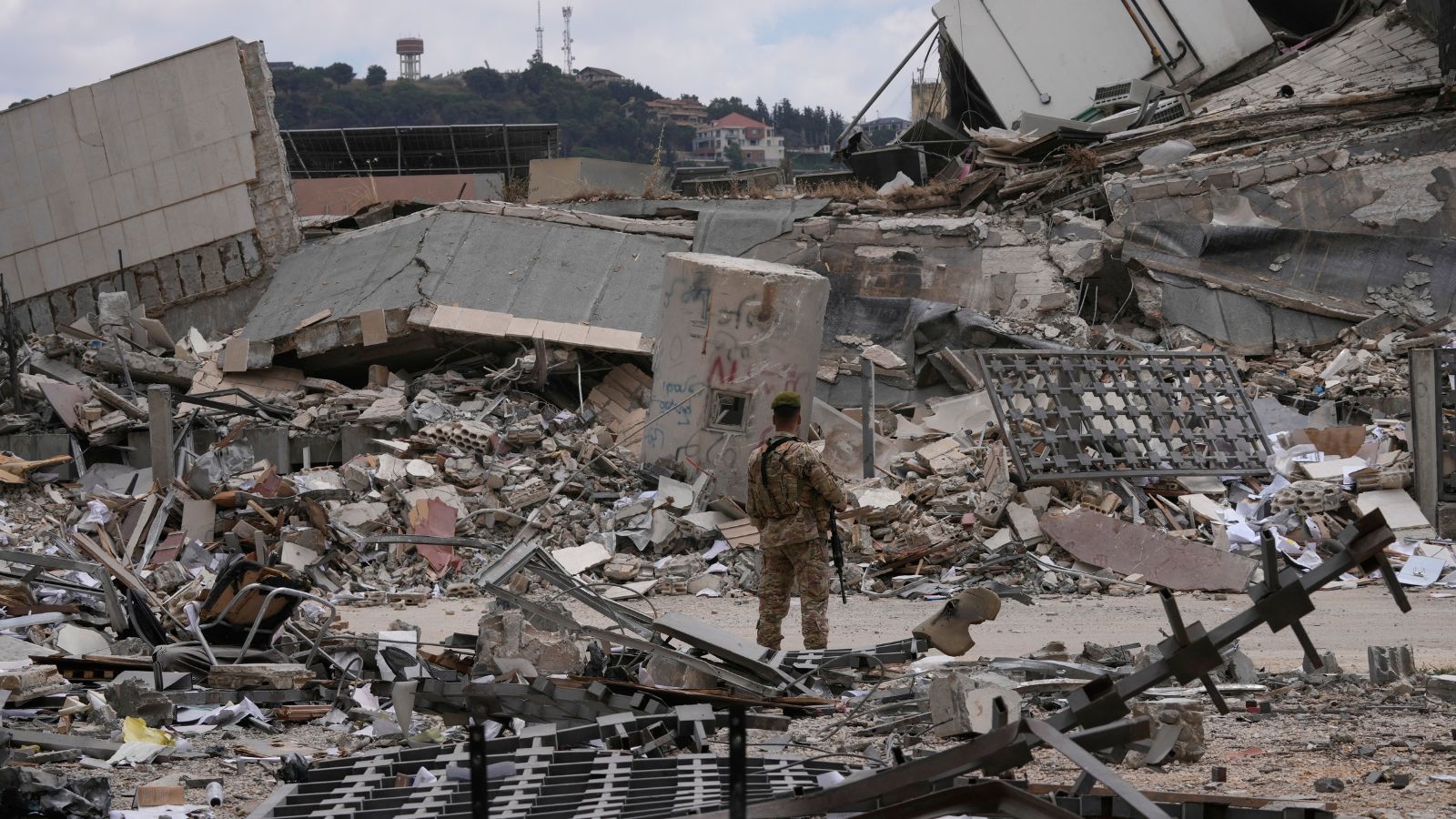
Kyiv just rewrote the rules of engagement. If you think the drone campaign inside Russia is just about hitting oil refineries to spike global fuel prices, you are missing the bigger picture. The overnight strikes on June 24, 2026, targeted something far more strategic, far deeper, and infinitely more difficult for Moscow to replace.
Ukrainian long-range drones flew more than 1,200 kilometers behind the front lines. They didn't just hit an ordinary energy site. They struck the Orenburg Gas Processing Plant and Russia's only helium production facility. At the exact same time, separate drone waves hit two of Russia's most critical space and satellite communication centers, including the massive Dubna complex near Moscow. In related developments, take a look at: The Anatomy of Judicial Containment in Balochistan.
This wasn't a random harassment raid. It was a calculated, surgical amputation of Russia's high-tech military supply chain.
The Deepest Punch Yet
Orenburg sits thousands of miles from the trenches of the Donbas, right up against the border with Kazakhstan. For years, the Kremlin assumed this distance made its industrial crown jewels safe. They were wrong. The overnight operation proves that no piece of Russian military infrastructure is out of reach anymore. Associated Press has provided coverage on this fascinating topic in extensive detail.
Local reports and satellite data confirmed multiple fire hotspots tearing through the Orenburg industrial zone. The airport in Orenburg had to shut down entirely, suspending all arrivals and departures as the night sky lit up. The region's governor, Yevgeny Solntsev, tried to downplay the strike by claiming drones were shot down over an industrial facility, but the smoke visible for miles told a completely different story.
This specific plant is a massive cog in Gazprom's Orenburg Gas Chemical Complex. It processes natural gas from Kazakhstan's Karachaganak field. Striking this node does more than disrupt local energy production. It fractures a delicate economic partnership and stops the processing of highly specialized chemical components that the Russian war machine requires to keep building precision weapons.
Striking the Heart of Russian Rocketry
To understand why this strike matters, you have to look at what the Orenburg facility actually produces. This isn't just about cooking gas or heating fuel. This complex houses the only helium plant in the entire country.
Helium is a critical resource for advanced military applications. Liquid-fuel rocket engines rely heavily on helium to pressurize fuel tanks. The Russian space program and, more importantly, its ballistic missile units cannot function without it. If you can't pressurize the tanks, the rockets don't launch.
The plant also refines ethane. Ethane is a baseline component used to manufacture solid rocket fuel and specialized gunpowder. By setting this complex on fire, Ukraine didn't just cause a temporary power outage. They targeted the literal fuel source of Russia's long-range missile campaign.
Replacing a specialized helium and ethane refining infrastructure is an engineering nightmare. Russia cannot easily import the required high-tech machinery due to international sanctions. Every single compressor, valve, and cooling tower damaged in Orenburg will take months, if not years, to fix or replace. Kyiv knows this. By hitting the source of rocket manufacturing ingredients, Ukraine is trying to force a hard ceiling on how many missiles Russia can build in the coming months.
Cutting Moscow Space Lifelines
While the Orenburg complex was burning, another synchronized operation unfolded closer to the capital. Ukrainian drones hammered two vital satellite communication nodes used directly by the Russian military.
The first target was the Dubna Space Communications Center located just north of Moscow. It is widely recognized as the largest ground-based satellite communication complex in Russia. The second strike hit the Vladimir Space Communications Center east of the capital. According to reports from Ukraine's General Staff, both facilities suffered significant damage, with at least two main buildings catching fire in the Vladimir region.
These centers aren't for civilian television broadcasts. They support long-distance space communications, satellite tracking, and encrypted data arrays used by Russian security forces and military commands. Knocking these complexes offline throws a wrench into Russia's battlefield coordination.
Modern warfare depends entirely on real-time data flow. When satellite tracking centers lose power or structural integrity, the lag time between identifying a target and striking it grows. Drone operators lose connectivity. Commanders lose the clear bird's-eye view of the front line. Ukraine is systematically blinding the Kremlin's eyes in the sky.
The Reality of Air Defenses in 2026
The scale of the drone deployment on both sides shows how much air warfare has transformed. Russia's Defense Ministry claimed its air defenses shot down 323 Ukrainian drones overnight. Meanwhile, Ukraine's air force reported that Russia launched 101 long-range attack drones during the same window.
Even if you take the Russian numbers with a grain of salt, the sheer volume of drones in the air is staggering. It reveals a simple mathematical truth. Air defense systems, no matter how advanced, can be overwhelmed by saturation tactics. You launch enough cheap drones, and some will always get through to the target.
While Russia focused on defending Moscow and its immediate military installations, Ukraine found the gaps. Flying a drone fleet 1,200 kilometers across heavily defended airspace without being intercepted requires incredible route planning, electronic warfare coordination, and intelligence. It shows that Ukraine's Unmanned Systems Forces have matured into a highly sophisticated branch of military operations.
Dismantling the Crimean Supply Hub
The strikes deep inside Russia occurred alongside a relentless campaign to isolate Crimea. The strategic Black Sea peninsula has become a trap for Russian forces. Overnight drone strikes successfully knocked out power in the port city of Sevastopol, causing widespread blackouts.
Ukraine's Security Service confirmed they also targeted two military airfields and destroyed active missile systems on the peninsula. The goal here is obvious. By targeting the power grid and air defenses in Crimea at the height of the summer, Kyiv is disrupting the main logistics artery feeding the southern front.
Crimea hosts critical naval bases and supply routes. If Ukraine can keep the lights off, disable the airfields, and threaten the bridges, holding the peninsula becomes an expensive, unsustainable burden for Moscow. Western analysts point out that this dual strategy of hitting high-value targets deep inside Russia while squeezing Crimea places immense psychological and political pressure on the Kremlin.
To understand where this conflict goes next, watch the production output of Russian missile manufacturers and the operational stability of their satellite networks over the coming weeks. The damage at Orenburg and Dubna will show its true impact not in immediate headlines, but in the slowing pace of Russia's tech-dependent military operations. To adapt to this shifting reality, security teams must expect deeper, more specialized industrial targets to face identical drone swarm tactics moving forward.