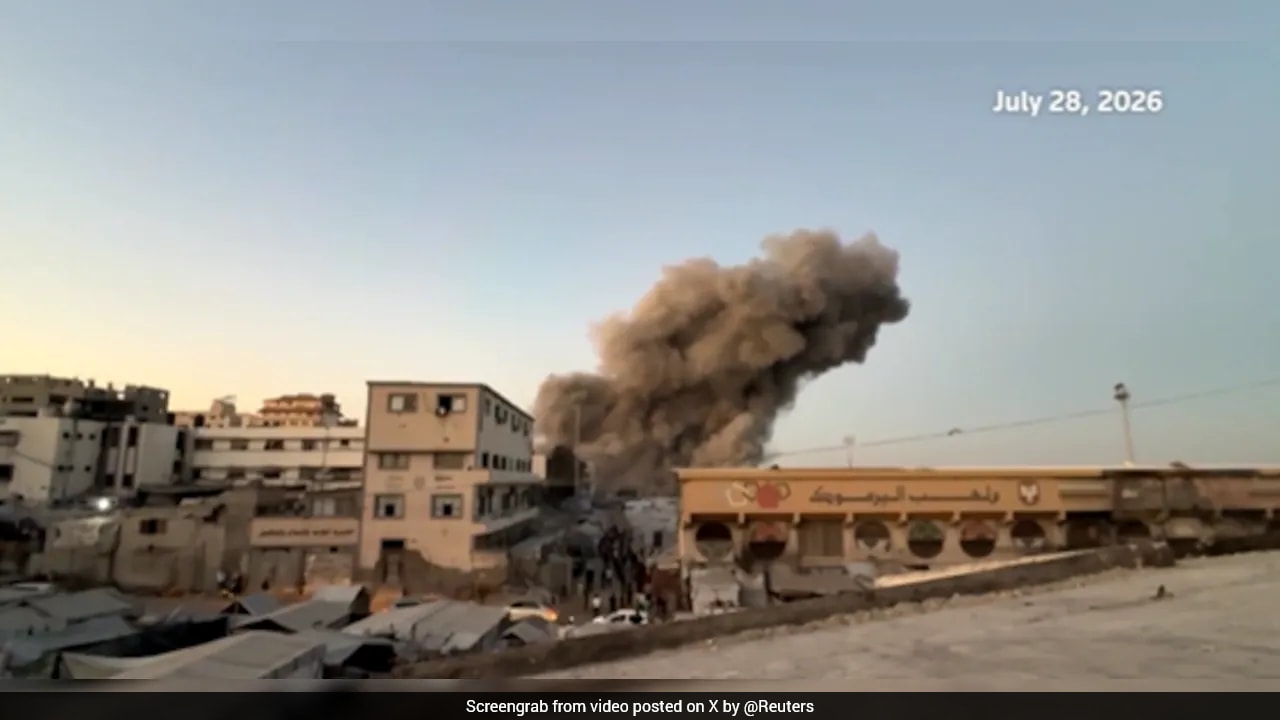
Plumes of thick black smoke swallowed the evening sky over Gaza City as an Israeli airstrike reduced the Al-Muttaqin Mosque to a shattered pile of concrete and twisted metal. If you follow the daily updates out of the region, you probably saw the headline. The Israel Defense Forces claimed the site hid a militant weapons depot. Hamas and local religious authorities dismissed the charge as a fabricated excuse to target houses of worship.
The reality on the ground is messy, violent, and far more complicated than a simple press release. Let's look at what actually happened, why this specific strike matters right now, and what it reveals about the fragile state of affairs in the strip.
Striking the Al-Muttaqin Mosque
The attack hit the Al-Muttaqin Mosque near Yarmouk Stadium. For months, the surrounding area has hosted clusters of tents and temporary shelters for families displaced by years of continuous fighting. When the missile struck, it sent shockwaves through a population already living on edge.
According to the IDF, the mosque served as a functional hub for storing weapons meant to target Israeli troops and civilians. The military stated that they issued advance warnings, allowing civilians nearby to evacuate before the detonation. Footage captured by independent journalists showed dozens of residents fleeing the zone moments before the blast tore through the structure.
Miraculously, health officials in Gaza reported zero deaths or injuries from this specific blast. But the physical destruction was absolute. The minaret collapsed into rubble, and the neighborhood was left to sift through the dust.
The Broader Context of the Fragile Truce
To understand why a single mosque strike triggers international friction, you have to look at the timeline. A U.S.-backed ceasefire deal went into effect back in October. Many hoped that agreement would permanently freeze the conflict.
It didn't.
Violence has simmered and boiled over on a regular basis. More than 1,200 people have died in Gaza since that truce was signed, alongside tens of thousands casualties from the broader war. Israel maintains that its ongoing operations target remaining military infrastructure and uncompromised cells, pointing to terms in broader international peace proposals that require militant groups to fully lay down their arms.
On the other side, local leaders argue that these continuous strikes prove the ceasefire is effectively dead. They contend that military pressure is being used to shrink Palestinian-controlled coastal areas and enforce a permanent blockade. Eyewitnesses on the street express sheer exhaustion, asking reporters how any semblance of normal life can exist when explosions happen hourly.
The Pattern of Civilian Infrastructure
Using religious and civic buildings for military operations remains a central flashpoint in modern asymmetric warfare. The Israeli military has repeatedly documented and argued that militant factions intentionally embed assets inside schools, hospitals, and mosques to deter attacks or weaponize the resulting structural damage for international sympathy.
Critics and humanitarian organizations push back hard against this justification. They argue that regardless of the tactical rationale, the destruction of cultural and religious heritage sites deepens an already catastrophic humanitarian crisis. With hundreds of mosques damaged or flattened over the course of the conflict, the loss of these community pillars leaves lasting psychological scars on a displaced population.
Amir Abu Al-Amrain, director general of Gaza's Ministry of Awqaf and Religious Affairs, called the attack a blatant crime wrapped in false pretexts. Meanwhile, military strategists in Tel Aviv signal that operations will continue until complete demilitarization is achieved, regardless of diplomatic pushback.
The rubble of the Al-Muttaqin Mosque will eventually be cleared, but the cycle driving these strikes shows no sign of slowing down. Keep a close eye on how international mediators respond to these recurring violations, because the current path points straight toward renewed escalation rather than long-term stability.