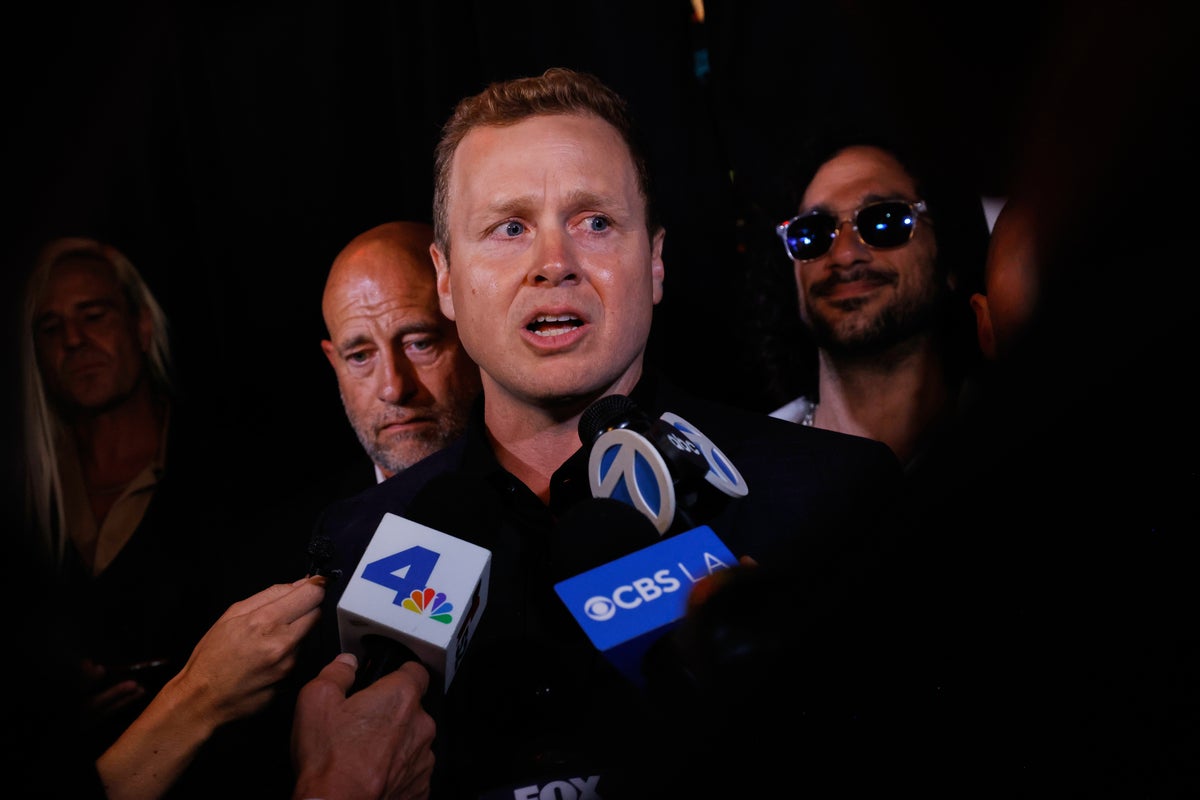
Spencer Pratt was winning. Until he wasn't.
When the early mail-in ballots dropped on primary night, The Hills villain turned crystal tycoon held a comfortable eight-point lead over progressive city council member Nithya Raman. For a few frantic days, it looked like Los Angeles was about to do the unthinkable: hand the keys to a $15 billion municipal budget and 50,000 city workers to the guy who once blew a $10 million fortune on wizard crystals and faked his own divorce for MTV ratings.
Then reality set in.
Over the weekend, a massive wave of late-returned mail ballots completely erased his lead. By Monday, the Associated Press officially called it. Raman surged ahead, locking Spencer Pratt out of the November runoff and leaving him to threaten that he is leaving LA for good.
The post-mortem from political pundits was fast and predictable. They blamed his tabloid past. They laughed off his candidacy as a joke. But treating his mayoral run as a mere stunt completely misses the point. The real story behind the Spencer Pratt LA mayors race failure isn't that a reality star lost a political campaign. It's about why a deep-blue city flirted with him in the first place, and why his specific brand of chaotic populism hit a brick wall built by traditional election math.
The Fire That Triggered the Spencer Pratt LA Mayors Race
You can't understand why Spencer Pratt ran for office without looking at the ashes of his life. Literally.
In January 2025, the catastrophic Palisades Fire tore through Southern California. It was the most destructive wildfire in Los Angeles history, and Pratt’s Pacific Palisades home was completely leveled. He lost everything. He ended up living in a trailer parked on the ruins of his property, filming TikToks and trying to launch a new reality show about the rebuilding process.
Trauma breeds resentment. Pratt didn't just blame the weather; he blamed the government. He sued the city of Los Angeles. He demanded investigations into California Governor Gavin Newsom and Mayor Karen Bass. On the exact one-year anniversary of the fire, he stood in front of his burned-out lot and announced his candidacy for mayor.
"They let my home burn down," Pratt said in his announcement video. "I know what the consequences of failed leadership are."
Suddenly, the guy known for spreading sex tape rumors on MTV was speaking for a massive, angry segment of the population. He wasn't just a caricature anymore. He was a pissed-off homeowner in a city where regular people feel completely abandoned by City Hall.
The Strategy Behind the Viral Campaign
Pratt ran as a registered Republican in a city where a conservative hasn't won the mayor's seat since Richard Riordan in 1997. He knew the label was poison, so he spent the campaign downplaying his party registration. He openly denied being part of the MAGA movement during a KNBC televised debate, even though Donald Trump gave him an official nod of approval.
Instead of playing traditional party politics, Pratt targeted the visceral pain points of everyday Angelenos.
- The Homelessness Crisis: He didn't offer complex housing policies. He attacked the millions spent on nonprofits, calling the current approach "political theatre." He blamed "super meth" for fueling the crisis and advocated for defunding progressive housing programs to force people into mandatory treatment and enforcement.
- Crime and Policing: He promised a massive surge in funding for the Los Angeles Police Department (LAPD) to beef up their depleted force of 8,600 officers. He pledged to crack down heavily on street takeovers and coordinate directly with Immigration and Customs Enforcement (ICE).
- Cultural Safety: In a move that won him quiet support among affluent enclaves, he promised to direct the LAPD to increase dedicated patrols around synagogues and Chabad centers amid rising tensions.
He didn't sound like a policy wonk. He sounded like a furious guy commenting on a Citizen app thread. He used artificial intelligence to generate viral campaign videos that flooded TikTok and Instagram. He went on Fox News. He modeled his communication style after local community advocates, even comparing his grassroots approach to a young Barack Obama during the debates.
It worked. He didn't just appeal to right-wingers. He won over lifelong Democrats like 38-year-old Susie Tho, who stood outside his primary night party just to shake his hand. She admitted she wanted a clean, safe street for her kid and missed the old LA. Pratt gave her a vehicle for that nostalgia.
Why the Reality TV Playbook Failed at the Ballot Box
If the buzz was so real, why did he lose?
The answer comes down to institutional mechanics and old-school voter behavior. LA uses a nonpartisan blanket primary system. The top two vote-getters advance to November, regardless of party. Incumbent Mayor Karen Bass was always going to secure the first spot, despite pulling a highly vulnerable sub-35% of the vote. The real war was for second place.
Pratt relied on celebrity juice and high-energy donors. He raised money from big names like Jeanie Buss, Katharine McPhee, Rick Salomon, and Manny Pacquiao. Record producer David Foster even hosted a high-profile fundraiser for him.
But money and fame don't vote. Organization does.
According to data reported by The New York Times, only about 17% of Pratt's campaign donations came from actual residents living inside the city limits of Los Angeles. He was a national internet phenomenon, but a local ghost.
More importantly, his campaign hit a demographic wall. Pratt’s core voters were highly motivated, angry, and early. They mailed their ballots in weeks before the deadline. Progressive voters, by contrast, overwhelmingly held onto their ballots until the final days of the election cycle.
When those late ballots were finally tabulated by LA County election officials, Nithya Raman cleared a massive 33,000-vote deficit. The institutional left deployed a highly coordinated ground game, turning out working-class renters and progressive activists who viewed Pratt as an existential threat to the city. Pratt didn't have the field operations to counter that late surge. On election night, he looked like a winner. By Sunday, the math crushed him.
True to form, Pratt didn't take the loss quietly. As the numbers turned against him, he publicly insinuated that the late-counting votes were fraudulently tied to the city's unhoused population. It was a classic reality TV heel turn, alienating the moderate voters who had briefly given him a look.
What You Should Do Next
The defeat of the Spencer Pratt LA mayors race experiment shows that while voter anger in major cities is real, viral fame cannot bypass traditional political infrastructure. If you want to understand or influence local urban politics going forward, stop focusing on the loudest voice on TikTok. Look at these specific areas instead.
Track the late ballot trends. California's slow vote-counting process isn't a conspiracy; it's a demographic reality. Left-leaning voters routinely vote late. Never trust primary night numbers in West Coast elections until the provisional and late mail-in ballots are fully processed.
Watch the November runoff. The race is now a straight choice between the centrist establishment approach of Karen Bass and the progressive, democratic-socialist-backed vision of Nithya Raman. This election will serve as the ultimate litmus test for whether voters in a struggling city want to double down on progressive policies or force a shift back toward the center.
Focus on ground-game metrics over fundraising totals. Look at where a candidate's money comes from. If a local politician is pulling the vast majority of their cash from out-of-town elites, they lack the neighborhood-level infrastructure required to survive a sustained, multi-day vote count. Out-of-state buzz doesn't win local precincts.