New York already banned the sale of uncertified e-bikes back in 2023, yet lithium-ion battery fires surged roughly 70 percent in the first half of 2026. If you thought City Hall solved this crisis with UL stickers, look at the numbers again.
By mid-November 2026, the Fire Department of the City of New York recorded 406 fires caused or suspected to be caused by lithium-ion batteries, killing nine people and injuring 70. That's nearly double the 241 incidents logged during the same stretch in 2025. Lawmakers in Albany and at City Hall are scrambling to pass tougher restrictions because the existing rules have a massive blind spot. You might also find this similar coverage insightful: Democrats Just Swept the 2026 Midterms and Now the Real Headache Starts.
Here's the uncomfortable truth nobody wants to admit: banning bad batteries at the cash register doesn't remove the tens of thousands of ticking time bombs already sitting in apartment hallways across the five boroughs.
Why Existing NYC Battery Laws Are Failing to Stop Fires
When Local Law 39 took effect in September 2023, New York became the first major American city to prohibit the sale, lease, or rental of e-bikes and mobility devices lacking certification from an accredited testing lab like Underwriters Laboratories. Later legislation—Local Laws 49 and 50 of 2024—jacked up penalties to $2,000 per device type and gave officials the power to padlock repeat offenders. As discussed in detailed coverage by Al Jazeera, the implications are significant.
On paper, it looked airtight. In practice, enforcement turned into a game of whack-a-mole.
The FDNY's enforcement task force conducted nearly a thousand inspections and issued hundreds of summonses, yet uncertified batteries still flood the city through online marketplaces, peer-to-peer resales, and unregulated repair shops. Worse, the law explicitly exempts devices people already own unless they try to resell or rent them. If you bought a cheap, uncertified e-bike off a sketchy website two years ago, you can legally keep charging it in your living room today.
Even UL certification isn't a magic shield against bad habits. Look at the FDNY's own incident breakdowns:
- Nearly half of lithium-ion battery fires start when the pack isn't even plugged into a wall.
- Physical damage from dropping a battery, riding through deep puddles, or letting a local shop "repack" dead cells turns even a decent battery into an unstable hazard.
- A 2024 survey by UL Standards & Engagement revealed that 49 percent of home-charging riders admit to blocking a fire exit, while 41 percent charge overnight while asleep.
That exit-blocking habit is what turns a small apartment fire into a fatal trap. In June 2026, a tenant in Jamaica, Queens died after charging an e-bike battery directly between the front door and the bedroom. When a lithium-ion cell enters thermal runaway, it doesn't just smolder. It explodes like a blowtorch, shooting toxic gas and flames across the only escape route in seconds.
The Tougher Restrictions New York Is Weighing Right Now
Because retail bans alone aren't bending the fire curve, state and city lawmakers are pushing aggressive new mandates that target how and where riders store and charge their gear.
Mandatory Fire-Resistant Charging Blankets and Containers
In Albany, lawmakers introduced Assembly Bill A252 during the 2025–2026 legislative session, and it's a major shift in regulatory thinking. Instead of just policing battery manufacturers, the bill puts legal requirements directly on everyday riders and retailers.
If enacted, every e-bike or e-scooter sold in New York State would have to include a fiberglass fire-resistant blanket, bag, or containment box. More importantly, riders would be legally required to place their battery pack inside that containment gear—or drape the blanket over the entire bike if the battery isn't removable—every single time they plug it in. Violators would face a $500 fine on the first offense and an extra $500 for every repeat ticket.
City Council Oversight and Landlord Crackdowns
Meanwhile, the New York City Council scheduled joint oversight hearings in November 2026 to scrutinize why residential battery fires keep climbing and whether current enforcement has enough teeth. Council members are examining proposals like Intro 920-2026 alongside stricter enforcement of NYC Fire Code Chapter 3, which already governs residential storage and charging.
At the same time, private landlords, co-op boards, and condo associations aren't waiting around for politicians. Across Manhattan, Brooklyn, and Queens, residential buildings have quietly rolled out blanket bans barring e-bikes from elevators, hallways, and apartments altogether. If your lease or building house rules prohibit micromobility devices indoors, getting caught charging a pack in your foyer can trigger immediate lease violations or eviction proceedings.
Federal Pressure From the CPSC
New York's fight is also spilling onto the national stage. In late 2026, the U.S. Consumer Product Safety Commission heard testimony on proposed federal rules targeting thermal runaway, electrical-system failures, and aftermarket conversion kits. Those federal standards mirror New York's playbook by leaning on UL 2849 for complete e-bike electrical systems, UL 2271 for standalone batteries, and UL 2272 for e-scooters. Until a federal rule becomes final, however, out-of-state buyers can still order uncertified junk online and bring it straight into New York.
Why Blankets and Bans Spark Fierce Pushback
Ask a firefighter about stricter e-bike rules, and they'll tell you every regulation is written in blood. Ask a working delivery rider in midtown Manhattan, and you'll get a very different reality check.
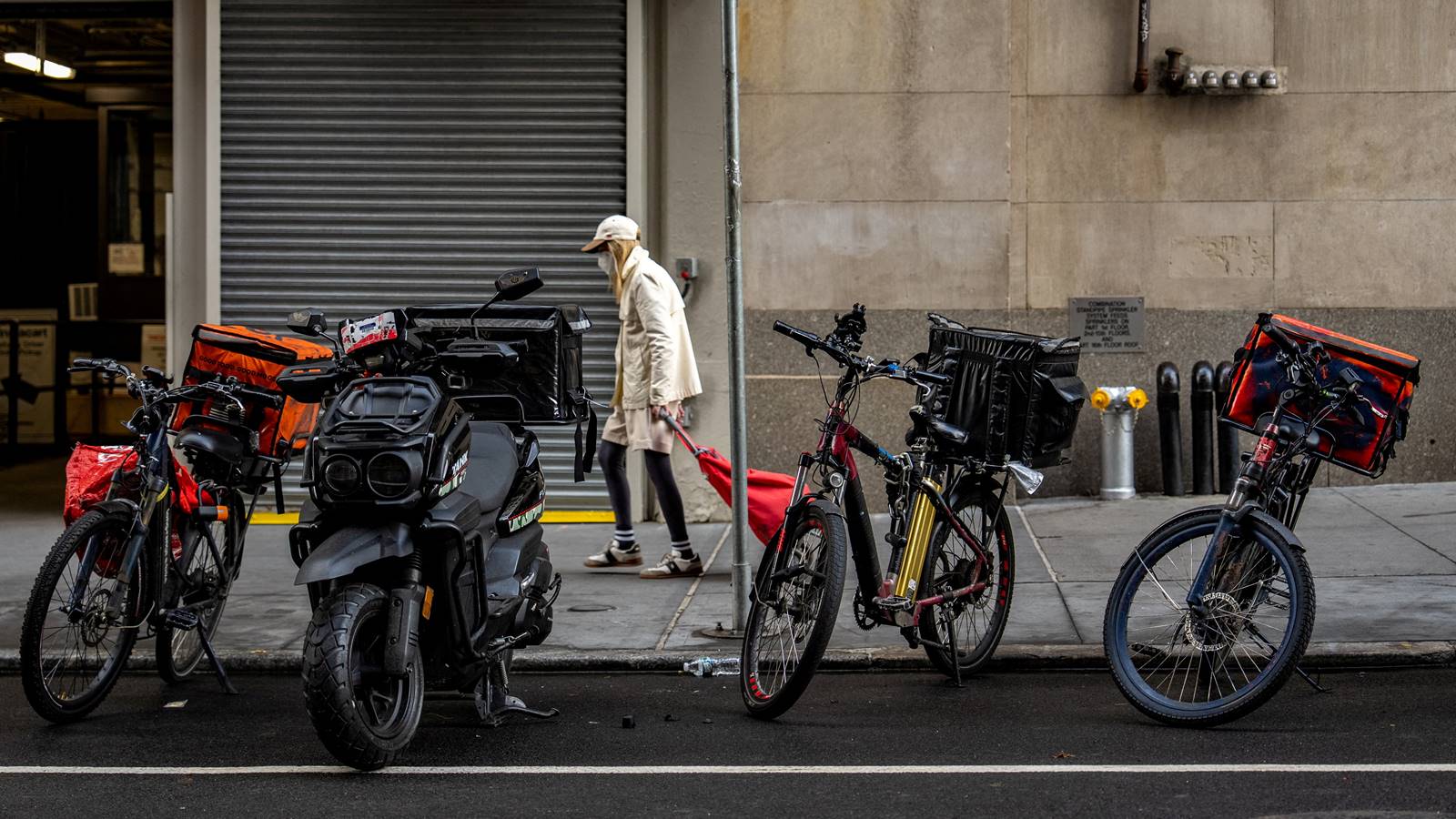
New York's app-based delivery workforce—tens of thousands of workers who haul groceries and takeout through rain, snow, and gridlock—relies on e-bikes to make a living. Most of these riders live in cramped, rent-stabilized apartments or shared rooms where outdoor charging isn't an option. When a building bans e-bikes indoors, where is a worker supposed to leave a $1,500 livelihood overnight? On the street, where it'll get stripped for parts before sunrise.
Even well-intentioned policies hit practical walls:
- The Trade-In Bottleneck: New York City announced a $2 million trade-in program to help eligible delivery workers swap dangerous, uncertified rigs for UL-certified e-bikes and spare batteries. While helpful for the workers who secured spots, two million dollars barely scratches the surface of a fleet numbering in the tens of thousands.
- The Enforcement Paradox: Critics of proposals like Assembly Bill A252 point out a glaring flaw. How exactly do police or fire inspectors verify whether someone is using a fiberglass charging blanket inside a private apartment without violating basic privacy rights? Unless a fire already broke out, a $500 indoor-charging fine is nearly impossible to enforce.
- Withdrawn Storage Rules: Even the FDNY had to pump the brakes on overreach. In August 2025, the department proposed a sweeping rule targeting uncertified storage batteries, only to withdraw it later after public commenters pointed out confusion over scope and enforceability.
What You Can Actually Do to Protect Your Home Right Now
Waiting for Albany or City Hall to figure out enforcement won't save your apartment if a cheap cell shorts out at 3:00 AM. Whether you ride an e-bike daily or live next door to someone who does, you need to treat lithium-ion batteries with the same respect you'd give a can of gasoline.
Audit Your Current Setup
Check the label on both your battery pack and your charger today. You're looking for an official mark from a Nationally Recognized Testing Laboratory—specifically UL 2849 for the bike's electrical system or UL 2271 for the battery itself. Be skeptical of counterfeit stickers on bargain-basement imports. If you bought a refurbished pack from an unverified shop or slapped a DIY conversion kit onto a standard pedal bike, retire it.
Change How and Where You Charge
Never plug an e-bike into an extension cord or a multi-outlet power strip. High-capacity chargers draw sustained electrical current that melts cheap power strips long before the battery finishes topping off. Plug the manufacturer's original charger directly into a wall outlet on a hard, non-flammable surface like tile or concrete—never on a bed, couch, or rug.
Keep a clear path between your bedroom and your front door at all times. Never park or charge a bike in an apartment foyer, hallway, or stairwell. Stay awake while it charges, and unplug it the moment the indicator light turns green.
Spot Warning Signs Before Thermal Runaway Hits
Lithium-ion batteries almost always give warnings before they fail catastrophically. Stop using a pack immediately if you notice:
- Swelling or bulging in the plastic casing.
- Excessive heat when the battery is just sitting idle.
- Hissing, popping, or clicking sounds coming from inside the cells.
- A sweet, chemical, or metallic odor leaking from the housing.
If a battery starts smoking or hissing, don't try to douse it with water or a standard household fire extinguisher. Water won't stop a lithium-ion chemical reaction and can actually make things worse. Grab your family, get out of the apartment, close the door behind you to slow the smoke, and call 911 from outside.
Dispose of Dead Batteries Safely
Never toss a dead, swollen, or damaged e-bike battery into your regular kitchen trash or blue recycling bin. Sanitation trucks routinely catch fire when hydraulic compactors crush discarded lithium-ion packs. In New York City, wrap the battery terminals in electrical tape or place the pack in a separate plastic bag, and take it directly to an official NYC Special Waste Drop-Off Site. Check nyc.gov/batteries for the closest drop-off location in your borough, audit your charging spot tonight, and keep your exit routes completely clear.