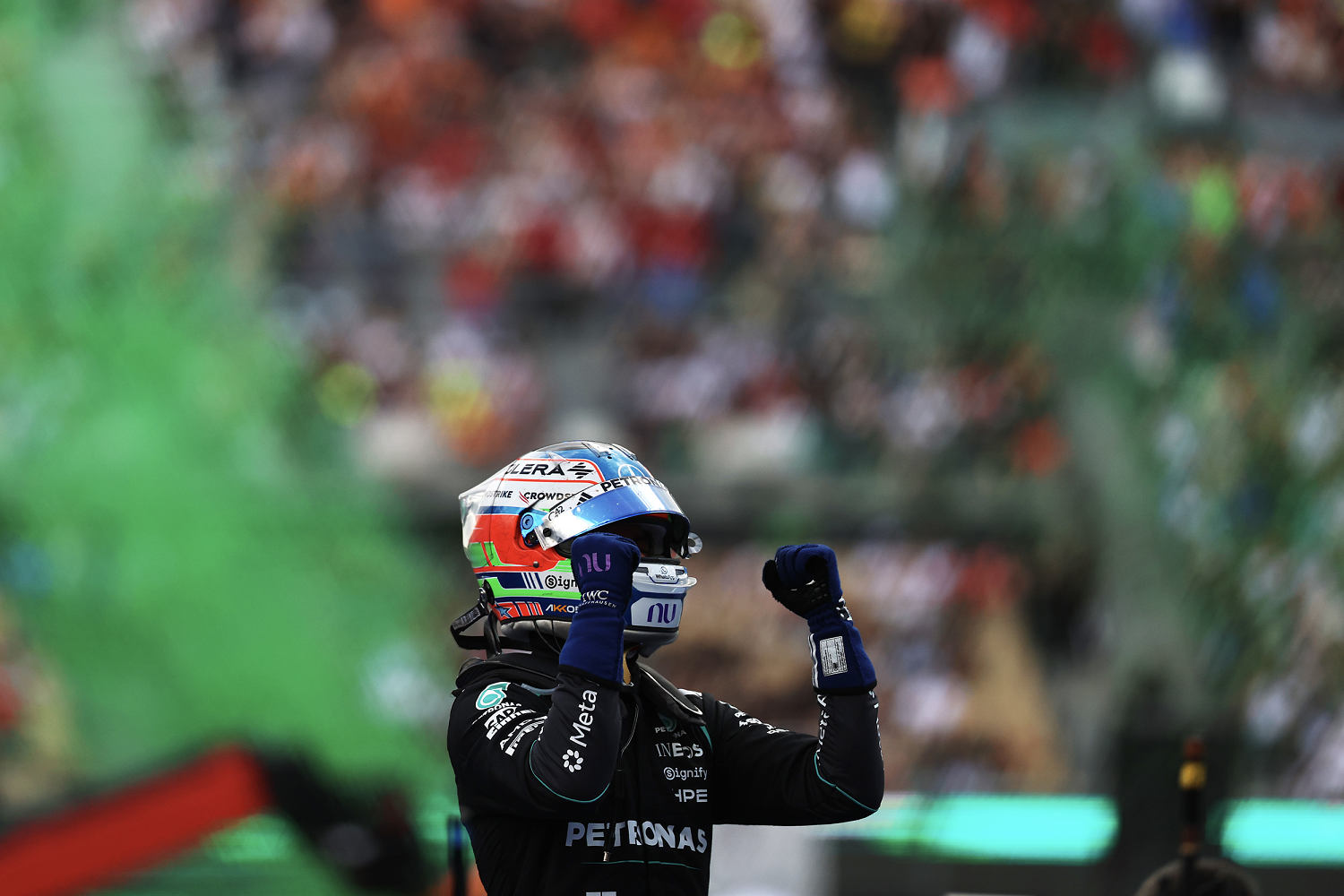
Everyone wants to talk about the birth certificate. Andrea Kimi Antonelli clinched the 2026 Formula 1 World Championship at 20 years old, shattering Sebastian Vettel's long-standing benchmark and rewriting the record books for Mercedes. That's the headline plastered across every sports page on the planet right now.
Honestly, focusing purely on his age misses the real story.
If you watched every lap of this 2026 campaign, you know Kimi Antonelli becoming the youngest Formula 1 champion ever wasn't some fairytale fluke or a lucky break from a dominant car. It was the result of a brutal, calculated gamble by Toto Wolff and a level of mental composure we haven't seen from a twenty-year-old in modern motorsport. People love a prodigy narrative because it's easy to digest. The reality inside the Brackley garage was way messier, way tenser, and infinitely more impressive than a simple stat line suggests.
Why Sebastian Vettel's Record Looked Untouchable Until Now
To understand what Antonelli just pulled off, you have to look at the record he erased. Back in 2010, Sebastian Vettel won his first title with Red Bull at 23 years and 134 days old. For sixteen years, that number stood like a brick wall. Max Verstappen came closest in 2021, taking his maiden crown at 24. Even Lewis Hamilton was 23 when he lifted his first trophy in 2008.
Why did the record survive for so long? Because Formula 1 isn't built for teenagers anymore.
Modern F1 cars are rolling supercomputers. Managing energy deployment, tire thermal degradation, brake migration, and constant radio traffic requires thousands of hours of muscle memory. When the FIA introduced the current super-license point system, they intentionally blocked teams from pulling another Verstappen-style move where a 17-year-old jumps straight from Formula 3 onto the grid. Drivers were supposed to marinate in Formula 2, spend two years at a midfield outfit like Williams or Sauber, and maybe—if they survived the politics—get a shot at a top seat by age 23 or 24.
Antonelli skipped the line entirely. Born on August 25, 2006, in Bologna, Italy, he bypassed Formula 3 altogether after winning the Formula Regional European Championship in 2023. He spent a single season in Formula 2 with Prema Racing in 2024 before Mercedes dropped him straight into Lewis Hamilton's vacated seat for 2025.
Most fans thought Wolff had lost his mind. I'll admit, I had serious doubts myself when Antonelli crashed out on his very first FP1 flying lap at Monza back in 2024. Throwing a kid into the pressure cooker of a works Mercedes seat during a transition year looked like career sabotage. Instead, that painful 2025 rookie season became the exact foundation he needed when the massive 2026 technical regulation overhaul hit the grid.
How the 2026 Regulation Reset Leveled the Playing Field
You can't separate Antonelli's championship from the radical rule changes introduced for the 2026 Formula 1 season. Every few years, F1 hits the reset button, and 2026 was the biggest mechanical shakeup since the turbo-hybrid era began in 2014.
The sport ditched the complex MGU-H, cranked up electrical power output to roughly a 50-50 split with the internal combustion engine, and introduced active aerodynamics on both the front and rear wings. Suddenly, decades of veteran intuition went straight into the shredder. A 35-year-old driver with three hundred Grand Prix starts had to unlearn years of braking and corner-entry habits because the new cars harvested energy completely differently under deceleration.
Antonelli didn't have bad habits to unlearn.
Having grown up glued to high-level simulators and coming straight out of junior formulas where active aero prototypes were already being tested in private sessions, he adapted to the 2026 power unit characteristics faster than almost anyone on the grid. While veterans complained over team radio about clipping at the end of long straights and unpredictable rear-end stability when switching between Z-mode and X-mode aerodynamics, Antonelli treated the steering wheel like a video game controller.
Look at how he handled the battery management battles during the middle third of the season. In modern F1, passing isn't just about late braking anymore; it's about outsmarting your rival's state-of-charge two laps before you even attempt a move. Antonelli consistently baited older, more experienced rivals into draining their electrical deployment defending the wrong corners, only to breeze past them three turns later with a full battery reserve. You can't teach that kind of spatial awareness in a debriefing room. Either your brain processes data at that speed, or it doesn't.
Surviving the Rookie Mistakes That Almost Broke His Momentum
Let's not rewrite history and pretend it was smooth sailing from day one. Anyone claiming Antonelli was destined for greatness without stumbling clearly skipped watching his 2025 debut year.
His rookie campaign was rough around the edges. There were moments where raw pace was blindingly obvious—like his blistering qualifying laps in wet conditions—followed immediately by rookie errors that cost Mercedes critical Constructors' points. Overdriving cold tires on out-laps, locking up into tight chicanes when trying to force an overtake that wasn't there, and struggling to keep the rear Pirelli rubber alive over a fifty-lap stint. Pundits questioned whether Mercedes had rushed him too quickly. Some even suggested he needed a loan spell at a customer team to get his head right.
Here's what actually happened behind closed doors at Brackley. Instead of shielding him or sugarcoating the telemetry, trackside engineering director Andrew Shovlin and race engineer Peter Bonnington—who stayed on after Hamilton's move to Ferrari—stripped his approach down to the studs.
Having "Bono" on the pit wall was arguably the single most important factor in Antonelli's survival. Bonnington spent over a decade managing Lewis Hamilton's emotions, translating vague driver feedback into sharp setup changes, and keeping things calm when everything was falling apart. He brought that exact same steady heartbeat to Antonelli's ear. Whenever the young Italian started over-pushing and burning through his front-left tire, Bonnington didn't lecture him. He gave him concrete, bite-sized targets on entry speeds and lift-and-coast points.
By the time the 2026 season opener rolled around in Melbourne, the frantic edge in Antonelli's driving had vanished. He stopped trying to win every single corner by two-tenths of a second and started stringing together clean, metronomic race stints. That shift from reckless speed to controlled aggression is what separates fast qualifiers from world champions.
The Turning Points That Won the 2026 Title
Championships aren't won in a single afternoon, even if the trophy gets handed out after the checkered flag. Looking back across the 2026 calendar, three specific moments turned Antonelli from a race winner into a legitimate title favorite.
First came the wet-weather masterclass early in the European leg. Rain has always been the great equalizer in Formula 1 because it exposes flaws in car control immediately. While established title contenders tip-toed around looking for grip and complaining about visibility, Antonelli found rhythm on the intermediate compound within two laps. He pulled out a gap of over a second per lap on the field, carving through standing water with the kind of fearless precision that immediately drew comparisons to Ayrton Senna at Donington in 1993 and Max Verstappen at Interlagos in 2016. After that Sunday, nobody in the paddock looked at him as "the kid" anymore.
Second was how he handled his first real title-fight collision mid-season. Fighting wheel-to-wheel for the championship lead, Antonelli got squeezed at the apex, tangled wheels, and ended up in the barriers with a DNF while his main rival walked away with 25 points. In previous years, a setback like that would have sent a young driver into a spiral of over-compensation at the next Grand Prix. Instead, Antonelli showed up five days later, stuck the Mercedes on pole position by three-tenths of a second, and controlled the race from lights to flag without putting a single wheel out of place.
Third—and most underrated—was his tire preservation during the scorching late-season flyaway races. The 2026 cars generate massive torque out of slow corners, which punishes rear tires mercilessly if a driver gets greedy with the throttle pedal. During the brutal triple-header stretches in October and November, Antonelli consistently extended his first stints five or six laps longer than his direct competitors. That strategic flexibility allowed Mercedes to pull off clean overcuts while rivals got stuck in midfield DRS trains.
What Antonelli's Championship Means for the Future of Driver Scouting
Toto Wolff has been trying to live down missing out on Max Verstappen back in 2014 for over a decade. When Verstappen signed with Red Bull's junior program because Mercedes couldn't offer him an immediate F1 seat, Wolff swore he would never let another generational talent slip through his fingers.
Signing Antonelli to the Mercedes Junior Team back in 2019—when the kid was still tearing up international karting circuits at age twelve—was Wolff's long-term insurance policy. Investing millions into private testing programs in old 2021 and 2022 machinery so Antonelli could rack up thousands of kilometers before ever sitting in a current-spec car looked excessive at the time. Now, every single team principal on the pit wall is scrambling to copy the blueprint.
Expect three major shifts across motorsport over the next twenty-four months because of what just happened:
- The death of the traditional feeder ladder. Teams are no longer going to insist that drivers spend two years in F3 and two years in F2. If a driver dominates at one level, teams will fund massive private testing mileage in previous-generation F1 cars rather than risking their confidence in spec junior series where engine lotteries and reliability issues can derail a season.
- Earlier academy lock-ins. Red Bull, Ferrari, McLaren, and Mercedes are already scouting karting paddocks aggressively, but Antonelli's success at 20 proves that molding a driver's technical habits from age 13 or 14 pays off when major rule changes arrive. Expect 11- and 12-year-old karters to be signed to full developmental contracts with dedicated simulator engineers before they even hit high school.
- Shorter leashes for aging midfield veterans. For years, teams clung to 30-something drivers for "experience and car development feedback." Antonelli proved that a 20-year-old raised in modern simulation environments can guide technical development just as effectively—and do it three-tenths faster on Saturday afternoons.
Misconceptions Fans Still Have About Kimi Antonelli
Even with the championship trophy locked up, plenty of lazy takes are floating around social media. If you want to actually understand how this happened, ignore the noise and look at what's actually true.
Myth 1 He won purely because Mercedes nailed the 2026 engine.
Did Mercedes build a monster power unit for the new regulations? Yes. Nobody wins a Formula 1 title in a slow car. pretending otherwise would be dishonest. Look at the other side of the garage and look at Mercedes' customer teams running the exact same power unit. None of them matched Antonelli's consistency over twenty-four races. A great engine puts you in the fight; it doesn't keep you out of the wall in Monaco or manage a dying set of hard tires over the final fifteen laps in Interlagos.
Myth 2 He's just a quiet, robotic simulator kid.
Because Antonelli comes across as polite and measured in post-race press conferences, casual viewers assume he lacks the ruthless streak of a Schumacher, Senna, or Verstappen. Watch his onboard footage during defensive battles. He places his car on the absolute millimeter of legality, squeezes rivals onto the dirty side of the track on corner exits, and never yields an inch unless physics forces him to. He just doesn't feel the need to yell about it over the radio every three laps.
Myth 3 Breaking the age record means he'll automatically win seven titles.
Sebastian Vettel looked unstoppable after winning four straight titles by age 26—and never won another one after 2013. Fernando Alonso became the youngest champion ever at the time in 2005, added a second in 2006, and has spent two decades chasing a third. Formula 1 is ruthless. Engineering advantages evaporate overnight, rival teams poach key aerodynamicists, and regulations shift again. Antonelli has earned his place in history at 20, but keeping the crown is always harder than stealing it.
How to Watch What Comes Next Without Falling for the Hype
If you're following Formula 1 closely heading into the off-season and the 2027 campaign, don't just stare at the timing screens during qualifying. Watch how Antonelli handles wearing the number one on his nose cone next spring.
Pay attention to his first-sector telemetry during practice sessions, where drivers test the absolute limits of the active aero zones, and listen to how his radio communication with Peter Bonnington evolves now that the hunter has officially become the hunted. Rival teams like Ferrari, McLaren, and Red Bull have spent all year dissecting Mercedes' aerodynamic concepts and energy recovery maps. The gap will shrink dramatically by the time winter testing begins.
If you want to appreciate the sheer absurdity of what Kimi Antonelli accomplished at 20 years old, pull up the onboard replay of his championship-clinching stint and watch his hands on the steering wheel. No panic, no wasted motion, and zero hesitation—just a twenty-year-old driving like he's been doing this his entire life. Because, in almost every way that counts, he has.