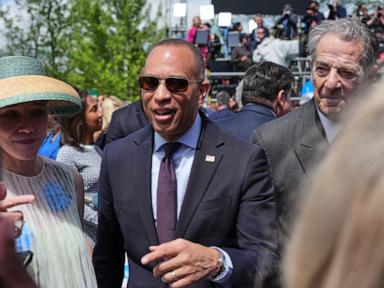
A victory party in a Brooklyn warehouse rarely sends shockwaves through the highest corridors of national power, but when democratic socialist Claire Valdez toppled an establishment incumbent in New York, the celebration turned into an explicit warning shot. As her supporters watched an image of House Democratic leader Hakeem Jeffries flash onto the screen, the crowd didn't cheer for the party's historic leadership. Instead, they chanted a direct threat: "You're next!"
That single moment exposes a massive fault line running straight through the modern Democratic coalition. The traditional media loves a simple narrative, usually framing these battles as a basic ideological tug-of-war between centrist moderates and left-wing progressives. But that explanation is lazy, and it completely misses what's actually happening on the ground. You might also find this related coverage useful: The Macroeconomics of Climate Justice: Asymmetry, Historical Liability, and the Global South Bottleneck.
This isn't just an intellectual debate over policy papers or tax brackets. It's a messy, generational collision where class politics, populist anger, and racial identity smash right into each other. The old political machines, built by legendary civil rights activists who fought for decades to gain inside power, are now facing fierce primary challenges from a new wave of anti-establishment insurgents. The traditional gatekeepers are suddenly being painted as the elite establishment by their own base.
The Cracks in Identity Politics
For decades, the path to power within the Democratic party followed a predictable, hard-fought trajectory. Activists from minority communities pushed from the outside, gradually built robust local organizations, and eventually became the ultimate insiders. Today, figures like Hakeem Jeffries and veteran representative Gregory Meeks represent the pinnacle of that achievement. To the older generation, protecting these leaders isn't just about partisan politics; it's about honoring an equity movement that cost real lives. Meeks made that clear when he warned that people literally died to create the opportunity for a Black speaker of the House. As reported in detailed reports by TIME, the effects are notable.
But the young insurgents don't view legacy institutions through that historical lens. To a new class of voters and organizers, an establishment insider is an insider, regardless of their background. They see a system that's fundamentally broken, failing to deliver on housing, wages, and healthcare, and they want to replace the occupants of those offices immediately.
Look at what happened in Texas. Rep. Al Green, a 78-year-old civil rights titan seeking his 12th term, didn't lose his seat to a conservative challenger. He got ousted in a primary by Christian Menefee, a 38-year-old local official who is also Black. It wasn't a racial shift in the district; it was a clear demand for generational turnover. The old argument that representation alone is enough to satisfy the base is officially dead.
The Changing Electorate and the Class Rift
A quiet shift in voter demographics is fueling this internal war, and the data shows a reality that makes party strategists incredibly nervous. According to long-term Gallup polling research, white Democrats have actually become significantly more likely to label themselves as liberal compared to Black and Hispanic Democrats.
Many party insiders argue that the aggressive left-wing surge isn't bubbled up from working-class neighborhoods, but is instead driven by college-educated white progressives flooding urban areas. They see an ironic twist where elite, educated newcomers use populist rhetoric to target working-class representatives who have deep, multigenerational roots in their districts.
The insurgents, naturally, push back hard on that theory. Organizers point out that their platform—which focuses heavily on tenant rights, universal healthcare, and freezing utility hikes—directly targets the daily economic pain felt in low-income neighborhoods. They argue that senior lawmakers get too comfortable with corporate donors and lose their appetite for a real fight.
This creates a brutal paradox for the party leadership. The very communities that served as the reliable backbone of the Democratic establishment are caught right in the middle of a "people versus elites" framing. When activists launch a campaign against a veteran lawmaker of color, it triggers intense resentment from older, traditional voters who view the challenge as a total disrespect of their history and political achievements.
Surviving the Populist Wave
If establishment incumbents want to survive this wave of primary challenges, they have to stop relying purely on their resumes and identity credentials. Voters are anxious, prices are high, and institutional trust is at an all-time low. Telling a voter that you have twenty years of seniority doesn't work when that voter can't afford their monthly rent.
As veteran lawmakers look to defend their seats, the strategy has to shift away from defending the institution itself. Insurgent candidates win because they validate the public's anger and offer radical, simple solutions. To counter that momentum, incumbents must provide a tangible sense of economic security that addresses the immediate anxieties of their local communities.
The top party leadership seems to be learning this lesson in real-time, even if it looks uncomfortable. Shortly after the New York primary upsets, Hakeem Jeffries took a pragmatic route. Instead of picking a public fight over ideology or defending the defeated insiders, he issued a statement congratulating the progressive nominees. He pivoted immediately to a unifying message, focusing their collective energy on defeating far-right extremism in the general election.
Stepping back from the ledge of a total internal civil war is a smart short-term move for the general election, but it doesn't fix the underlying tension. The generational and class divides inside the coalition aren't going away. If the Democratic party wants to build a lasting majority, it has to stop treating these primary challenges like isolated anomalies or simple ideological disagreements. The party needs to realize that the old playbook of relying on institutional loyalty and identity-first politics is quickly losing its grip on a younger, frustrated electorate that cares far more about immediate disruption than legacy traditions.
The shift inside urban voting blocks is moving fast, and staying ahead of changing district dynamics means looking closely at how grass-roots movements operate. To get a better sense of how these local campaigns map out and organize their ground games against entrenched figures, check out this deep dive on local political organizing tactics, which shows how modern campaigns use specific neighborhood data to build momentum outside of standard party structures.