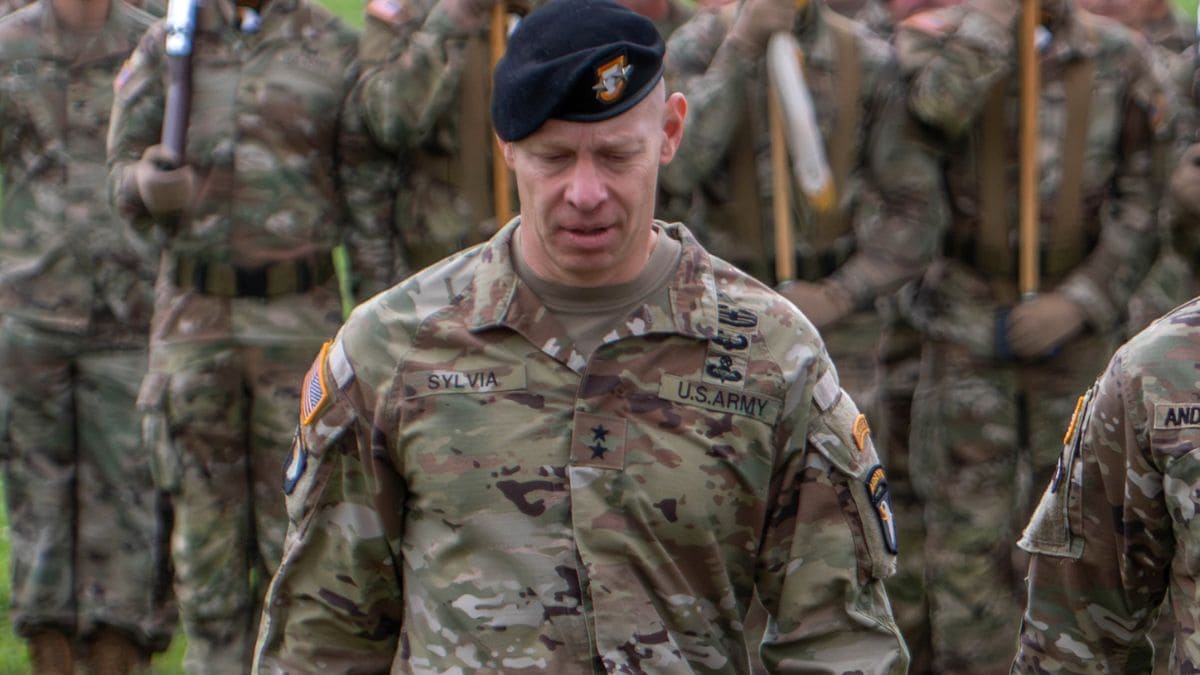
When headlines break about a fired US general leaking classified war details on Iran and the Russia-Ukraine conflict to journalists, the public usually splits into two predictable camps. One side immediately screams treason and demands a court-martial. The other side celebrates the officer as a brave whistleblower exposing Pentagon cover-ups.
Both reactions miss the real story.
In Washington, unauthorized disclosures by senior military leaders rarely look like Hollywood spy thrillers. There are no secret drop-offs in dark parking garages or encrypted thumb drives slipped to investigative reporters at midnight. Usually, it's a frustrated three- or four-star officer venting over dinner in Georgetown, trying to shape a narrative after losing an internal policy fight at the Pentagon.
If you've ever spent time around defense reporting or worked inside national security circles, you know that "leaking" at the flag-officer level is often an extension of bureaucratic warfare. When a general gets fired—or gets pushed toward the exit—the battle doesn't stop. It just moves to the front pages of major newspapers.
Why Senior Military Officers Leak Sensitive War Details
Let's be honest about how Washington actually works. Top brass don't wake up one morning and decide to hand enemy intelligence services a gift. When classified assessments about Iranian drone capabilities, Strait of Hormuz force postures, or Ukrainian battlefield attrition end up in the press, there's almost always a specific political or operational motive behind it.
Most senior military leaks stem from three distinct pressures:
- Policy paralysis at the top. Generals routinely clash with civilian leadership at the White House and the National Security Council over rules of engagement. If a commander believes the administration is slow-walking weapons to Kyiv or pulling punches against Iranian proxies in the Middle East, leaking an internal intelligence assessment is a fast way to force the president's hand publicly.
- Protecting institutional turf. Defense budgets aren't infinite. When resources get split between Eastern Europe and the Persian Gulf, service chiefs and combatant commanders leak worst-case scenarios to prove their theater needs more ships, missiles, and funding.
- Reputation management after a firing. Nobody reaches the rank of general without an ego and a deep concern for their historical legacy. Getting relieved of command is a public humiliation. Talking off the record to trusted defense correspondents is the quickest way to tell "their side" of why things went wrong.
That last point is huge. When a fired US general shares sensitive details about Iran or the Russia-Ukraine war with journalists, they rarely view themselves as breaking the law. In their minds, they're providing "context" so the public understands why civilian leaders made a mistake.
The problem? Intent doesn't matter under federal law.
How Classified Leaks Differ From Official Pentagon Messaging
One reason these stories explode online is that regular readers confuse authorized background briefings with illegal leaks. They aren't the same thing, even though they look identical in print.
Every single week, the Pentagon hosts off-the-record "gaggles" where senior defense officials brief reporters on the condition that they aren't named. The government wants that information out there. It sends a deterrence signal to Tehran or Moscow without forcing the Secretary of Defense to make a formal speech.
An unauthorized leak crosses a hard legal line. It happens when someone with a Top Secret/Sensitive Compartmented Information (TS/SCI) clearance shares restricted material—like signals intelligence, satellite imagery capabilities, or unapproved war plans—without declassification authority.
Even when a general paraphrases a classified briefing rather than handing over a physical document, it's still a violation of their non-disclosure agreement and potentially the Espionage Act. You don't have to hand a paper folder to a reporter to compromise sources and methods. Simply confirming that the US intercepted a specific Iranian military communication tells Tehran that their encryption is broken. Within hours, they change their protocols, and American intelligence goes blind.
What History Tells Us About Fired Generals and Press Leaks
This isn't a new phenomenon. Look back at recent US military history, and you'll see a clear pattern of high-ranking officers getting burned—or pushed out—over their relationships with the media.
Take General Stanley McChrystal in 2010. He wasn't fired for handing over nuclear launch codes, though his career ended over what he and his staff said to Rolling Stone magazine. Still, the same era saw massive friction over leaked troop-surge assessments in Afghanistan, where military leaders used the press to box in the Obama White House.
Or look at General James Cartwright, the former Vice Chairman of the Joint Chiefs of Staff. Cartwright wasn't fired in a dramatic public spectacle, but he pleaded guilty in 2016 to making false statements to the FBI during an investigation into leaks about Stuxnet—the covert US-Israeli cyberattack on Iran's nuclear program. He was later pardoned, yet his case proved how aggressively the Justice Department will pursue even four-star legends when classified Iran operations hit the news.
Then there's General David Petraeus, who resigned as CIA director and pleaded guilty to a misdemeanor charge of mishandling classified material after sharing black binders full of war secrets with his biographer.
Notice the common thread? None of these men were traitors working for foreign governments. They were elite, respected commanders who got too comfortable treating classified national security secrets as personal currency in Washington's media ecosystem.
The Real Damage of Exposing Iran and Ukraine War Intelligence
When details about the Russia-Ukraine war or Iranian military operations leak, the fallout hits two very different levels.
First, there's the tactical damage on the ground. In Ukraine, the war relies heavily on real-time intelligence sharing, electronic warfare, and supply chain logistics. If a leaked assessment reveals exact ammunition burn rates, air defense vulnerabilities, or how Western satellites track Russian troop movements, Moscow adapts immediately. Russian commanders relocate command posts, alter rail schedules, and jam specific frequencies. People die because a timeline got exposed in a newspaper column.
The same goes for Iran. Tensions in the Middle East hinge on deterrence and ambiguity. Iran's Islamic Revolutionary Guard Corps (IRGC) constantly tests American red lines through regional proxies. When internal Pentagon debates or intelligence estimates about Iranian ballistic missiles leak to journalists, Tehran gets a free look inside Washington's decision-making loop. They learn what scares US planners and what doesn't.
Second, there's the diplomatic trust deficit. The US doesn't gather intelligence in a vacuum. Washington relies on the Five Eyes alliance—Britain, Canada, Australia, and New Zealand—alongside NATO partners and regional allies in the Middle East. When senior US military figures leak sensitive war details, allied intelligence agencies stop sharing their best material with the Pentagon. Why risk your best human sources in Tehran or Moscow if an angry American general might spill their secrets to a Washington columnist next Tuesday?
Why Prosecuting Senior Officers Is Harder Than You Think
You might wonder why, if the law is so clear, more fired generals don't end up in prison.
Honestly, prosecuting a flag officer for leaking to journalists is a nightmare for the Department of Justice. Here's why those cases routinely stall or end in quiet administrative punishments:
- The "graymail" problem. To convict someone of leaking classified information, prosecutors have to prove in court that the leaked details were actually classified and damaging to national security. Defense lawyers love this. They demand access to mountains of related Top Secret files to mount a defense, forcing the Pentagon to choose between dropping the charges or exposing even more secrets in open court.
- Overclassification muddies the waters. The US government classifies way too much information. When half the facts in a "classified" memo were already reported by open-source intelligence analysts on social media using commercial satellite photos, a jury isn't going to send a decorated combat veteran to jail.
- Senior leaders rarely leave digital footprints. Low-level analysts—like Jack Teixeira, who posted Pentagon documents on Discord—get caught fast because they print files and take photos with their phones. A four-star general doesn't print anything. They read the morning intelligence book, memorize the key takeaway, and mention it during a phone call from a personal landline. Proving who said what without wiretapping journalists is nearly impossible.
Instead of a dramatic criminal trial, the Pentagon usually handles rogue retired or fired generals quietly. They strip their security clearances, block them from lucrative defense contractor board seats, or quietly reduce their retirement rank—a move that costs an officer tens of thousands of dollars a year in pension payments and permanently stains their service record.
How to Read National Security Leak Stories Like an Insider
The next time you see a breaking news alert about a fired US general leaking classified Iran or Russia-Ukraine war details, don't just skim the outrage on social media. Read the reporting closely and ask yourself a few basic questions to figure out what's really happening behind the scenes.
Look at who benefits from the timing of the story. Did the leak drop right before a major congressional vote on Ukraine aid? Did it appear hours before a White House National Security Council meeting on Iran? Leaks don't happen by accident. Someone wanted that specific detail in the bloodstream of Washington on that exact day.
Pay attention to the phrasing journalists use. When a reporter writes that officials "confirmed" or "acknowledged" something, that's usually spin control after the fact. When they cite "documents reviewed by" the outlet or "people familiar with sensitive intelligence assessments," you're looking at a genuine unauthorized disclosure.
Finally, separate the political theater from the operational reality. Politicians from both parties will use a military leak to score points—either attacking the administration for weak leadership or attacking the general for insubordination. Ignore the cable news shouting matches and focus on the actual intelligence mentioned in the piece. Does it reveal new capabilities, expose allied cooperation, or signal a major shift in US military strategy? That's where the real news lives.
Start checking the bylines and sourcing language in your daily news feed using these filters, and you'll spot the difference between genuine national security crises and standard Washington infighting every single time.


