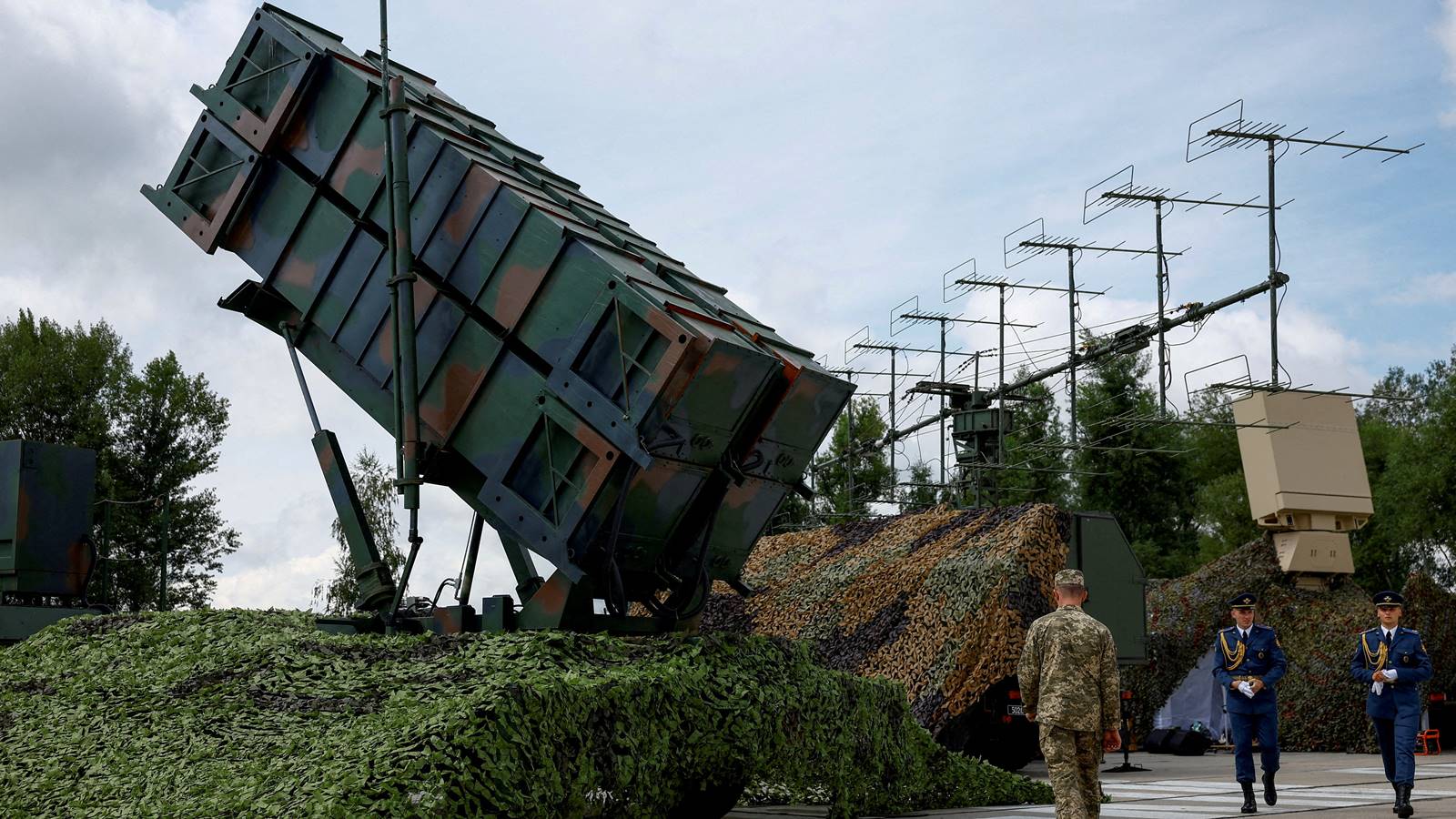
The United States Army is throwing open its test ranges to small commercial technology companies in an urgent push to accelerate weapon development and field modern gear before conventional adversaries outpace them. For decades, the military acquisition pipeline has moved at a glacial crawl, bound by rigid requirements, multi-year budgeting cycles, and a procurement monolith tailored for traditional prime contractors like Lockheed Martin and General Dynamics. Now, facing intense strategic competition and rapid technological shifts, defense leadership is attempting to lower the barriers of entry. They want fresh ideas, nimble software, and hardware built by firms that have never worn a uniform.
Yet, opening a firing range or an installation testing pad is only the first step. The deeper challenge lies in navigating a risk-averse bureaucratic ecosystem that often rejects the very agility it claims to desire.
Why the Traditional Procurement Model Broke Down
To understand why the Army is suddenly scrambling to court small businesses, you have to look at the structural decay of the defense procurement apparatus. For the past fifty years, the Department of Defense relied on a consolidated defense industrial base. This model worked reasonably well during an era defined by massive weapon systems like aircraft carriers, main battle tanks, and strategic bombers. These platforms required decades of research, predictable funding lines, and massive capital infrastructure.
Times have changed. Modern warfare is iterative, software-driven, and defined by commercial innovation. Consumer electronics, artificial intelligence, autonomous drone swarms, and commercial space assets now dictate tactical advantage.
When a small startup develops a groundbreaking counter-drone capability using commercially available microchips and open-source software, they measure development in months. The Pentagon, however, measures development in decades. By the time a traditional requirements document winds its way through Pentagon corridors, gets validated, receives funding in a future fiscal year budget, and enters a formal competition, the underlying technology is obsolete.
Small companies possess the exact speed the military desperately needs. They iterate rapidly, accept high failure rates during prototyping, and pivot based on immediate feedback. The traditional prime contractors, by contrast, are optimized for compliance and predictability rather than speed. They build massive factories and hire legions of compliance officers to manage regulatory overhead. Startups build prototypes in garages and university labs.
The Reality of Testing Range Access
Opening Army test ranges to non-traditional vendors sounds revolutionary on paper. Historically, getting access to specialized military infrastructure like electromagnetic anechoic chambers, live-fire artillery ranges, or high-speed vehicle tracks required a prime contractor badge, a sponsored contract vehicle, or months of bureaucratic clearance.
When a small firm tries to test a novel radio-frequency jammer, they need a controlled spectrum environment. When an autonomous ground vehicle startup wants to test navigation without GPS, they need rugged terrain with simulated electronic interference. By allowing these companies direct access to military testing assets, the Army hopes to cut months, if not years, off the validation timeline.
However, access to physical real estate is only half the battle.
Testing a weapon or a sensor on an Army range requires navigating a maze of safety protocols, environmental impact studies, cybersecurity accreditations, and range scheduling conflicts. A tiny software firm with twelve employees does not typically employ a dedicated military compliance team. When they are told they need an Authority to Operate (ATO) for their digital architecture before their hardware can even connect to a test range network, the timeline stalls.
Furthermore, test ranges are chronically oversubscribed. Traditional programs of record take priority. If an Abrams tank upgrade or a major missile test requires the range, the startup waiting with their unproven drone swarm will get bumped to the back of the queue. Infrastructure access without priority status is a hollow victory.
The Valley of Death and the Funding Cliff
Even if a small company successfully tests its technology on an Army range and proves it works brilliantly, they face an even more treacherous obstacle known as the valley of death.
This is the chasm between successful prototyping and actual mass procurement. The Pentagon has created numerous venture-friendly accelerators and innovation units, such as the Defense Innovation Unit and Army Applications Laboratory. These organizations are exceptional at handing out small, rapid-prototyping contracts worth a few hundred thousand or a few million dollars. They find brilliant startups, fund a quick demonstration, and capture glowing headlines.
Then the money runs out.
To transition from a successful prototype to a program of record, a company needs a line item in the President's Budget Request. That budget is locked in nearly two years before funds are actually appropriated by Congress. A startup that proves its technology in January cannot simply wait around until the fiscal year 2028 budget kicks in to receive a production contract. They will go bankrupt within six months.
Traditional defense primes survive the valley of death because they have massive balance sheets, diverse portfolios, and predictable sustainment contracts for legacy systems that keep cash flowing while they wait for new programs. Startups do not. They live or die by their burn rate.
When the Army invites small companies to test their weapons, it must answer a harder question: What happens the day after the test succeeds? If there is no dedicated funding mechanism to immediately buy the gear in operational quantities, the initiative becomes a glorified science fair.
Cultural Friction on the Front Lines
Beyond procurement and funding, a fundamental cultural mismatch exists between the military establishment and the venture-backed startup community.
Silicon Valley operates on a philosophy of moving fast and breaking things. If a software update crashes an application, engineers push a patch five minutes later. The stakes are low; nobody dies if a social media app glitches.
The military operates on a philosophy of operational reliability and zero tolerance for catastrophic failure. If a weapon system fails in combat, soldiers die. This imperative creates a deeply ingrained risk aversion. Military evaluators are rewarded for avoiding mistakes, not for taking bold risks on unproven technology. A colonel whose career depends on safe execution will naturally prefer a mediocre, reliable system from a trusted prime contractor over a revolutionary, unproven system from an unknown startup that might experience technical glitches in the field.
Startups often speak a different language entirely. They talk about minimum viable products, user feedback loops, and equity dilution. Soldiers talk about doctrine, logistics tails, maintenance manuals, and interoperability with legacy command-and-control networks.
When a small tech firm brings a prototype to an Army test range, the evaluation criteria are often dictated by rigid military specifications written years prior. If a startup's device achieves the objective in a novel, unconventional way that violates the specification checklist, it may still fail the evaluation. Bridging this cultural divide requires more than opening gates to a firing range. It requires a fundamental shift in how military leaders evaluate military utility.
The International Imperative
The urgency behind these half-measures is driven by a sobering global reality. The defense technological edge that the United States enjoyed for decades is eroding.
In regions like Eastern Europe and the Middle East, modern conflict has evolved into a high-speed technological arms race. Commercial drones modified with off-the-shelf munitions, cheap electronic warfare systems, and decentralized communication networks are dominating the battlefield. These capabilities are not being designed by traditional defense primes operating under ten-year acquisition timelines. They are being cobbled together by combatants using commercial off-the-shelf components, updated weekly based on frontline lessons.
If the United States military cannot find a way to harness the speed and ingenuity of its domestic technology sector, it risks fighting the next major conflict with yesterday's museum pieces. Opening test ranges is an encouraging signal that leadership recognizes the threat.
Yet, symbolism will not defeat a strategic competitor. Unless the Department of Defense is willing to fundamentally overhaul its budgeting process, accept higher levels of programmatic risk, and clear out the regulatory weeds that choke non-traditional vendors, the doors of those test ranges will remain open only to companies that eventually learn to move at the speed of bureaucracy.