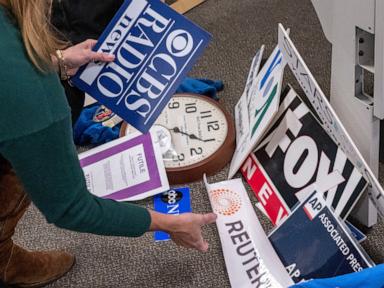
The Pentagon has quietly locked the doors to its dedicated press working space, locking out reporters under the guise of national security. Officials claim the physical room has been reclassified as a secure environment for handling classified information. This move effectively ends decades of open, immediate access for the defense press corps. While the Department of Defense frames this as a technical updates to security protocols, the reality is far more troubling. It represents a deliberate, structural dismantling of press oversight at the highest levels of military command.
For generations, the Pentagon press bullpen served as a vital hub. Reporters from major dailies and specialized defense publications lived in the building. They walked the corridors, caught officials in the hallways, and verified battlefield claims in real time. By transforming this shared space into a closed, classified zone, the current administration has built a wall between the military apparatus and the public.
The immediate result is a controlled information ecosystem. Information will no longer leak through casual, trusted interactions. Instead, it will be rationed through stage-managed press conferences and carefully sanitized press releases.
The Pretext of Classification
Bureaucrats love a rubber stamp, and nothing serves them better than the stamp marked "Secret." The official explanation for closing the press office relies on a bureaucratic technicality. The Pentagon claims that modern electronic warfare, cybersecurity threats, and the proximity of press workstations to secure communication lines made the space a liability.
They argue that foreign adversaries could exploit the presence of unvetted civilian electronics within the building’s inner rings.
This argument falls apart under scrutiny. The press corps has operated from the same physical footprint through the height of the Cold War, the aftermath of September 11, and the wars in Iraq and Afghanistan. Reporters have always been subject to strict background checks, badge requirements, and physical screening. The sudden discovery that the press room is a security vulnerability is a convenience, not a crisis.
What has actually changed is the appetite for accountability. Over the past decade, successive administrations have grown weary of the rapid news cycle and the instant dissection of military operations. By declaring the physical room a classified space, the Pentagon uses national security law to solve a public relations problem. It is a legal maneuver designed to insulate policy decisions from immediate skepticism.
The New Information Filtering Process
Under the new restrictions, reporters are pushed outside the building’s secure perimeter or restricted to a sterile briefing room. This changes the entire mechanics of defense journalism.
- Sanitized Access: Journalists can no longer walk down the hall to knock on a public affairs officer's door. Every meeting must be scheduled, escorted, and logged.
- The Death of the Off-the-Record Chat: The best investigative reporting relies on informal coffee shop discussions and hallway run-ins. When every movement is tracked by armed guards, sources dry up.
- Total Surveillance: Reporters working outside the designated pool are subject to intense scrutiny. Their presence in the building is treated as an anomaly rather than a constitutional right.
The Historical Precedent of Military Friction
The tension between the military and the press is old. It is a fundamental feature of a free society. During the Vietnam War, the daily briefings in Saigon became known as the "Five O'Clock Follies" because the official metrics failed to match the reality on the ground. Independent journalists wandering the field exposed the gap between official optimism and tactical reality.
The Pentagon learned a lesson from Vietnam, but it was the wrong one. Rather than committing to greater transparency, the military apparatus committed to better information management. The 1991 Gulf War introduced the concept of highly managed media pools. The 2003 invasion of Iraq refined this into the "embedded reporter" program. While embedding offered thrilling front-line access, it inherently limited a reporter’s perspective to the specific unit they were traveling with.
The closure of the Pentagon press office is the final stage of this evolution. It moves the censorship from the battlefield back to the headquarters. If you control the space where policy is written, you control how that policy is framed to the taxpayer.
The Illusion of Modern Public Affairs
Defense officials will point to their active social media accounts, digital press kits, and streamed briefings as proof of their commitment to transparency. This is a sleight of hand.
"A live-streamed press conference where questions are rationed and follow-ups are cut off is not transparency. It is a broadcast."
True journalism requires the ability to look at the documents on a desk, to notice who is walking into a meeting, and to sense the tension in a hallway after a failed operation. None of those things can happen through a digital portal. The modern public affairs office functions less as a bridge to the public and more as a corporate marketing department. Its goal is brand protection, not truth-telling.
The Strategic Fallout for American Democracy
This is not a dispute over office space or real estate. It is a quiet crisis regarding civilian control of the military. The United States Constitution deliberately places the military under civilian leadership to prevent the rise of an insular, unaccountable warrior class. The press acts as the public’s eyes and ears inside that closed world.
When the press is expelled, the chain of accountability breaks. The public is left entirely dependent on the Pentagon’s self-reporting. History shows that when the military is allowed to grade its own homework, the results are catastrophic. We saw it in the overblown body counts of the 1960s, the flawed intelligence regarding weapons of mass destruction in 2003, and the systemic cover-ups of civilian casualties in the drone campaigns of the last twenty years.
+-------------------------------------------------------------+
|               THE EVOLUTION OF MILITARY ACCESS             |
+-------------------------------------------------------------+
| Vietnam War (1960s-70s): Open access, high friction         |
| Gulf War (1991): Managed pools, strict censorship           |
| Iraq War (2003): Embedded reporting, localized perspective  |
| Present Day (2026): Total eviction, digitized containment   |
+-------------------------------------------------------------+
Furthermore, this decision sets a dangerous precedent for other federal agencies. If the Department of Defense can successfully cite vague cybersecurity concerns to evict the press, nothing stops the Department of Justice, the State Department, or the Department of Homeland Security from following suit. The term "classified space" can be expanded to cover any office where embarrassing policy decisions are made.
The Path to Forcing the Doors Open
The defense press corps cannot accept this eviction as a done deal. Fighting back requires moving past polite letters of protest from editorial boards. The strategy must change.
First, major media organizations must challenge the classification designation in federal court. The Freedom of Information Act and First Amendment jurisprudence provide levers to contest the arbitrary labeling of public spaces as secure zones. The government must be forced to prove, with specific evidence, why a room that housed journalists for fifty years suddenly poses an existential threat to the republic.
Second, newsrooms must reallocate their resources. If the Pentagon will not allow reporters inside, media organizations must embed reporters deeper into the industries, think tanks, and legislative committees that feed the defense machine. The story of military waste and strategic failure is rarely found in the building's inner rings anyway; it is found in the defense contractor boardrooms and the congressional subcommittees where the money is allocated.
The Pentagon relies on the assumption that the public does not care about the logistics of journalism. They believe that as long as the evening news has video footage of fighter jets, no one will notice that the reporters who cover those jets have been barred from the building. The press must prove that assumption wrong by exposing the mechanics of this lockout.
The doors are locked, the badges are deactivated, and the hallways are quiet. The military has successfully insulated itself from the immediate gaze of the public it is sworn to protect. Now, the real work begins outside the walls.