The Peace Talk Delusion
Mainstream outlets are currently tripping over themselves to report on the "historic" start of peace talks in Pakistan. They frame it as a victory for diplomacy, a softening of hardline stances, and a step toward regional stability. This is a fairy tale. I have spent two decades watching these cycles of "engagement" followed by immediate "escalation," and the pattern is as predictable as it is exhausting.
The consensus view suggests that dialogue is the precursor to peace. In the tribal belt and the volatile borders of Pakistan, dialogue is actually a precursor to rearmament. When militant factions sit at the table, they aren't looking for a democratic compromise. They are looking for a ceasefire long enough to replenish their supply lines, recruit the next generation of fighters, and wait for the international community to look elsewhere.
Calling these "peace talks" is a linguistic sleight of hand. It gives legitimacy to actors who have no intention of surrendering their core ideology. We see this play out every five to seven years. The government offers concessions, the militants offer vague promises, the West sighs in relief, and then—without fail—the violence returns with higher intensity.
Pakistan’s Internal Sovereignty Crisis
The media fails to address the fundamental structural rot. You cannot have peace talks when the entity you are negotiating with does not recognize the concept of a nation-state. Most analysts treat these groups like political parties with guns. They aren't. They are entities that view the very existence of a centralized Pakistani state as a theological error.
By engaging in these talks, the Pakistani government isn't asserting its power; it is broadcasting its exhaustion. It is admitting that it cannot control its own territory. Every handshake in a high-end Islamabad hotel is a signal to the provinces that the central government is open to being bullied.
If you want to understand the reality on the ground, stop looking at the press releases. Look at the capital flight. Look at the people who actually have skin in the game. They aren't investing in "Peaceful Pakistan." They are moving their assets to Dubai and London because they know that a "peace talk" is just a polite term for a tactical retreat.
Why Trump Is Right About The Failing Nation Label
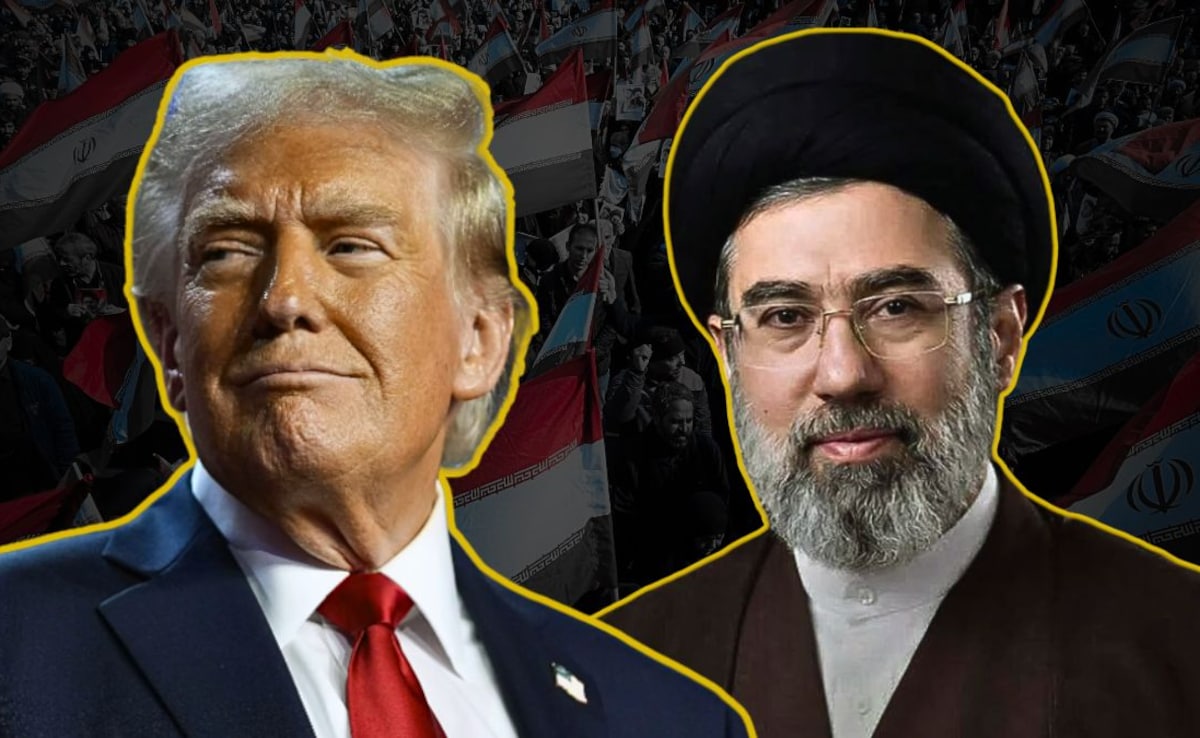
While the diplomatic circles are busy clutching their pearls over Donald Trump’s rhetoric regarding Iran, they are missing the brutal economic reality that underpins his "failing nation" comment. The outrage focuses on the tone. The smart money focuses on the data.
Iran isn't failing because of a lack of culture or history; it is failing because its leadership has prioritized a shadow empire over its own currency. When Trump calls it a "failing nation," he is pointing to the math. The rial has been in a free-fall for years. Inflation is a permanent guest. The middle class, once the pride of the region, has been effectively liquidated.
The critics argue that "maximum pressure" didn't work because the regime didn't collapse. That is a low-resolution take. The goal of labeling and treating a country as a "failing nation" is to isolate its contagion. You don't negotiate with a house that is structurally unsound; you brace the neighboring buildings.
The Misunderstood Mechanics of Sanctions
There is a popular myth that sanctions only hurt the "average person" and strengthen the regime. This is the "lazy consensus" of the humanitarian-industrial complex. In reality, sanctions create a massive friction point for the regime’s ability to project power externally.
A failing nation cannot sustain a multi-front proxy war indefinitely. It can do it for a decade. Maybe two. But eventually, the cost of keeping the lights on in Tehran competes with the cost of funding militias in Lebanon, Yemen, and Iraq. By calling Iran "failing," Trump is signaling that the U.S. is waiting for the inevitable bankruptcy of the revolutionary export model.
Consider the sheer scale of the currency devaluation. If you held 100 million rials in 2017, it was worth roughly $3,000. Today, that same amount is worth less than a decent dinner in Manhattan. When a nation's currency becomes a joke, its sovereignty is an illusion.
The Fallacy of the Rational Actor
The biggest mistake Western diplomats make in both the Pakistan and Iran scenarios is the "Rational Actor Fallacy." We assume that because we value economic growth, regional stability, and human rights, our adversaries must also value them—or at least be incentivized by them.
They aren't.
For the militants in Pakistan, "success" is the imposition of their specific legal code, not the growth of the GDP. For the hardliners in Iran, "success" is the survival of the clerical elite and the expansion of their ideological footprint, not the stability of the rial.
When you treat a revolutionary state or a militant group as a rational economic actor, you have already lost the negotiation. You are offering them a seat at a table they want to burn down. Trump’s bluntness—calling a spade a spade and a failing nation a failing nation—is a rejection of the polite fiction that has governed Middle Eastern and South Asian policy for forty years.
The High Cost of Diplomatic "Politeness"
We have been conditioned to believe that "unfiltered" language is dangerous. The opposite is true. The most dangerous thing in geopolitics is a lack of clarity.
When we use words like "peace talks" to describe a temporary truce with terrorists, we deceive our own publics. We set expectations that can never be met. When we treat a state that is actively cannibalizing its own economy to fund foreign wars as a "strategic partner in dialogue," we fund our own demise.
I’ve sat in rooms where officials whispered the truth: "Pakistan is losing control of the north" or "The Iranian banking system is a house of cards." Then, those same officials walked out to a podium and talked about "building bridges" and "meaningful engagement." That gap between private reality and public rhetoric is where bad policy breeds.
Stop Asking If Peace Is Possible
People always ask: "When will there be peace in Pakistan?" or "Can we reach a new deal with Iran?"
These are the wrong questions. The premise is flawed. It assumes that "peace" is a static end-state that can be achieved through a signed document.
In these regions, there is no "peace" in the Western sense. There is only the balance of power. There is only the presence or absence of leverage.
The real question is: "How much leverage do we have left?"
In Pakistan, the leverage is gone. The government has negotiated away its authority so many times that the militants now view the state as a vassal. Every new talk is just an audit of how much more the state is willing to give up.
In Iran, the leverage is the economic reality. The nation is failing because its current model is incompatible with the global financial system. You don't fix that with a treaty. You fix it by letting the failure reach its logical conclusion.
The Actionable Truth
If you are an investor, a policy-maker, or just a citizen trying to make sense of the headlines, ignore the optics of the handshakes.
- Watch the Currency: In Iran, the black market rate for the USD tells you more about the regime’s lifespan than any speech from the UN.
- Watch the Borders: In Pakistan, if the military isn't actively reclaiming territory, the "peace talks" are just a managed surrender.
- Ignore the Adjectives: When a politician uses words like "historic," "comprehensive," or "robust," they are usually covering for a lack of results.
The world is messy, and the "peace" being sold to you today is a product designed for your comfort, not for the reality of the people living in those zones.
Donald Trump isn't being "undiplomatic" when he calls Iran a failing nation. He is being a realist in a room full of people addicted to the perfume of a dying status quo. Pakistan isn't "talking peace." It is buying time.
Stop looking for the "game-changer" in the news cycle. There isn't one. There is only the slow, grinding reality of states that have chosen ideology over arithmetic. And arithmetic always wins in the end.
The "failing" label isn't an insult; it's a diagnosis. And you don't cure a terminal patient by pretending they’re just having a bad day. You prepare for the inevitable collapse.
The era of managed decline is over. Either you recognize the failure now, or you get crushed by it later.



