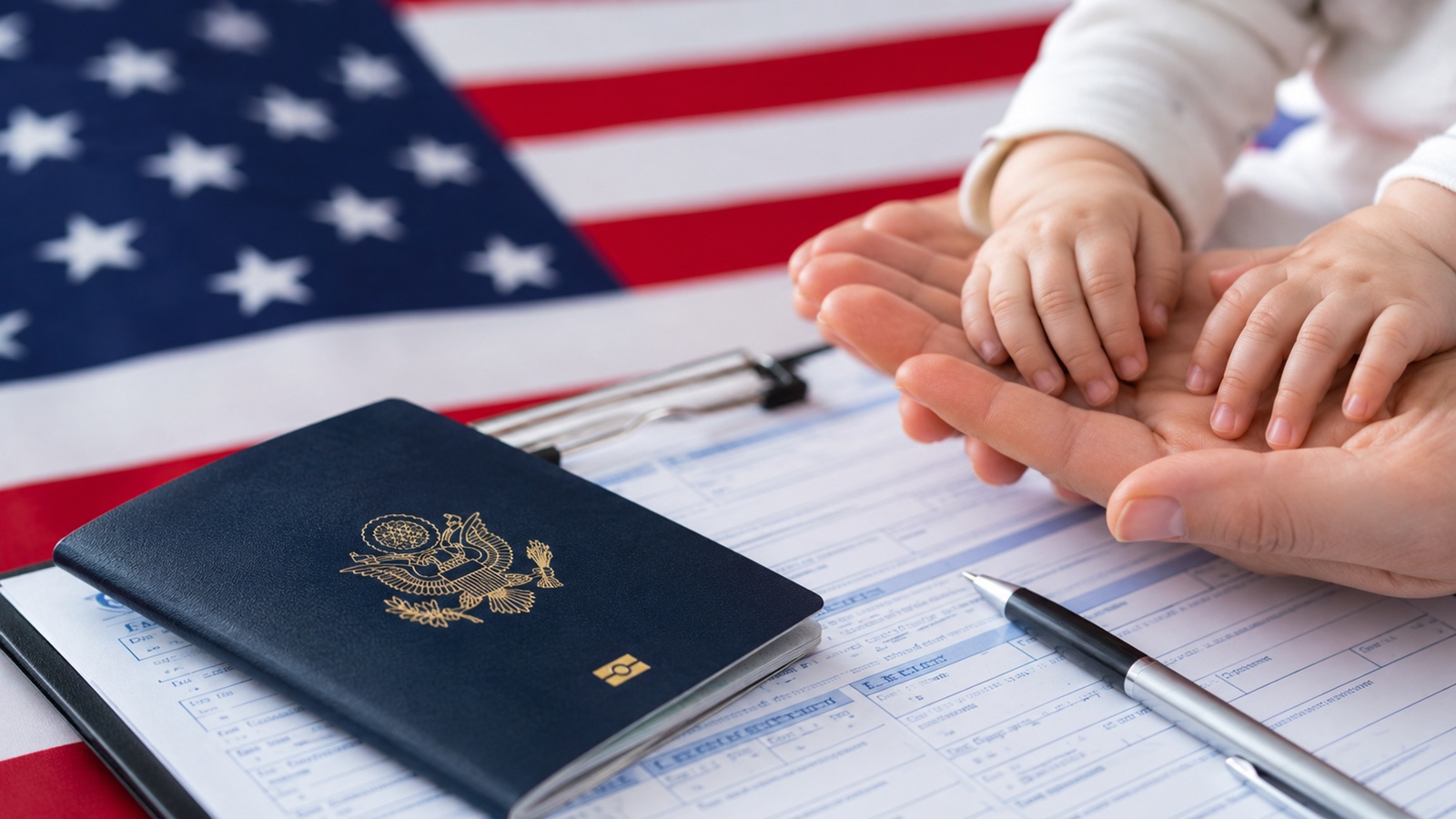
The bureaucratic machinery of American immigration is shifting its gears downward, targeting the fundamental documentation required for children born on United States soil to claim their constitutional birthright. A newly leaked draft of State Department guidance reveals an impending operational framework designed to enforce executive action against birthright citizenship by altering how minor passports are adjudicated. Under these proposed rules, parents applying for a standard child passport will no longer merely check a box affirming their status; they will be compelled to submit documentary proof of their own citizenship or legal immigration standing.
For millions of foreign nationals legally residing in the country, including a massive diaspora of skilled professionals caught in generational employment-based visa backlogs, this administrative tweak introduces an unprecedented layer of vulnerability. The policy is built to operationalize an executive directive aimed at narrowing Fourteenth Amendment protections. By weaponizing the passport issuance mechanism, the administration attempts an end-run around traditional judicial hurdles, transforming a routine travel document application into an aggressive screening gateway.
To understand the weight of this policy shift, one must look closely at the mechanics of the current system. Historically, obtaining a passport for an infant born within domestic borders required establishing parental relationship, submitting a birth certificate, and presenting basic photo identification. While forms inquired about parental citizenship, the burden of proof stopped at the declaration. The draft guidelines upend this precedent by demanding tangible evidence—such as a valid domestic passport, birth certificate, permanent residency card, or an active I-94 arrival record—to cross-reference against restrictive executive parameters.
The direct line from executive orders to passport counters creates an administrative bottleneck with wide-ranging consequences. Communities rooted in non-immigrant work visas, such as the H-1B category, find themselves staring down an uneasy horizon. While the administration frames the directive as a precision strike against foreign nationals exploiting domestic delivery infrastructure for citizenship acquisition, the structural drag catches entirely legal workers in its wake. When the state begins auditing parental status at the cradle, the margin for administrative error narrows drastically.
Legal resistance has materialized swiftly, setting up a high-stakes constitutional collision in federal courts. Advocacy groups and class-action litigators have rushed to challenge the directive before federal judges, pointing out the glaring contradictions between executive overreach and the explicit text of the Fourteenth Amendment. During recent preliminary hearings, federal jurists expressed profound skepticism regarding the administration's legal theories. Yet, the mere drafting of these operational rules signals an intent to test the boundaries of executive power piece by piece, forcing affected families to fight for status verification at the administrative level long before any final judicial consensus is reached.
The broader implications extend far beyond the immediate friction of international travel planning. For families navigating the labyrinthine American immigration system, a passport has long served as an unquestioned confirmation of native-born status. Introducing conditional hurdles into this process casts a shadow of uncertainty over children who are legally citizens under historical interpretations of constitutional law. As federal agencies refine their internal adjudication protocols and litigation winds its way toward higher benches, the daily reality of raising children as temporary residents in a country they call home grows increasingly precarious.
The battle lines are drawn not in grand constitutional debates alone, but in the fine print of federal forms and desk-level document checks. Every new requirement adds friction to an already overburdened immigration ecosystem, ensuring that the administrative weight of the state reaches down into the nursery.