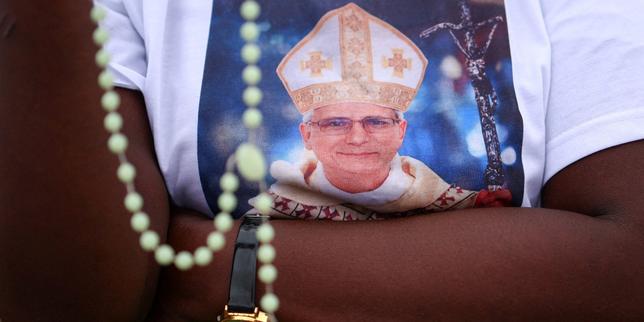
The world is currently swooning over the latest pastoral outreach from the Vatican, treating the words of Pope Leo XIV as a refreshing breeze in a stagnant room. The consensus is lazy and predictable: a "welcome voice" for the marginalized, a "progressive shift" for an ancient institution, and a "necessary intervention" in global politics.
They are wrong.
This isn't a breakthrough. It is a desperate branding exercise. By focusing on the charisma of a single figurehead, we ignore the structural decay of moral authority in the 21st century. The mistake everyone makes is believing that a more "likable" Pope equates to a more effective Church. In reality, the more we rely on a centralized moral superstar, the faster the actual foundation of local, community-driven ethics erodes.
Institutional survival is being mistaken for moral clarity.
The Cult of the Global Chaplain
Most commentary treats the Papacy as a sort of "Global Chaplain" position—a moral referee for secular states. This role is a modern invention, a byproduct of the 19th-century loss of the Papal States. When the Church lost its physical land, it pivoted to "moral influence."
The problem? Moral influence is a depreciating asset when it is detached from local accountability.
When people praise Leo XIV for his stance on economic inequality or environmental stewardship, they are participating in a spectacle. It costs a reader nothing to agree with a televised speech. It costs the Vatican nothing to issue a document. This is "virtue by proxy." You feel better because someone in a white robe said the thing you already believe, while the actual mechanics of the institution—the parish wealth, the real estate holdings, the local hierarchy—remain untouched.
I have watched organizations, from NGOs to Fortune 500s, attempt this same pivot. They swap systemic change for a charismatic CEO who says the right things on LinkedIn. It results in a short-term stock bump and long-term irrelevance. The Church is currently in its "LinkedIn CEO" phase.
The Nuance of Failed Decentralization
The lazy argument says the Church is too slow to change. My argument is that the Church is changing in exactly the wrong way: it is becoming a personality-driven media entity.
True moral authority is built from the bottom up. It’s the local priest who knows your name; it’s the community that holds its members accountable. By centralizing all "hope" in the figure of Leo XIV, the institution inadvertently tells its billion followers that their local actions matter less than the Pope’s global optics.
Imagine a scenario where a global corporation announces a radical green initiative from its headquarters, but every local branch continues to dump waste into the river. The headlines praise the CEO. The river stays toxic. That is the current state of the "welcome voice." The rhetoric at the top is used as a shield to protect the inertia at the bottom.
Why Infallibility is a Business Burden
We need to talk about the trap of "Evolution without Error." The Church cannot admit it was wrong about past stances without shattering the concept of its own divine guidance. So, it performs a linguistic dance. It "develops" doctrine.
This is the ultimate corporate gaslighting.
Instead of saying, "We were wrong for five centuries," the narrative is, "We are now unveiling a deeper understanding." This intellectual dishonesty is what alienates the very "modern thinkers" the Church is trying to attract. You cannot build a bridge to the future using bricks of denial.
A superior strategy would be the "Agile Model" of morality—admitting fault, pivoting quickly, and relinquishing the need to be eternally consistent. But the Papacy is built on the opposite: the need to be eternally right. This makes every "progressive" step feel like a calculated legal maneuver rather than a genuine change of heart.
The Myth of the Marginalized Voice
The competitor article argues that Leo XIV is finally giving a voice to the marginalized. This is a patronizing falsehood.
The marginalized already have voices. They don’t need a monarch in a walled city to "validate" their existence through a decree. What they need is the redistribution of the very power the Papacy represents. To truly champion the poor, the office of the Pope would have to dismantle its own exceptionalism.
It won’t.
Instead, it offers "solidarity," which is the spiritual equivalent of a "thoughts and prayers" tweet. Solidarity is a feeling; justice is a transfer of power. If the Vatican were serious about the "peripheries," it would move its headquarters to Kinshasa or Manila. It stays in Rome because the brand requires the Roman aesthetic.
The Data of Disaffiliation
If Leo XIV’s voice were as "welcome" as the press suggests, we would see a stabilization in membership across the West. We don't.
- In Germany, church exits hit record highs annually.
- In Latin America, the "Catholic Heartland" is hemorrhaging members to Pentecostalism and secularism.
- In the US, "Nones" (the religiously unaffiliated) are the fastest-growing demographic.
People are not leaving because the Pope isn't "nice" enough. They are leaving because the gap between the grand rhetoric and the lived reality of the institution is a canyon. A "welcome voice" does not fix a broken house. It just makes the ruins more pleasant to look at for a moment.
The Counter-Intuitive Path Forward
If the Church actually wanted to disrupt the status quo, it would stop trying to be a global influencer.
- Radical Transparency: Open the archives and the ledger. Total sunlight. No more "discretion."
- Dissolve the Monolith: Shift power from the Curia back to regional councils with actual teeth.
- End the Celebrity Cult: Stop the global tours. Stop the media blitz. Return to the "silent servant" model.
The current path—using a charismatic leader to mask systemic stagnation—is a roadmap to becoming a museum. Museums have beautiful voices and grand histories, but they are where dead things live.
Stop waiting for the man in the white robe to save the world. If his voice is the only thing you're listening to, you're not looking at the cracks in the floor beneath you.
The "welcome voice" is a distraction. The silence of the structure is the real story.