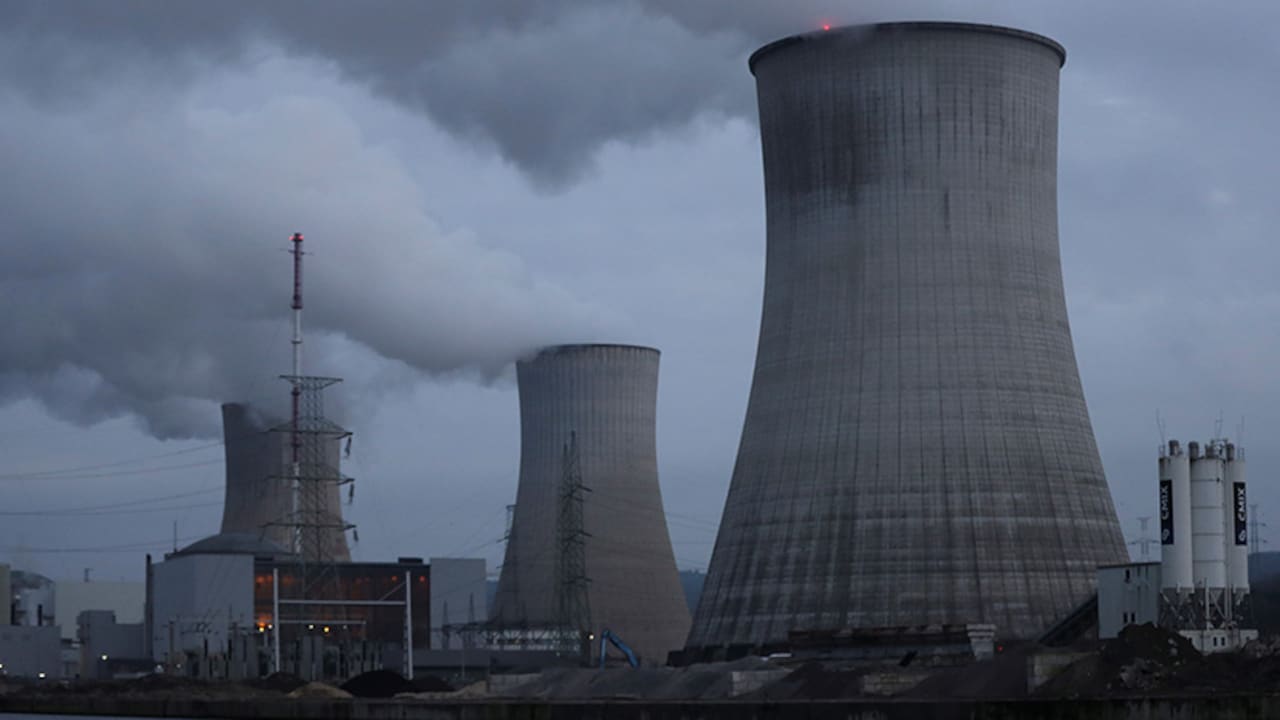
Every time a drone so much as rattles a pane of glass near a thermal plant in Eastern Europe, the global media machine seizes up. Headlines scream about impending nuclear Armageddon, international watchdogs issue grave warnings, and desk-bound pundits clutch their pearls over cooling towers taking shrapnel.
It is theatrical, it is lazy, and it fundamentally misunderstands how nuclear containment actually works.
I have spent two decades walking the floor of heavy industrial facilities, watching engineers model structural stress and containment resilience under high-impact loads. I have seen regulators panic over surface-level scuffs while ignoring actual operational vulnerabilities. The lazy consensus dominating the current discourse is that a drone strike on a cooling tower equals a compromised core.
That is absolute nonsense.
Let us dismantle the physics, strip away the media hysteria, and look at why worrying about a concrete shell is the exact wrong place to put your attention.
The Concrete Fallacy
To understand why the latest headlines about drone impacts on cooling towers are absurd, you first need to understand what a cooling tower actually does. It is not a reactor vessel. It is not a steam generator. It is a giant, hyper-engineered chimney made of reinforced concrete whose sole job is to evaporate water to reject waste heat into the atmosphere.
Think of it as an industrial radiator. If you throw a rock at your car radiator, your engine gets hot, but it does not detonate like a missile.
Yet, when a drone clips a cooling tower, the UN nuclear watchdog behaves as though the monolith's structural integrity is all that stands between civilization and a radioactive wasteland. This is a profound category error. Cooling towers are thin-shell concrete structures designed to withstand immense wind loads and localized impacts, not to act as radiation shields. The actual radioactive inventory—the fuel rods, the primary coolant loop, the multi-inch-thick steel reactor pressure vessel—lies hundreds of meters away inside a completely separate, heavily armored containment building designed to withstand commercial aircraft strikes.
When an external structure takes a localized hit and sustains cosmetic damage, the panic is driven by ignorance of spatial separation and defense-in-depth engineering. We are treating a plumbing fixture like it is the core itself.
Why The Watchdog Gets It Wrong
International oversight bodies thrive on diplomatic ambiguity and risk aversion. Their institutional survival depends on treating every minor incident as a DEFCON 1 emergency. If an agency admits that a drone scraping a cooling tower is a non-event from a radiological standpoint, they lose their leverage. They trade technical precision for political theater.
Let us look at the actual mechanics of what happens during an impact. Modern cooling towers use high-strength reinforced concrete grids. When a low-payload drone impacts the surface, it causes spalling—surface concrete chips off, rebar might get exposed, and a localized patch looks ugly on a drone camera.
Does it affect the thermal efficiency of the plant? Marginally, if a major section collapses, which rarely happens from a small tactical device. Does it release radiation? Absolutely not, because cooling water in a closed-loop secondary or tertiary system does not touch the primary reactor coolant loop under normal operational separation.
By treating every localized scuff as a critical nuclear threat, we dilute real safety discourse. We train the public to panic over concrete chips while ignoring the subtle, insidious supply chain vulnerabilities and cybersecurity vectors that actually threaten industrial control systems.
The Real Vulnerabilities Nobody Talks About
If you want to disrupt a nuclear facility, a drone hitting a cooling tower is amateur hour. It is a spectacle designed for television ratings, not operational disruption.
The real pressure points in modern nuclear infrastructure are remarkably mundane:
- Offsite Power Interdependencies: A reactor can shut its fission reaction down in milliseconds via control rod insertion, but it still requires continuous cooling power for days to remove decay heat. Severing grid connections and diesel fuel replenishment lines is infinitely more dangerous than chipping a cooling tower.
- Talent Drain and Operator Fatigue: Running a Soviet-era pressurized water reactor under active artillery fire and continuous personnel rotation creates cognitive fatigue. Human error under extreme stress is a far greater hazard than any piece of kinetic ordinance hitting an unshielded exterior structure.
- Supply Chain Brittleness for Specialized Spares: Try sourcing replacement high-pressure turbine blades or specific digital control logic cards when geopolitical sanctions and logistics bottlenecks are in play. That is where a plant dies a slow, untelevised death.
Focusing on the cooling tower is a masterclass in looking at the shiny object while the real threat operates out of sight.
The Cost Of Hyper-Vigilance
There is a steep price to this constant manufactured panic. When every minor operational disturbance is inflated into a global crisis, decision-making paralyzes. Plant operators spend more time drafting PR statements for international regulators than managing thermal hydraulics. Resources get diverted toward superficial physical hardening of non-essential exterior structures while core instrumentation and secondary safety systems starve for attention.
Imagine a scenario where plant leadership is forced to shut down a perfectly stable reactor purely out of political anxiety over exterior debris near a non-nuclear water basin. That unnecessary thermal cycle places micro-stress on primary piping loops—the exact kind of mechanical fatigue you actually want to avoid. In trying to prevent a non-existent catastrophe, the overreaction creates real operational risks.
Stop Treating Symptoms, Look At The Architecture
It is time to stop reacting to every tactical headline as if it were a physics textbook rewrite. Nuclear engineering is governed by cold, unforgiving laws of thermodynamics, fluid dynamics, and material science—not by cable news chyron writers or bureaucratic press releases.
A drone strike on a cooling tower is a headline-grabber, nothing more. If you want to understand why a facility remains secure, look past the exterior concrete cosmetics and examine the redundant decay heat removal loops, the emergency power backups, and the fail-safe reactivity controls.
Stop panicking over the chimney. Protect the core, secure the grid, and let the engineers do their jobs without the peanut gallery screaming about the sky falling every time a piece of shrapnel hits a water pipe.