Every time a commercial aircraft shoots a tongue of fire out of the cowling and diverts back to the tarmac, the media treats it like an apocalyptic omen. Passengers post grainy phone footage to social media. Panic spreads. Commentators breathlessly talk about harrowing ordeals and miraculous survivals.
Stop buying the hysteria. In other developments, read about: Stop Obsessing Over Map Projections Your Outrage Over Mercator Is Entirely Pointless.
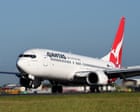
That fiery spectacle is not a sign of catastrophic systemic failure. It is proof that multi-million-dollar engineering redundancy is operating exactly as designed. When a Qantas Boeing 737 out of Queenstown recently spat flames after a suspected bird strike, the internet lost its collective mind. People hyperventilated about plunging out of the sky.
I have spent decades watching armchair critics mistake standard safety protocols for near-death experiences. Let us look past the cinematic drama of burning fuel and examine the cold, mechanical reality of modern aviation. Lonely Planet has also covered this critical subject in extensive detail.
The Myth of the Fragile Tube
The lazy consensus in modern travel reporting assumes that a commercial airliner is a delicate glasshouse. People think a single loud pop, a flash of light, or a flickering engine gauge means the pilots are moments away from wrestling a dead brick out of the sky.
This is fundamentally wrong.
Modern commercial jets are certified under Federal Aviation Administration and European Union Aviation Safety Agency regulations to fly on a single engine for extended periods. When a bird strike causes a compressor stall—which is what typically triggers those dramatic exterior pyrotechnics—the engine is choking on disrupted airflow. Fuel accumulates in the exhaust stream, ignites, and creates a visible torch.
It looks terrifying from window seat 14A. To the flight deck, it is Tuesday.
Pilots train for engine failures until their hands bleed in simulators. They run through QRH checklists with absolute clinical detachment. The aircraft does not drop out of the air. It climbs, vectors, and lands safely on the remaining powerhouse.
Why a Single Engine Is More Than Enough
Imagine a scenario where you are driving a semi-truck down a highway, one of your eight tires blows out, and you pull over calmly. Nobody writes a breaking news alert about a catastrophic vehicular collapse. Yet, put an engine through a minor hiccup at thirty thousand feet, and society acts like gravity has been repealed.
Twin-engine aircraft, known as ETOPS certified jets, can fly across vast oceans with one engine shut down entirely. Losing an engine on takeoff from Queenstown is loud, bright, and inconvenient. It is not dangerous unless the crew panics—which they never do, because training strips away the emotional panic that grips the cabin.
A modern turbofan engine is built with containment rings designed to swallow turbine blades internally if things go sideways. When uncontained failures happen, they are vanishingly rare anomalies. A compressor stall with exterior fire is simply unburned fuel hitting hot turbine sections. It is a loud, smoky light show.
The Real Danger Is the Panic Inside the Cabin
The scariest part of an engine flameout is never the machinery outside the window. It is the psychological contagion inside the passenger cabin.
When passengers see a flash of orange light, their heart rates spike. They scream, unbuckle seatbelts, and pull out phones to broadcast their final goodbyes for clout. That panic creates a physical hazard. A chaotic cabin makes crew coordination impossible.
Aviation safety relies on absolute procedural calm. By treating a standard engine shutdown as a movie-tier disaster, sensationalist headlines encourage dangerous passenger behavior during routine safety events.
If you want to survive air travel, stop staring out the window looking for sparks. Start paying attention to the safety briefing you usually ignore while scrolling through Instagram.
The System Works Because It Expects Failure
Engineers do not build planes that assume everything will go right. They build planes that assume everything will go wrong, simultaneously.
Every critical system on a modern jet has a backup, and that backup has a backup. Hydraulic lines are separated. Electrical busses are isolated. Fuel systems cross-feed. When a bird goes through a fan blade, sensors isolate the event, computers adjust fuel flow, and the flight crew executes a textbook single-engine diversion.
That is not a miracle. That is mathematics meeting metallurgy.
The next time you see a headline about a Qantas flight turning back due to flames, remember what is actually happening. You are watching a safety net catch a falling knife without grazing a finger.
The plane was never going to fall out of the sky. The only thing crashing was the passenger collective intelligence.


