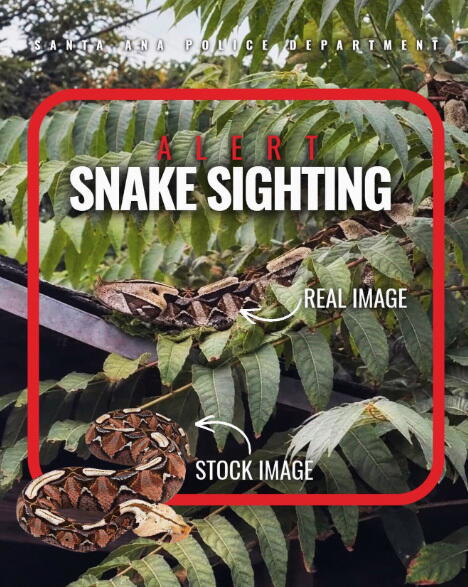
Every time a scaly exotic pet breaks containment, suburban America undergoes a collective psychological breakdown. Local news anchors dust off their most dramatic disaster voices, police departments mobilize tactical gear as if facing an armed cartel, and armchair legislators call for immediate total bans on anything possessing scales. The recent media circus surrounding an African viper loose in a Southern California neighborhood is a textbook masterclass in civic hysteria.
The headlines shriek about the snake with the longest fangs in the animal kingdom, painting a picture of a nightmare predator slithering through manicured lawns and elementary school playgrounds. It makes for fantastic ratings. It generates millions of frantic shares on social media platforms. It is also a masterclass in dishonest fear-mongering that completely distorts how animal biology, local ecology, and actual human risk assessment operate.
Let us dismantle the lazy consensus immediately. The dominant narrative pushed by local authorities and tabloid journalism claims that a terrifying, alien beast has invaded a tranquil paradise, turning everyday suburban life into a literal minefield. This is pure fiction. We need to look past the sensationalized fangs, examine the true mechanics of the animal, and confront the bureaucratic theater that follows every single exotic pet escape.
The Myth of the Subversive Monster
To hear the local sheriff tell it, a Gaboon viper is a sleek, hyper-aggressive death machine waiting in the hydrangeas to strike down an innocent jogger. I have spent years studying herpetoculture and working alongside professional keepers who handle venomous species daily. I have seen municipal governments blow hundreds of thousands of dollars on panic-driven manhunts for single reptiles while ignoring structural community hazards that kill dozens of citizens every month.
The Gaboon viper is a biological marvel, not a movie monster. It is a heavy-bodied, thick-waisted ambush predator designed by millions of years of evolution to sit completely motionless under leaf litter and wait for an unsuspecting rodent to wander within striking distance. It possesses the longest fangs of any snake, reaching up to two inches in length, paired with a massive venom yield. That is an impressive anatomical resume. But it does not make the animal a hunter of humans.
Anatomy does not equal intent. A tank has immense destructive capacity, yet it does not spontaneously chase pedestrians down Main Street. Gaboon vipers are notoriously placid, sluggish animals. Their primary defense mechanism is camouflage so effective that you could step inches away from one and never see it. When disturbed, their typical reaction is to emit a loud, intimidating hiss—resembling a car tire losing air—and stay put. They do not pursue. They do not hunt. They want to be left alone in the dark.
If you somehow manage to step directly on one, yes, you will experience a severe medical emergency. But treating a shy, sedentary pit viper like an apex predator roaming the concrete jungle reveals a profound, embarrassing illiteracy regarding basic zoology among the adults running our municipal institutions.
The Regulatory Hypocrisy of Exotic Pet Bans
Whenever an animal escapes in a suburb, politicians trip over themselves to draft emergency ordinances. They demand registries, felony penalties, and sweeping bans on private ownership of venomous reptiles. The knee-jerk instinct is always prohibition.
Here is the dirty secret behind municipal animal control: prohibition does not eradicate the hobby; it drives it underground into the shadows where accountability vanishes.
I have seen keepers operate secret collections in cramped suburban basements, bypassing veterinary care and safety protocols entirely because local laws treat them like international arms dealers. When owning a specialized animal becomes an underground criminal act, you eliminate safety standards. You ensure that if an animal escapes or falls ill, the owner panics and dumps it outdoors rather than calling experienced professionals, fearing arrest and public lynching.
Rational regulation looks entirely different from reactionary bans. It requires mandatory inspections, proof of secure housing standards, emergency response protocols filed with local authorities, and specialized peer networks. But competence requires actual effort. Blanket bans are lazy. They allow politicians to posture as defenders of public safety while solving zero actual problems.
The Statistical Reality of Suburban Danger
Let us inject some hard data into the hysterical discourse. People are uniquely terrible at assessing risk. We panic over exotic snakes while ignoring the mundane, statistically proven killers parked in every single driveway and backyard across Southern California.
Statistically, your domestic dog is a thousand times more likely to inflict a severe or fatal bite than an escaped exotic viper. Swimming pools quietly claim the lives of children in residential neighborhoods every single summer without prompting emergency city council meetings to ban backyard water features. Automobiles driven while distracted by smartphones annihilate pedestrians daily.
Yet, when a single captive reptile makes a break for freedom, the city treats it with the gravity of a foreign military invasion. Why? Because fear of the exotic is primal and easy to manipulate. A dog biting a neighbor is a familiar tragedy; a venomous African snake in the bushes taps into ancient, visceral phobias that trigger maximum panic.
Media outlets and sensationalist police blotters exploit this psychological vulnerability. They present an extreme outlier event as an everyday existential threat. By inflating the danger, they justify disproportionate expenditure of taxpayer funds and divert attention away from systemic municipal failures that actually threaten public health.
The Economics of Tactical Animal Control
Watch the footage of a high-profile reptile search, and you will witness a masterclass in bureaucratic waste. You see dozens of officers in full tactical gear, thermal imaging drones buzzing overhead, and specialized teams sweeping neighborhoods block by block.
It is security theater at its finest. It makes great television, and it lets police chiefs pad their budgets by demonstrating urgent operational necessity.
In reality, capturing a terrestrial ambush predator in an urban environment requires patience, simple plastic snake hooks, and quiet observation—not a SWAT team kicking in garden gates. A Gaboon viper is not scaling a suburban fence or hiding in the upper branches of an oak tree. It is likely huddled under a cool deck, a dense bush, or a pile of mulch within fifty feet of its escape point.
When municipalities treat a lost reptile like a public enemy combatant, they panic the public needlessly. They turn a routine animal recovery operation into a state of civil emergency. The cost in municipal resources, diverted emergency services, and psychological toll on jittery residents far outweighs any actual threat posed by the animal.
The Uncomfortable Truth About Private Keeping
To maintain credibility, we must also confront the failures within the herpetoculture community itself. Contrarianism is worthless if it simply serves as an excuse to defend indefensible negligence.
Keeping specialized, potentially dangerous animals is not a casual hobby for weekend hobbyists. It requires ironclad discipline, redundant security measures, and absolute respect for the biology of the animal. Every time an animal escapes due to a poorly secured latch, a cracked enclosure, or sheer complacency, the entire community suffers. It hands ammunition to prohibitionists on a silver platter.
I have seen hobbyists cut corners on caging, use flimsy screen tops, or show off venomous animals to drunk friends for cheap thrills. That behavior is inexcusable. If you choose to keep animals that require heightened precautions, your margin for error is precisely zero. When you fail, you endanger not only your own life but the reputation of thousands of responsible keepers who maintain strict, institutional-grade security protocols.
We do not need more laws; we need higher standards of peer accountability. The herpetoculture community must police its own reckless elements ruthlessly before municipal governments step in with blunt-force bans that destroy the hobby for everyone.
What We Should Actually Fear
The real danger exposed by this incident is not the snake slithering through the shrubbery. The real danger is our collective descent into allergic panic whenever something unfamiliar enters our sanitized, sterilized suburban bubble.
We live in a culture that demands absolute sterile predictability. We want every blade of grass manicured, every risk engineered away, and every wild element safely locked behind glass or erased entirely. When nature—even captive nature—breaches the perimeter, we lose our minds because we have forgotten how to coexist with anything that cannot be petted or plugged into a wall.
The African viper will likely be found, or it will succumb to the Southern California climate, which is entirely foreign to its dense equatorial rainforest origins. The news cycle will move on to the next manufactured crisis. The politicians will file away their proposed bans until the next escaped iguana or stray python triggers another round of synchronized screaming.
Stop treating every rare animal like a demonic invasion. Stop demanding that the state legislate away every minor discomfort and statistical anomaly in existence. And above all, recognize that the most dangerous thing in any neighborhood is not the hidden fangs in the brush—it is the unchecked, weaponized panic of a public that has lost all perspective on actual risk.