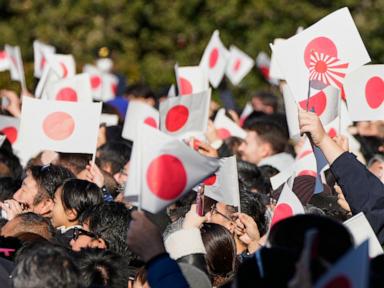
Western commentators love a good free speech panic, especially when it involves East Asia. When Japan's ruling Liberal Democratic Party pushes forward with legislation to criminalize the desecration of the Japanese national flag, the media response follows a tired, predictable script. Outrage merchants immediately decry the move as an authoritarian assault on civil liberties, a dangerous regression to wartime nationalism, and a death blow to political expression.
They are wrong. They are looking at the issue through a deeply flawed, Eurocentric lens that completely misreads how legal frameworks, social cohesion, and political signaling actually function in Tokyo.
The lazy consensus insists that punishing flag vandals is a threat to free speech. The reality? This debate has almost nothing to do with suppressing genuine political dissent and everything to do with a hyper-specific legal asymmetry that lawmakers are finally closing.
The Legal Blind Spot Critics Conveniently Ignore
To understand why the current outrage is manufactured, you have to look at the existing Japanese Penal Code. Under Article 92, it is already a crime to damage, remove, or deface the national flag or emblem of a foreign nation with the intent to insult that country.
Let that sink in.
If an activist walks into the streets of Tokyo and burns the Stars and Stripes, or the flag of any foreign ally or adversary, they face up to two years in prison or a fine of up to 200,000 yen. Yet, under the current letter of the law, if that same individual burns the Hinomaru—Japan’s own flag—the act is perfectly legal.
This is a glaring, illogical loophole. The proposed amendment does not invent a brand-new category of state censorship. It simply applies the exact same standards of public order and diplomatic decency to domestic symbols that Japan has extended to foreign states for decades.
Calling this a sudden descent into fascism is intellectually dishonest. It is basic legal harmonization.
The Myth of the Slippery Slope
Human rights lawyers frequently deploy the "slippery slope" argument, claiming that criminalizing flag burning will inevitably lead to the banning of anti-government protests, labor strikes, and dissenting journalism.
I have spent years analyzing constitutional law adaptations across East Asia. This specific flavor of slippery-slope alarmism fails to account for the supreme resilience of Article 21 of the Japanese Constitution, which explicitly guarantees freedom of assembly, association, and speech.
The Supreme Court of Japan has historically maintained a high threshold for what constitutes a restriction on expression. For a speech restriction to stand, it must present a clear, demonstrable threat to public welfare.
Constitutional Protections vs. Public Welfare
Consider how Japanese courts handle municipal ordinances regarding public protests:
| Action | Legal Status | High Court Precedent |
|---|---|---|
| Organizing an anti-government march | Fully Protected | Guaranteed under Article 21; police must grant permits unless a riot is imminent. |
| Publishing critical political satire | Fully Protected | Protected under press freedoms; public figures face high burdens for defamation. |
| Vandalizing public/private property during protest | Criminalized | Property damage is prosecuted regardless of the political motivation behind it. |
Burning a piece of nylon in a public square is not a structural critique of state policy; it is a performative act designed to provoke a breach of the peace. Criminalizing the physical destruction of a specific symbol does not diminish a citizen's ability to criticize the Prime Minister, vote the ruling party out of office, or publish scathing editorials.
The Western obsession with expressive conduct often conflates action with speech. Japan’s legal system has always drawn a sharper line between the two.
Why the US Model is the Wrong Benchmark
When critics bash Japan's legislative moves, they almost always point to the United States Supreme Court's landmark 1980s decisions, Texas v. Johnson and United States v. Eichman, which ruled that flag burning is protected speech under the First Amendment.
But the American model of near-absolute free speech is a global anomaly, not the default standard for healthy democracies.
Look at Europe. Section 90a of the German Criminal Code explicitly punishes anyone who insults or damages the colors, flag, coat of arms, or anthem of the Federal Republic of Germany. France imposes heavy fines for insulting the French national anthem or tricolor flag during regulated events. Italy, Denmark, and Switzerland maintain similar statutes.
Are we to believe that Germany and France are totalitarian regimes on the brink of collapse? Of course not. These societies recognize that a democratic state relies on a shared baseline of civic respect.
The assumption that Japan must copy American libertarianism to remain a valid democracy is patronizing. Japan operates on a communitarian framework where social harmony and the prevention of public disorder are balanced against individual liberties.
Dismantling the "People Also Ask" Assumptions
Whenever this topic trends, the same fundamentally flawed questions populate search engines. Let us answer them without the usual diplomatic hand-wringing.
Does criminalizing flag burning stop political dissent?
No. Dissenters in Japan have an incredibly wide array of legal avenues to oppose state policy. They can litigate, protest, vote, organize strikes, and dominate the media landscape. If your entire political movement relies exclusively on setting fire to a piece of cloth, your movement lacks substance.
Will this law be used to arrest peaceful protesters?
Only if those peaceful protesters choose to destroy property or intentionally incite public brawls. The legislative text targets the specific act of defacement with malicious intent. It does not grant police the authority to round up people holding signs criticizing foreign policy or defense spending.
Is Japan returning to its pre-war nationalist ideology?
This is the ultimate bogeyman argument. The Japan of 2026 is not the Japan of 1930. The nation’s defense posture, legal constraints, and deeply ingrained pacifist culture are thoroughly institutionalized. Passing a law that mirrors the legal codes of modern-day Germany is not a revival of imperial militarism; it is the act of a normal nation-state establishing normal boundaries.
The Real Danger: Weaponized Asymmetry
The hidden danger that nobody wants to talk about is how the absence of this law creates a breeding ground for radicalization on both ends of the political spectrum.
Right-wing ultra-nationalists (uyoku dantai) regularly cruise through Tokyo in black sound trucks, blasting imperial anthems and screaming through loudspeakers. On the flip side, radical fringe groups use provocative acts like flag burning to spark a reaction.
When the state refuses to protect its own foundational symbols while protecting the symbols of foreign nations, it creates a vacuum. Ultra-nationalists exploit this asymmetry to claim that the current government is weak, illegitimate, and subservient to foreign interests. This fuels their narrative, drives recruitment, and escalates tensions on the street.
By normalizing the legal code and removing the flag from the theater of performative vandalism, the state effectively de-escalates the conflict. It strips extremists of a potent propaganda tool.
The Actionable Reality for Global Observers
Stop looking at East Asian legal developments through a Western civil liberties playbook that was written for a completely different cultural context.
If you are analyzing Japanese political risk, investing in the region, or studying international relations, ignore the editorial hand-wringing. The passage of a flag-protection law will not destabilize Japan’s democracy, it will not tank its press freedom index in any meaningful way, and it will not lead to a crackdown on corporate or individual expression.
It is a minor, long-overdue housecleaning of the penal code. Treat it as such. Let the pundits cry wolf about an authoritarian wave that isn't coming, while the rest of us focus on the actual geopolitical shifts moving the region.