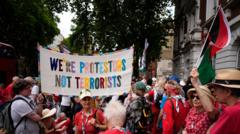
You can agree or disagree with direct action tactics, but labeling protestors as terrorists sets a dangerous legal precedent. The UK's highest court has just agreed to hear a final appeal on the proscription of Palestine Action. This legal showdown isn't just about one activist group. It tests the boundaries of free speech, executive power, and national security laws.
How Palestine Action Ended Up on a Terror List
Back in July 2025, former Home Secretary Yvette Cooper used powers under the Terrorism Act 2000 to ban Palestine Action. The trigger? Activists targeted military sites like RAF Brize Norton, breaking in and damaging equipment to protest the war in Gaza.
Governments usually reserve proscription for international terror networks or violent extremist cells. Applying it to a domestic direct-action group known for property damage and red paint marked a massive shift. Overnight, belonging to the group or even holding a supportive sign turned into a criminal offense carrying a maximum sentence of 14 years. Thousands of arrests followed, pulling ordinary demonstrators into the criminal justice system.
The Legal Ping-Pong Between Courts
The fight to overturn the ban has bounced through the British court system with dramatic twists.
In February, the High Court sided with co-founder Huda Ammori. Three judges ruled the ban unlawful, finding that standard criminal laws already existed to deal with property damage without invoking counter-terrorism powers. They decided the proscription violated basic rights to free expression and peaceful assembly.
That victory was short-lived. In June, the Court of Appeal overturned the High Court verdict. Five appeal judges declared the ban "justified and proportionate," arguing that the Home Secretary had wide discretion when national security and escalating property damage were involved.
Now, the Supreme Court has granted permission for a final appeal.
Why Civil Liberties Groups Are Sounding Alarms
Human rights watchdogs like Liberty and Amnesty International haven't minced words. They argue that stretching counter-terrorism legislation to target activists creates a chilling effect on all public dissent.
When property destruction gets classified alongside mass violence, the legal threshold for state overreach drops significantly. Critics point out a stark reality: if a government can use terror laws against a group targeting defense infrastructure, future administrations can easily apply the same logic to climate protestors, labor unions, or any inconvenient political movement.
The upcoming Supreme Court hearing will decide whether executive power has overreached its legal leash. Expect a fierce constitutional battle this autumn that will define the future of dissent in Britain.