The headlines were breathless. "Largest exercise since the Cold War." "A return to high-intensity conflict." "France ready for the big one."
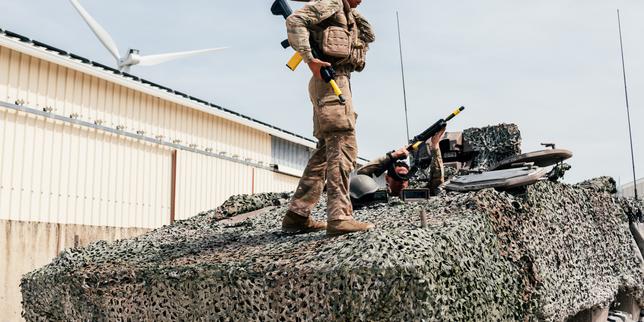
It was a beautiful theater production. If you like tanks rolling through the Marne and paratroopers darkening the skies over Castres, it was a five-star show. But if you actually understand the math of modern attrition, Exercise Orion wasn’t a display of readiness. It was a nostalgic fever dream funded by taxpayers who haven’t yet realized that a sovereign state's ability to wage "high-intensity" war for more than three weeks is currently a mathematical impossibility.
The consensus is lazy. The pundits saw 12,000 troops and thought "scale." They saw multi-domain integration and thought "mastery." They missed the reality that Orion was an exercise in logistics that we can no longer sustain, using platforms we can no longer replace, against a hypothetical enemy that would have turned our entire digital backbone into a brick in the first forty-eight hours.
The Industrial Blind Spot
The French military, like most NATO powers, has spent thirty years perfecting a "Sample Army." We have the best toys, but we only have five of them. We have the CAESAR howitzer—a masterpiece of engineering—but we produce them at a rate that would barely cover two days of losses in a real peer-to-peer slugfest.
Orion pretended that mass is back. Mass isn't back. Mass is dead because the industrial base required to support it has been hollowed out by decades of "just-in-time" procurement. You cannot simulate a return to the Cold War when your munitions factories operate on a peacetime shift schedule.
During Orion, commanders practiced deep strikes and rapid maneuvers. It looked great on the map. But in a real clash of the titans, the consumption rate of smart munitions is astronomical. We are talking about $150,000 missiles being used to take out $500 drones. The math doesn't work. When you run out of the "smart" stuff—which happens in weeks, not months—you are left with a massive, sophisticated force that is effectively blind and toothless.
I’ve sat in rooms where brass talk about "strategic depth." They’re lying to themselves. Strategic depth in 2026 isn't about how many kilometers you can retreat; it’s about how many assembly lines you can spin up in a month. Right now, that number is near zero.
The Transparency Trap
The most dangerous part of Orion was its reliance on the "all-seeing eye." The exercise leaned heavily into the idea that we can coordinate land, sea, air, and space because our networks are flawless.
This is the Great Delusion.
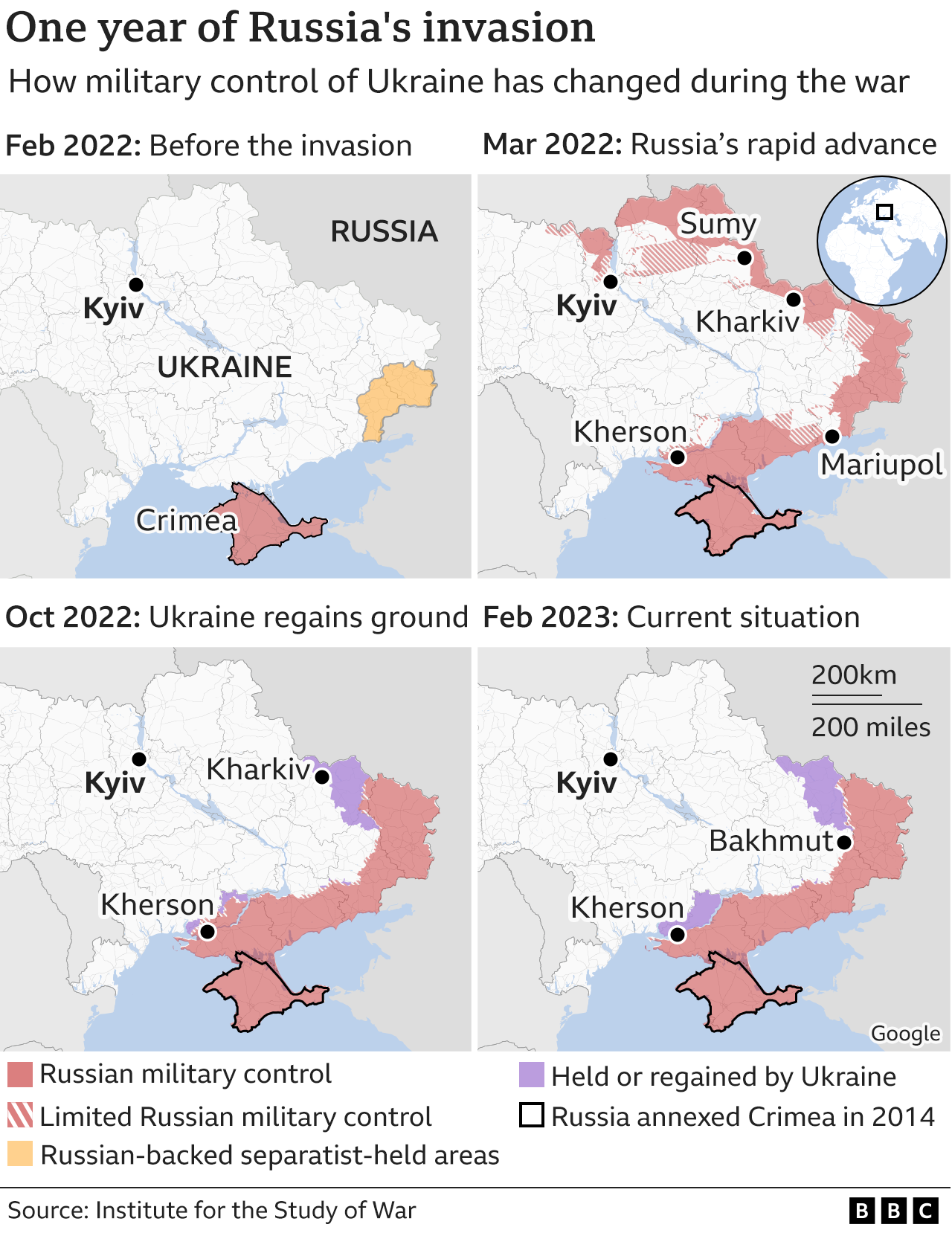
Modern warfare is no longer about who has the best sensors; it’s about who can survive being seen. In the Ukraine-Russia theater, if you emit a signal, you die. If you stay still for ten minutes, you die. If you gather more than three vehicles in a field, a commercial drone finds you and an FPV drone kills you.
Orion featured massive command posts. Tents full of screens. Dozens of officers drinking espresso while staring at digital maps. In a real conflict with a near-peer, that command post is a giant "Hit Me" sign. The electromagnetic signature of a modern HQ is visible from orbit.
We are training our officers to lead from the center of a target. We should be training them to lead while disconnected, scattered, and terrified of their own radios. The "integration" everyone cheered for is actually a single point of failure. If the satellite link goes down, or the cloud gets jammed, the "integrated" force becomes a collection of lost individuals.
The Personnel Lie
We talk about 12,000 troops as if it’s a staggering number. It isn’t. In a true high-intensity conflict, you can lose 1,000 men a day. Orion didn't show us how to win; it showed us how quickly we would run out of people.
The French Army is professional. It is elite. It is also tiny. You cannot replace a highly trained Leclerc tank commander in a fortnight. When your professional core is chewed up in the first month of a "high-intensity" engagement, what is the plan? Conscription? We don't have the barracks. We don't have the trainers. We don't even have the uniforms in storage.
Orion ignored the meat grinder. It focused on the "maneuver," which is the clean, intellectual part of war. It ignored the "attrition," which is the ugly, arithmetic part of war. We are practicing the opening gambit of a game we have no pieces left to finish.
Stop Buying Sovereignty and Start Buying Survival
The obsession with "sovereign platforms"—building every tank and jet in-house to protect French industry—is a suicide pact. It makes our equipment too expensive to lose.
When a Rafale costs over $100 million, you cannot afford to use it in a high-risk environment. It becomes a "fleet in being," a psychological tool that stays in the hangar because the political cost of losing one is too high.
If we want to actually prepare for the next decade, we need to stop the Orion-style pageantry and start focusing on the "Low-Cost/High-Volume" shift.
- Drones over Discs: Stop worrying about the next multi-billion dollar satellite. Start worrying about 50,000 disposable drones that can overwhelm an Aegis system through sheer numbers.
- Decentralized Command: Blow up the command posts. If a colonel can't run his operation from a burner phone and a paper map, he shouldn't be in the field.
- The 3D-Printed Arsenal: We need factories that can print shells, not just workshops that can hand-craft missiles.
The PAA Reality Check
People often ask: "Is the French army the strongest in Europe?"
The honest answer: It doesn't matter. Being the strongest kid in a playground doesn't help when a bulldozer shows up. No European power is currently equipped to handle the attrition of a 21st-century total war. Orion was a vanity project designed to reassure the public, not to scare the enemy.
The enemy isn't scared of a 12,000-man exercise. They are looking at our empty warehouses. They are looking at our three-year lead times for radar components. They are looking at our inability to sustain a frontline that requires 5,000 artillery rounds a day.
The Cognitive Dissonance of High Intensity
We are told that Orion proves we can handle "Multi-Domain Operations" (MDO). Let’s be clear: MDO is a buzzword for "everything is connected to everything else." In cybersecurity, that is called an "attack surface."
By making our tanks talk to our planes, which talk to our satellites, which talk to our infantry, we have created a system where a single software vulnerability or a well-placed jammer can paralyze the entire apparatus. Orion practiced the "talk," but it didn't practice the "silence."
The real winner of the next war won't be the one with the best network. It will be the one who can still function when the lights go out. We are currently building a military that is afraid of the dark.
Exercise Orion was a postcard from the past. It celebrated a way of war that died the moment commercial technology outpaced military procurement. We are polishing the brass on a sinking ship and calling it a "renaissance of power."
Stop looking at the troop counts. Start looking at the supply chains. If the factories aren't humming, the exercise is just a camping trip with better hardware.
War isn't a theater. It’s an accounting firm. And right now, our books don't balance.
Get rid of the tents. Burn the digital maps. Learn to fight with nothing but a rifle and a grudge, or get out of the way for the drones that are coming to replace the soldiers we can't afford to lose.