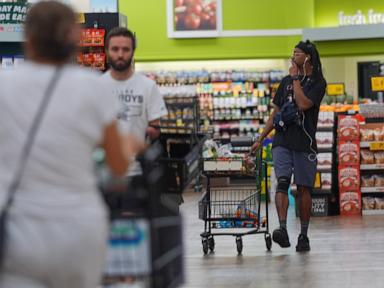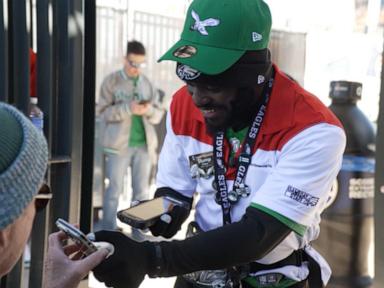
Integrating neurodivergent personnel into live professional sports operations requires restructuring standard stadium workflows rather than relying on performative philanthropy. While surface-level media coverage—such as highlighting Eagles Autism Foundation staff during Philadelphia Eagles home games—typically frames game-day employment through an emotional lens, the underlying operational reality is a rigorous exercise in environmental engineering, task decomposition, and sensory load management. Deploying staff on the autism spectrum inside a 69,000-seat National Football League venue succeeds only when management treats accessibility as a systemic design problem rather than an interpersonal accommodation.
The Structural Friction of Standard Stadium Operations
Professional sports venues are engineered to maximize sensory stimulation. Crowd noise regularly exceeds 100 decibels, concourse lighting relies on high-contrast glare, and pedestrian traffic moves in unpredictable surges tied to game clocks and television timeouts. For neurotypical employees, these variables represent background friction. For autistic staff members, unmanaged environmental inputs trigger cognitive overload, rapid fatigue, and executive dysfunction. If you liked this article, you should read: this related article.
Standard stadium staffing models fail neurodivergent workers across three primary operational vectors:
- Ambiguous Command Hierarchies: Game-day hospitality and retail teams rely heavily on verbal, ad-hoc instructions delivered over noisy radio channels. When directives lack explicit boundaries, employees who process language literally experience execution bottlenecks.
- Unbuffered Sensory Exposure: Positioning staff at high-decibel choke points—such as tunnel exits or main concourse intersections—without acoustic dampening or visual sightline barriers accelerates sensory burnout before halftime.
- Variable Task Switching: Traditional event staffing expects workers to pivot rapidly between ticket scanning, wayfinding, inventory restocking, and conflict de-escalation. Rapid context switching degrades performance when cognitive energy is already allocated to filtering environmental stimuli.
The Eagles Autism Foundation model bypasses these failure points by modifying the job architecture before the employee enters the concourse. Instead of forcing the worker to adapt to a chaotic baseline, operations teams isolate controllable variables within specific roles—such as merchandise fulfillment, suite hospitality, and targeted fan engagement—and engineer predictable micro-environments around them. For another angle on this story, check out the recent update from Forbes.
The Three-Tier Operational Architecture
To replicate the game-day execution observed within the Philadelphia Eagles organization, venue operators must implement a three-tier structural framework. This architecture separates emotional goodwill from repeatable human resources engineering.
1. Granular Task Decomposition and Role Isolation
High-reliability organizations reduce error rates by narrowing the scope of individual roles during peak stress windows. In a stadium setting, this means unbundling hybrid hospitality roles into discrete, linear workflows.
Rather than assigning a single employee to manage a merchandise kiosk—which requires simultaneous inventory tracking, point-of-sale operation, crowd management, and verbal upselling—management bifurcates the function. One specialist handles exact inventory staging and restocking using visual schematic guides, while another executes point-of-sale transactions using standardized, script-supported prompts. This division of labor eliminates context-switching penalties and allows individual contributors to achieve high velocity within a defined operational lane.
2. Sensory Calibration and Spatial Zoning
Environmental modification is more cost-effective than continuous behavioral coaching. Effective stadium integration requires auditing the physical workspace for sensory triggers and applying targeted controls:
- Acoustic Attenuation: Providing discrete, high-fidelity earplugs or noise-reducing headsets that filter low-frequency crowd roar while preserving speech-frequency clarity.
- Micro-Zone Anchoring: Assigning neurodivergent staff to physically bounded workstations—such as dedicated suite corridors, check-in desks, or specific retail bays—rather than roaming concourse patrols. Fixed spatial boundaries reduce spatial anxiety and allow the worker to map sensory variables early in the shift.
- Decompression Buffers: Establishing low-stimulation recovery zones within the stadium footprint. Unlike standard break rooms characterized by fluorescent lighting and blaring televisions, a functional decompression buffer utilizes dim, indirect lighting, acoustic insulation, and zero-demand rest protocols. A ten-minute reset in a controlled environment prevents a full shift abandonment.
3. Visual Standard Operating Procedures (SOPs)
Verbal onboarding fails in high-noise environments. Organizations that successfully deploy autistic talent replace multi-page text manuals and rapid verbal briefings with visual SOPs.
Every workstation contains laminated, high-contrast reference cards detailing exact step-by-step sequences, escalation triggers, and visual representations of completed tasks. If a point-of-sale terminal freezes, the employee does not need to interpret a supervisor's hand gestures across a crowded room; they execute the three-step visual troubleshooting protocol mounted beside the register. When an issue falls outside the defined decision tree, a single, unambiguous escalation protocol transfers the interaction to a designated floor lead.
The Economic and Brand Value Equation
Critics of specialized employment programs frequently misclassify them as corporate social responsibility expenses—sunk costs absorbed for public relations value. A rigorous financial assessment demonstrates that structured neurodiverse staffing generates measurable operational returns across three metrics.
Turnover Reduction and Onboarding Amortization
Event-based hospitality suffers from chronic churn, often exceeding 50 percent across an eight-to-ten-game home schedule. High turnover forces stadium vendors to continuously absorb recruiting, background check, uniform, and training costs for temporary labor that barely reaches peak efficiency before resigning.
Neurodivergent employees placed into well-structured, predictable roles demonstrate significantly higher retention rates than the broader temporary labor pool. Once a routine is mastered and the sensory environment is calibrated, attendance reliability and adherence to protocol remain consistent across the entire season. Amortizing onboarding expenses over multi-year tenures lowers the fully burdened cost per labor hour.
Process Discipline and Error Reduction
In repetitive, rule-bound tasks—such as credential verification, inventory reconciliation, and quality control—neurodivergent workers frequently outperform neurotypical peers who experience boredom-induced vigilance decrement. When a workflow requires strict adherence to a checklist without shortcutting, literal rule-following becomes an operational asset rather than a friction point.
Capital Flywheel and Institutional Legitimacy
For a franchise like the Philadelphia Eagles, operationalizing neurodiversity on game day closes the credibility loop for its broader philanthropic apparatus. Foundations struggle to sustain corporate sponsorship and donor trust when their public advocacy diverges from their internal labor practices. By demonstrating visible, competent execution by autistic staff during peak broadcast and stadium-attendance windows, the organization validates its mission in real time. Fans, corporate partners, and media observers witness functional competence rather than passive charity, driving higher fundraising conversion and brand affinity.
Operational Limitations and Failure Modes
Deploying neurodivergent staff in live event environments is not a frictionless model. Venue operators who ignore structural constraints will encounter predictable failure modes:
- The Tokenism Trap: Hiring neurodivergent workers for visible game-day roles without modifying management training, sensory environments, or task design guarantees rapid burnout. Placing an unsupported worker in a high-stress concourse role produces public failure that damages both the individual and the organization.
- Supervisory Bottlenecks: Middle management represents the weakest link in inclusive operations. Floor supervisors trained in traditional, high-pressure hospitality management often lack the communication precision required to direct neurodivergent staff. Without dedicated training in clear, non-idiomatic instruction and emotional regulation, supervisors default to vague directives that stall execution.
- Scalability Constraints: A single NFL franchise plays roughly eight to ten regular-season home games per year, allowing extensive pre-game preparation and high staff-to-supervisor ratios. Replicating this exact support infrastructure inside an 82-game NBA/NHL arena or a 162-game MLB ballpark requires automating the supervisory and sensory-buffer layers to preserve unit economics.
- Unpredictable Emergency Variables: While standard game-day operations can be scripted, severe weather evacuations, medical emergencies, or security incidents introduce non-linear chaos. Operations plans must explicitly define automated reassignment protocols that move neurodivergent staff out of primary crowd-control choke points into secure, secondary staging areas during critical incidents.
Strategic Execution Blueprint for Venue Operators
Organizations seeking to transition from symbolic inclusion to high-output neurodiverse staffing must execute a four-phase implementation sequence prior to opening day:
- Conduct a Sensory and Cognitive Job Audit: Map every game-day role across three dimensions: decibel exposure, task-switching frequency, and verbal ambiguity. Select roles with low task-switching requirements and high spatial predictability for initial deployment.
- Engineer Workstation Boundaries: Install visual SOPs, define strict escalation triggers, and establish dedicated, low-stimulation recovery spaces within a two-minute walk of every assigned post.
- Certify Floor Supervisors in Precision Communication: Train frontline managers to eliminate idioms, sarcasm, and multi-part verbal commands. Mandate single-step, literal task assignments paired with written or visual confirmation.
- Measure Retention and Accuracy Against Baseline Cohorts: Track shift attendance, transaction accuracy, and seasonal retention rates against traditional temporary staffing agencies. Use these hard operational metrics to justify expanding the program into year-round stadium operations, corporate headquarters, and facility management.