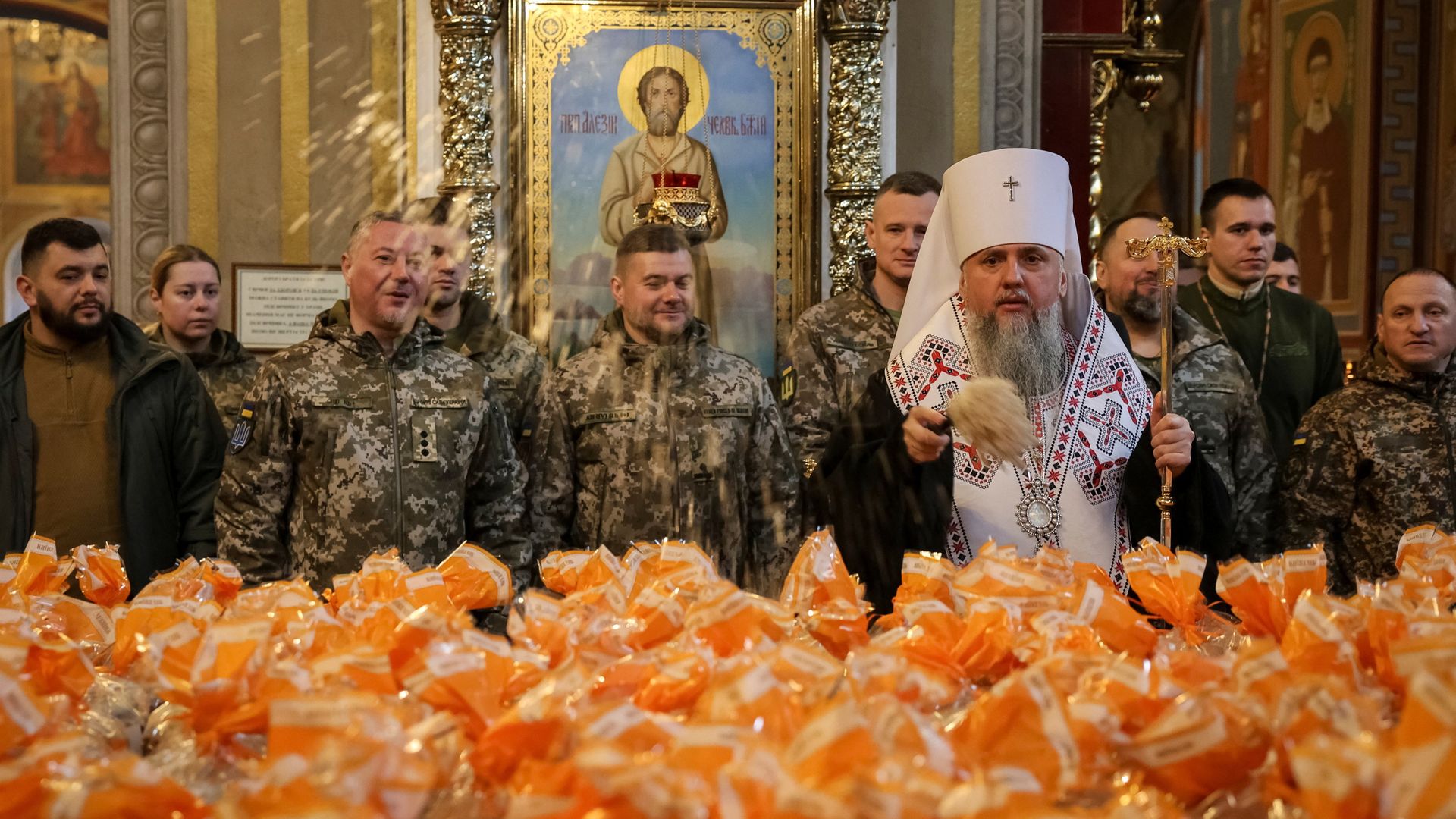
The 32-hour cessation of hostilities between Russian and Ukrainian forces for Orthodox Easter functions less as a humanitarian gesture and more as a calculated operational pause defined by asymmetric strategic incentives. While media narratives focus on the religious sanctity of the holiday, a clinical analysis reveals that such pauses are governed by three specific variables: logistical replenishment cycles, the signaling of internal stability, and the management of international perception. To understand the utility of this 32-hour window, one must evaluate the friction between kinetic momentum and the physical limits of front-line combat units.
The Architecture of the Operational Pause
A temporary ceasefire is rarely a vacuum of activity. Instead, it represents a shift from kinetic output to logistical throughput. In high-intensity conflict, the degradation of equipment and the exhaustion of personnel create a "culmination point" where further offensive action yields diminishing returns or risks total unit failure. The 32-hour window provides a structured environment to reset these parameters without the immediate risk of counter-battery fire or drone-directed interdiction.
Logistical Throughput and the "last mile" Problem
The most critical constraint in the current theater is the "last mile" of delivery—the dangerous zone where supplies move from regional depots to the zero-line. Under standard combat conditions, this movement is restricted to night hours or obscured by electronic warfare. A declared ceasefire, even if imperfectly observed, lowers the risk profile for:
- Casualty Evacuation (CASEVAC): Moving wounded personnel from stabilized stabilization points to rear-area hospitals.
- Equipment Recovery: Retrieving disabled armored vehicles that are otherwise too exposed to recover under active fire.
- Rotation of Personnel: Replacing exhausted front-line troops with fresh reserves, a process that is highly vulnerable to artillery strikes during the "handover" phase.
The Signal Value of Religious Compliance
For the Kremlin, adherence to an Orthodox Easter ceasefire serves a domestic legitimization function. By framing the conflict through the lens of defending "Traditional Values," the state uses the pause to reinforce the narrative of a holy war. Violations of the ceasefire, whether real or manufactured, are then utilized as "atrocity propaganda" to radicalize domestic support. Conversely, for Kyiv, agreeing to such a pause is a delicate balancing act between maintaining the moral high ground for Western audiences and ensuring that the pause does not allow Russian forces to solidify defensive fortifications in contested sectors like the Donbas.
Structural Incentives for Non-Compliance
The primary limitation of any short-term ceasefire in a decentralized conflict is the "Command and Control (C2) Lag." Even if the highest levels of military leadership issue a "stand down" order, the reality on the ground is dictated by tactical-level friction.
- Autonomous Drone Operations: Small-unit drone operators often operate with a degree of autonomy. Interdicting a high-value target that appears during a "ceasefire" provides a tactical advantage that often outweighs the political cost of a violation.
- The Defensive Advantage of Fire: In a war of attrition, the side on the defensive benefits from the opponent’s movement. If one side uses the 32-hour window to reposition artillery or mine-clearing equipment, the other side faces a binary choice: permit a significant shift in the tactical balance or break the ceasefire to maintain the status quo.
- Verification Deficit: Without third-party monitors—which are absent in this specific 32-hour agreement—neither side can verify the other’s compliance. This creates a "Prisoner's Dilemma" where the safest rational move is to remain in a state of high readiness, effectively nullifying the "peace" of the ceasefire.
The Cost Function of the 32-Hour Window
Economic and military resources are not static during a pause. The cost of maintaining a front line does not drop to zero when the shooting stops; it merely shifts.
- Intelligence Collection: A ceasefire is a period of peak intelligence activity. With the noise of active shelling removed, acoustic sensors and signals intelligence (SIGINT) can more easily pinpoint the locations of command posts and electronic warfare suites that remain active.
- Fortification Velocity: Both sides utilize pauses to expand trench networks. In 32 hours, a modern engineering unit with mechanical support can reinforce several kilometers of secondary defensive lines. This increases the "breakthrough cost" for the next offensive phase.
- Psychological Atrophy: For soldiers in high-stress environments, a sudden pause can lead to a dangerous drop in alertness. Re-establishing combat readiness after a 32-hour break often results in a 4-to-6 hour "vulnerability window" immediately following the resumption of hostilities.
Asymmetric Objectives: Russia vs. Ukraine
The utility of the ceasefire is not distributed equally. Each actor approaches the 32-hour window with divergent strategic requirements.
The Russian Calculus: Consolidation and Narrative
Russia’s primary objective in 2026 has shifted toward the "frozen conflict" model, where territorial gains are consolidated through layering deep echelon defenses. A ceasefire allows for the unimpeded delivery of concrete reinforcements and minefields. Strategically, the pause also serves to test the "fatigue" of Western allies. If Russia appears willing to negotiate—even for a mere 32 hours—it provides ammunition to political factions in Europe and the U.S. calling for a de-escalation of military aid.
The Ukrainian Calculus: Moral Authority and Intelligence
Ukraine faces a higher risk/reward ratio. Agreeing to the ceasefire preserves the lives of service members during a period of high symbolic importance, which is vital for maintaining national morale. However, Kyiv must remain vigilant against Russian "maskirovka" (deception). The Ukrainian General Staff likely views the 32-hour window as an opportunity to conduct high-altitude aerial reconnaissance to map the Russian logistical tail, identifying the specific depots that will be targeted the moment the ceasefire expires.
The Probability of Escalation Post-Ceasefire
History suggests that short-term ceasefires in Eastern Europe frequently act as "springboards" for intensified violence. The logic is simple: the logistical reset mentioned earlier allows for a higher "burst rate" of fire once hostilities resume.
- Ammunition Stockpiling: Artillery units can use the 32 hours to move shells from regional caches directly to the gun lines. This permits a sustained barrage in the hours following the ceasefire that would have been impossible without the unhindered transport window.
- Target Acquisition: The data gathered during the pause is processed into "target packages." The resumption of fire is rarely a return to the previous baseline; it is a synchronized strike on newly identified positions.
The 32-hour Orthodox Easter ceasefire should be viewed not as a step toward peace, but as a mandatory cooling period in a high-friction system. It is a functional necessity for two armies that are reaching the limits of their current operational cycles.
Strategic Forecast: The Post-Pause Pivot
Expect a significant uptick in long-range precision strikes within 12 to 24 hours of the ceasefire's conclusion. The data suggests that both sides will prioritize "Counter-Logistics" strikes, aiming to destroy the very supplies and personnel that were moved during the 32-hour window.
The primary indicator of success for either side will not be the lack of fighting during Easter, but the relative position of their logistical "teeth-to-tail" ratio on the morning the ceasefire ends. If Russia successfully rotates three fresh battalions into the Donbas front under the cover of the religious holiday, the ceasefire will have been a Russian tactical victory. If Ukraine uses the time to pinpoint the locations of Russian S-400 batteries that were moved to protect the holiday traffic, the advantage shifts to Kyiv.
The strategic play here is to treat the 32-hour window as a "grey zone" operation. Success is defined by the volume of information gained and the quantity of hardware moved, while maintaining a public-facing posture of restraint. The military that treats the pause as a true rest will find itself at a severe disadvantage when the kinetic reality reasserts itself. Use the window to recalibrate sensors, reposition mobile reserves, and finalize target lists for the inevitable 48-hour surge that follows any "humanitarian" pause.