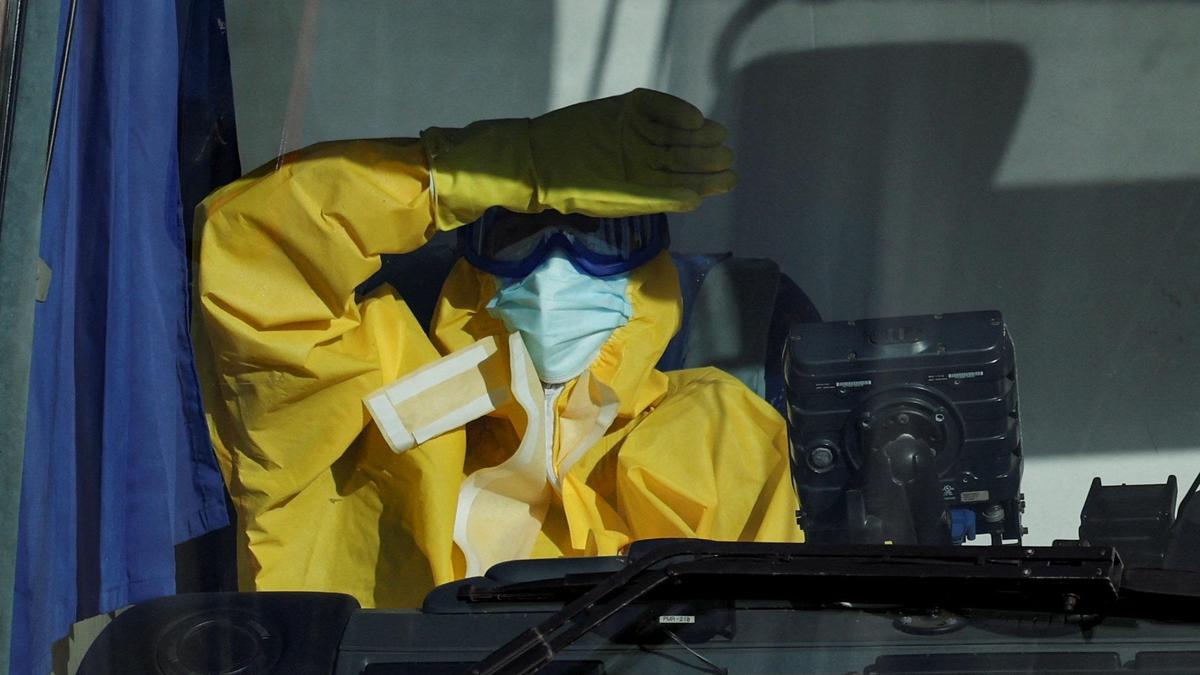
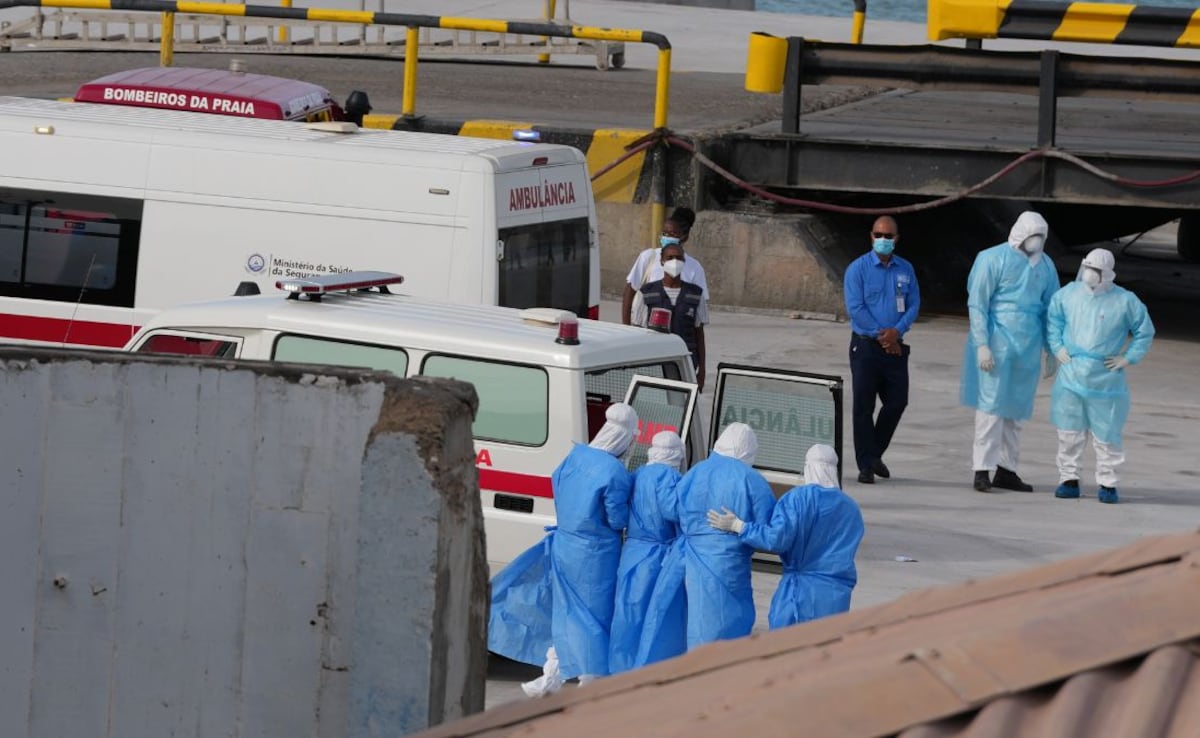
The repatriation of American passengers from a vessel identified with Hantavirus pulmonary syndrome (HPS) exposes a critical failure in current maritime biosecurity protocols: the inability to reconcile individual mobility with population-level risk mitigation. Most public reporting focuses on the emotional narrative of the "journey home." A structural analysis, however, reveals that the true challenge lies in the Kinetic Friction of Quarantine—the logistical and legal resistance encountered when moving potentially infected biological assets across international and domestic jurisdictions.
The Viral Architecture of Hantavirus in Maritime Environments
Hantavirus is not a typical cruise-ship pathogen like Norovirus. Its transmission mechanism and clinical progression require a different defensive posture. While Norovirus spreads through direct contact and contaminated surfaces, Hantavirus—specifically strains like Sin Nombre or Andes virus—is primarily zoonotic, transmitted through the aerosolization of rodent excreta. If you enjoyed this article, you should look at: this related article.
The Mechanism of Exposure
The presence of Hantavirus on a passenger vessel indicates a breach in the Sanitary Perimeter. Rodents act as the primary vector. When their dried droppings or urine are disturbed—often by HVAC systems or cleaning crews—the virus enters the air as microscopic particles. Passengers inhale these particles, initiating an incubation period that typically lasts 1 to 8 weeks.
http://googleusercontent.com/image_content/211 For another look on this development, refer to the recent update from Psychology Today.
Clinical Progression Variables
The risk profile of HPS is defined by a high case-fatality rate, often exceeding 35%. The transition from "prodromal phase" (fever, myalgia) to "cardiopulmonary phase" (rapid onset of pulmonary edema and hypotension) occurs with devastating speed. In a maritime context, this creates a Triage Latency problem. A passenger might appear asymptomatic during disembarkation but experience total respiratory failure within hours of boarding a commercial flight.
The Three Pillars of Repatriation Failure
The breakdown in the return journey for these passengers is a result of three competing pressures: jurisdictional ambiguity, logistical bottlenecks, and the degradation of the "Clean Chain."
1. Jurisdictional Ambiguity
Maritime law often clashes with the sovereign health policies of the port of call and the destination country. When a ship is "hit" by a virus, the vessel exists in a legal gray zone. The flag state, the port state, and the home nations of the passengers all hold varying levels of responsibility. This creates a Responsibility Vacuum, where passengers are trapped in a cycle of screening and re-screening because no single entity accepts the liability of "clearing" them for travel.
2. Logistical Bottlenecks in Biological Screening
Standard airport screenings are optimized for thermal detection of fevers. Hantavirus renders these tools largely ineffective during the long incubation period. To truly mitigate risk, authorities would require molecular testing (PCR) or serological assays, which are rarely available at scale in transit hubs. The result is a reliance on Declarative Screening—asking passengers if they feel sick—which is statistically insignificant for managing a virus with a silent incubation phase.
3. Degradation of the Clean Chain
The "Clean Chain" refers to the continuous path of non-exposure from the point of quarantine to the point of arrival. This chain is broken the moment a passenger enters a public transport hub. If an infected passenger sheds virus in a taxi, a lounge, or an airplane cabin, the primary containment event on the ship evolves into a secondary, multi-point dispersion event.
The Cost Function of Quarantine vs. Repatriation
Every hour a passenger remains in limbo increases the Aggregate Social Cost. This cost is calculated not just in dollars, but in the probability of a secondary outbreak.
- Fixed Costs: Chartering private medical transport, staffing specialized quarantine facilities, and medical supplies.
- Variable Costs: The economic loss of grounding commercial flights if exposure is later confirmed, and the long-term brand equity damage to the cruise line.
- Externalities: The strain on the public health infrastructure of the arrival city, which must now monitor hundreds of potentially exposed individuals for up to two months.
The current strategy relies on "self-monitoring," which shifts the cost and responsibility from the corporation and the state to the individual. While this reduces immediate government expenditure, it maximizes the risk of an uncontained outbreak if an individual fails to report symptoms or lacks access to specialized care.
Structural Vulnerabilities in Vessel HVAC Systems
The primary failure point on a hantavirus-hit ship is often the ventilation architecture. Modern cruise ships use complex air handling units (AHUs) that recirculate a percentage of air to optimize energy efficiency. If a rodent infestation occurs within the ductwork or storage areas, the HVAC system becomes a Viral Distribution Network.
Standard HEPA filtration can capture viral particles, but many older vessels or those with deferred maintenance schedules use lower-grade filters that allow sub-micron particles to pass through. Furthermore, the pressure differentials between passenger cabins and service corridors can inadvertently pull contaminated air from "dirty" zones (like trash holds or storage) into "clean" zones (guest quarters).
The Protocol for Bio-Secure Repatriation
To outclass the current ad-hoc response, a standardized Bio-Secure Repatriation Framework must be implemented. This moves away from the "journey home" narrative and toward a "controlled asset transfer."
Phase I: Internal Sequestration
Passengers are moved to "Zone Zero" on the ship—areas with independent air filtration and no shared plumbing with the rest of the vessel. All shared surfaces are treated with a 10% bleach solution or professional-grade virucidal agents.
Phase II: The Air-Bridge
Instead of commercial flights, passengers are moved via a dedicated air-bridge. This involves:
- Point-to-Point Transit: Bus-to-tarmac transfers that bypass public terminals.
- Zonal Aircraft Loading: Seating arrangements that maximize physical distance, even within a group of potentially exposed individuals.
- Post-Flight Sterilization: Using hydrogen peroxide vapor (HPV) to decontaminate the aircraft interior before it returns to general service.
Phase III: Geo-Fenced Surveillance
Traditional quarantine is often politically and economically unfeasible. A more effective model is "Digital Geo-Fencing." Passengers are issued wearable biometric sensors that track heart rate, blood oxygen levels, and temperature in real-time. This data is fed into an algorithmic monitor that detects the subtle physiological shifts marking the onset of the prodromal phase, allowing for immediate medical intervention before the passenger becomes highly symptomatic or infectious.
The Biological Defense Gap in Global Tourism
The hantavirus incident is a symptom of a larger "Defense Gap." The tourism industry has optimized for volume and luxury, but has under-invested in Biological Resilience. As climate change and urbanization push rodent populations into closer contact with human infrastructure, the frequency of zoonotic spillover in travel hubs will increase.
The current "wait and see" approach to passenger repatriation is a high-stakes gamble. It assumes that the virus will behave predictably and that passengers will act rationally. History and data suggest otherwise. The friction observed in the journey of these American passengers is not an anomaly; it is the natural result of a system designed for the movement of goods, not the containment of pathogens.
Strategic Realignment for Maritime Operators
Cruise lines must move beyond "cleaning protocols" and toward Architectural Immunity. This requires a fundamental shift in how ships are designed and operated.
- Zonal Isolation Capability: Future vessels must be built with the ability to completely isolate the air and water systems of specific decks or sections in the event of an outbreak.
- On-Board Molecular Diagnostics: Real-time PCR capabilities should be a mandatory requirement for any vessel carrying more than 1,000 passengers, allowing for definitive diagnosis within hours rather than days.
- Vector-Proofing Infrastructure: Replacing traditional insulation and ducting materials with rodent-resistant composites and implementing automated acoustic pest deterrents in non-passenger areas.
The objective is to transform the vessel from a potential incubator into a containment unit. Until this happens, the "journey home" for any passenger on an infected ship will remain a chaotic, high-risk exercise in crisis management rather than a controlled, professional extraction.
To minimize the probability of future cross-border contagion, the maritime industry must adopt a "Cold Chain" philosophy for biosecurity. Just as pharmaceuticals are kept within a strict temperature range from factory to patient, passengers involved in a bio-hazard event must be kept within a strict "Safety Envelope" from the ship to their home. This requires pre-arranged contracts with private medical transport firms and the establishment of international "Green Corridors" that bypass standard customs and immigration bottlenecks during health emergencies. Any operator failing to secure these contingencies is not just risking their passengers' health—they are risking the integrity of global public health borders.