The transition from low-Earth orbit (LEO) to cislunar space represents an exponential increase in mission complexity, moving beyond the safety of the Van Allen belts and the immediate communication infrastructure of the International Space Station. Artemis II is not merely a flight test; it is the validation of a deep-space life-support architecture and a high-bandwidth optical communication system designed to replace legacy radio frequency (RF) limitations. The success of the four-crew mission hinges on three critical systemic pillars: the High Earth Orbit (HEO) phasing maneuver, the integrity of the Orion Environmental Control and Life Support System (ECLSS), and the deployment of the Orion Artemis II Optical Communications System (O2O).
The Mechanics of the High Earth Orbit Phasing Maneuver
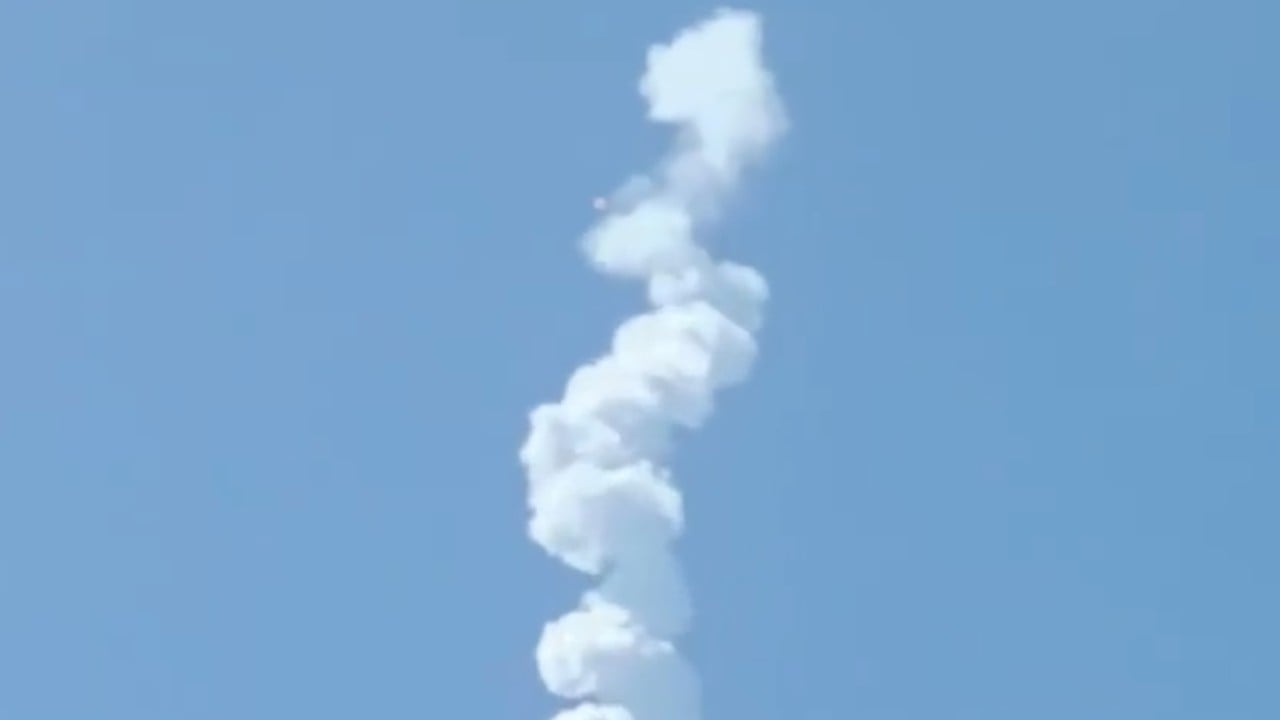
Unlike Apollo missions that utilized a rapid Trans-Lunar Injection (TLI) burn, Artemis II employs a multi-stage orbital strategy to verify system performance before committing to a lunar trajectory. After the Space Launch System (SLS) places the Orion spacecraft into an initial elliptical orbit, the crew performs a series of burns to reach a High Earth Orbit. If you found value in this article, you might want to read: this related article.
The primary function of this 24-hour HEO phase is risk mitigation. During this window, the crew tests the spacecraft's proximity operations by using the spent Interim Cryogenic Propulsion Stage (ICPS) as a target. This maneuvers the craft without the aid of GPS, which becomes unreliable at these altitudes, forcing a reliance on star trackers and optical navigation. If the life support systems or the European Service Module (ESM) show any telemetry anomalies during this 24-hour period, the orbital mechanics allow for a simplified "free-return" or early reentry. Once the TLI burn is executed, the physics of the trajectory commit the crew to a multi-day journey around the lunar far side, where abort options are significantly constrained by delta-v (velocity change) requirements.
Bandwidth Expansion via Optical Communication (O2O)
A central objective of the first crewed video transmissions from Artemis II is the stress-testing of the Orion Artemis II Optical Communications System. Traditional space communications rely on S-band and Ka-band radio frequencies. These are subject to signal degradation over long distances and offer limited data rates, often capped at a few megabits per second for deep-space applications. For another perspective on this story, check out the latest update from CNET.
O2O utilizes laser-based communication, which operates on a much higher frequency than radio. This shift provides several technical advantages:
- Data Density: Laser communications can transmit up to 260 megabits per second, enabling 4K video feeds and massive telemetry dumps that were previously impossible.
- Size and Power Efficiency: Because the wavelength of light is shorter than radio waves, the hardware required to focus the beam (the terminal) is significantly smaller and consumes less power than a comparable RF antenna.
- Precision and Interference: Lasers produce a much narrower beam, which reduces the risk of interference but requires extreme pointing accuracy—comparable to hitting a moving dime with a laser pointer from several miles away.
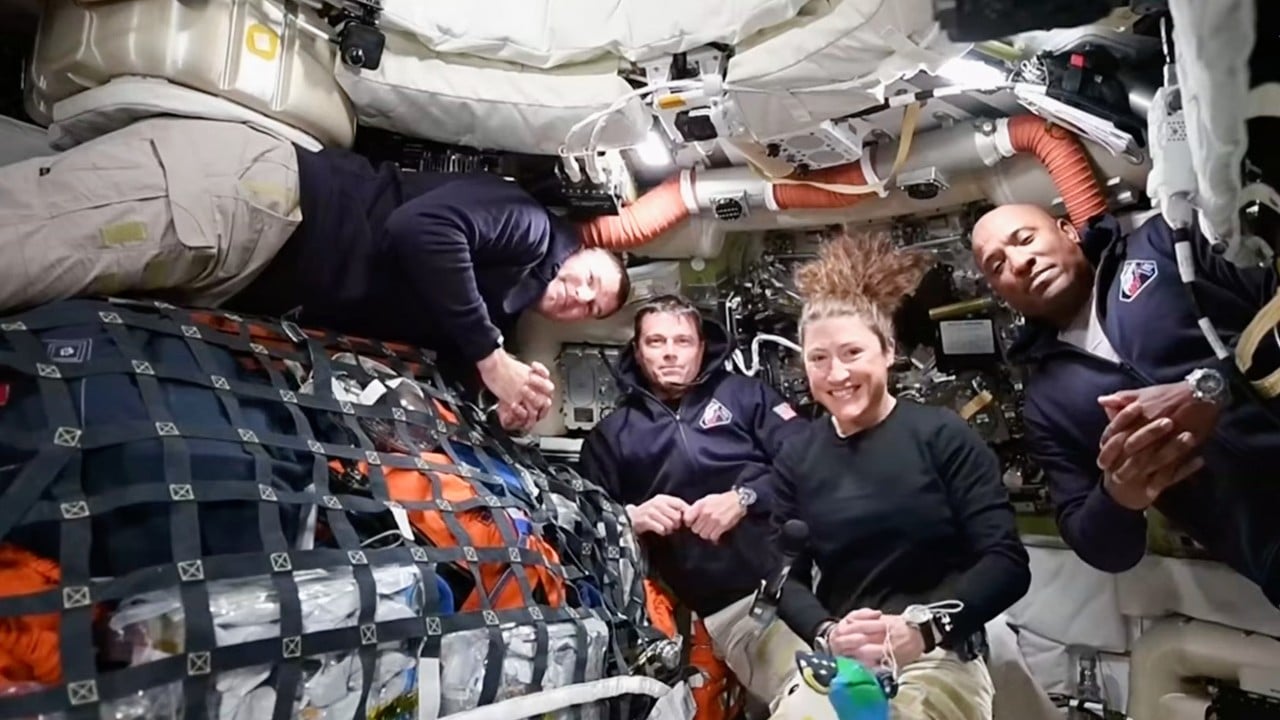
The video messages sent by the crew serve as the "ground truth" for this system. By transmitting high-definition data from thousands of miles away, NASA validates the ground station network—specifically the specialized receivers in California and New Mexico—ensuring that when future missions begin lunar surface operations, the data bottleneck will not be a limiting factor for scientific output.
The Environmental Control and Life Support System (ECLSS) Stress Test
The presence of four humans introduces a significant biological load on the spacecraft’s internal systems. The Artemis II Orion capsule is the first to fly with a fully integrated ECLSS designed for long-duration deep space. The system must manage three primary variables: atmospheric pressure/composition, thermal regulation, and water recovery.
Atmospheric Scrubber Cycles
The removal of Carbon Dioxide ($CO_2$) is achieved through the Amine Swing-bed payload. Unlike the International Space Station, which has more volume to buffer fluctuations, the Orion capsule's smaller pressurized volume means that $CO_2$ levels can spike rapidly if the scrubbing cycle fails. The system must also maintain a precise nitrogen-oxygen mix to prevent hypoxia or combustion risks, all while operating in a high-radiation environment that can affect the electronic controllers of the valves.
Thermal Loading and Radiators
Space is an insulator. The heat generated by the four astronauts’ metabolic processes, combined with the heat from the onboard electronics, must be actively rejected. The Orion uses a redundant loop of R-134a coolant that transfers heat to external radiators located on the European Service Module. In the HEO phase, the spacecraft experiences extreme thermal gradients as it moves from direct solar heating to the shadow of the Earth. The crew’s video updates confirm the stability of the internal cabin temperature, proving that the ESM can handle the thermal load of four active bodies.
Radiation Exposure and the Van Allen Transit
Artemis II is the first time since 1972 that humans have traveled through the Van Allen radiation belts. These regions of trapped solar and cosmic particles pose a threat to both biological tissue and sensitive avionics. The Orion spacecraft is equipped with the Hybrid Electronic Radiation Assessor (HERA) to provide real-time warnings of solar energetic particle events.
The shielding strategy for the crew relies on "sheltering in place." In the event of a solar flare, the crew is instructed to move to the center of the capsule and use on-board supplies (water bags and cargo) as makeshift shielding. This operational protocol is a critical data point for the mission; understanding how the crew interacts with the radiation monitoring hardware informs the safety margins for the future Artemis III lunar landing.
Cognitive Load and Human-Machine Interface (HMI)
The complexity of the Orion's glass cockpit represents a shift from the thousands of physical switches found in the Apollo and Shuttle eras. Artemis II utilizes three main display units and a sophisticated software architecture to condense mission-critical data.
The "first message" from space is also a demonstration of the HMI's effectiveness. The crew must manage the communication link while simultaneously monitoring the ESM’s propellant levels and the status of the life support loops. The ergonomic flow of the cabin is being evaluated for "habitability"—the ability of four people to live, work, and sleep in a space roughly the size of a small SUV for ten days.
Strategic Trajectory Limitations
While the mission is hailed as a return to the Moon, it is technically a "free-return trajectory." The spacecraft will not enter lunar orbit. Instead, it will use the Moon's gravity to "whip" the craft around the far side and head back toward Earth.
This trajectory is selected because it requires minimal fuel for the return leg, but it imposes a strict timeline. The crew cannot "loiter" at the Moon to investigate specific sites. Every kilogram of mass, from the food the crew eats to the camera equipment used for the video messages, is calculated against the delta-v available in the Service Module. The mission’s primary constraint is the mass-to-fuel ratio, a fundamental equation that dictates every decision made by the flight controllers in Houston.
The Operational Path Forward
The data gathered from the Artemis II crew’s initial transmissions and system checks will determine the launch window for Artemis III. If the O2O communication system shows jitter or packet loss, the ground stations must be recalibrated. If the ECLSS struggles with humidity control during the four-person load, the scrubbing algorithms will need revision.
The strategic play for the next 48 hours involves the transition from the Earth-centric HEO phase to the Moon-centric TLI. Once the ESM engine fires for the TLI, the mission enters its most autonomous phase. The crew will be further from home than any human in history, relying on a closed-loop system that must function without the possibility of resupply or immediate rescue. The objective is no longer just "getting there"; it is the rigorous verification of a sustainable deep-space transit model.